


By Seedy Jobe
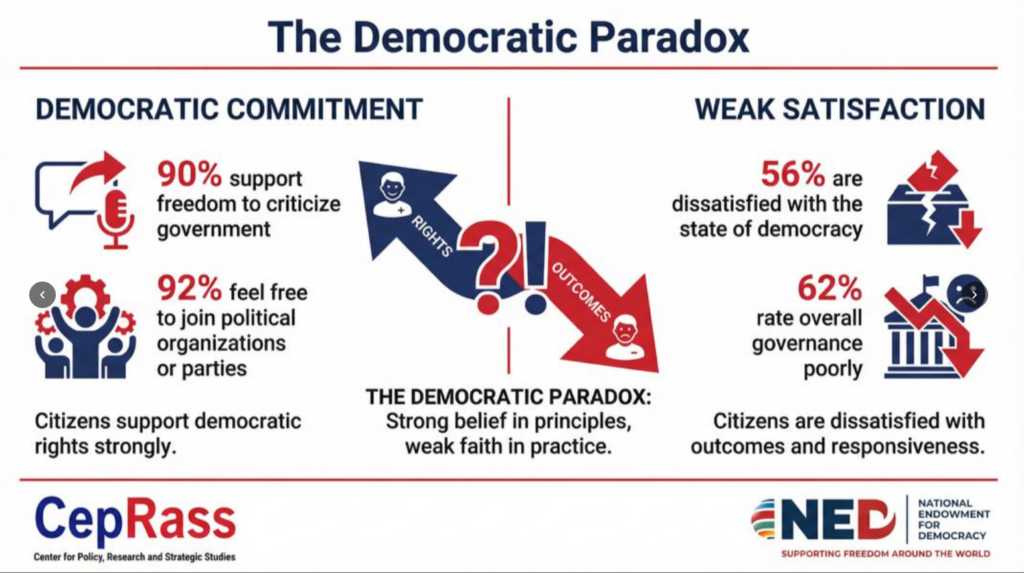
A majority of Gambians are dissatisfied with the way democracy is functioning in the country, according to a new national opinion survey released Thursday by the Center for Policy, Research, and Strategic Studies (CepRass).
The findings, based on responses collected nationwide, show that 56 percent of respondents expressed dissatisfaction, including 37 percent who said they were dissatisfied and 19 percent who described themselves as very dissatisfied. By comparison, 32 percent reported being satisfied—24 percent satisfied and 8 percent very satisfied—while 12 percent said they were neutral.
The results point to a broad sense of unease with the country’s democratic trajectory, with discontent particularly pronounced in urban and peri-urban areas and among women.
A gender gap was evident across the data. Among men, 36 percent reported satisfaction with democracy and 51 percent dissatisfaction. Among women, satisfaction dropped to 29 percent, while dissatisfaction rose to 61 percent, suggesting that women are more likely to hold negative views about the current political climate.
Regional disparities were also striking. In Brikama in the West Coast Region, dissatisfaction was highest, with 68 percent expressing negative views compared with 24 percent who were satisfied. Kanifing showed a similar pattern, with 54 percent dissatisfied and 29 percent satisfied. In Janjanbureh, 48 percent were dissatisfied and 38 percent satisfied, while Banjul registered what the report described as a “mixed but overall negative” outlook, with 43 percent dissatisfied and 33 percent satisfied.
In contrast, some provincial regions reported more favorable perceptions. Mansakonko recorded the highest level of satisfaction, with 62 percent expressing positive views and 26 percent dissatisfied. Basse showed 49 percent satisfaction against 32 percent dissatisfaction, while Kuntaur recorded 53 percent satisfaction, though with a relatively high dissatisfaction rate of 40 percent.
The survey also found dissatisfaction cutting across education levels. Respondents with university education reported 35 percent satisfaction and 51 percent dissatisfaction, while those with Majilis or Dara education showed 40 percent satisfaction and 51 percent dissatisfaction. The report noted that discontent was slightly more pronounced among those with secondary or tertiary education.
Age differences were also evident. Younger and middle-aged respondents were more likely to express dissatisfaction, while older respondents were somewhat less critical, though still more negative than positive overall.
CepRass described public sentiment as “cautious and, on balance, unfavorable,” noting that while democratic governance continues to be valued, many citizens are dissatisfied with how it is being practiced.
The findings, the report said, underscore the need for stronger democratic responsiveness, more effective institutions, and improvements in governance if public confidence is to be restored.
Comments are closed.