


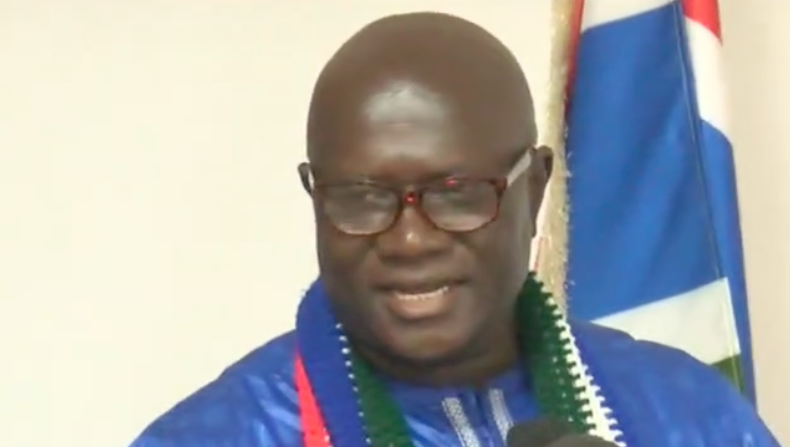
By Fatou Sillah
Madi Jobarteh, executive director of the Edward Francis Small Centre for Rights and Justice, said the Gambia has operated under a weak and fundamentally unfair electoral system since independence, raising concerns about the integrity and inclusiveness of democratic processes.
Speaking at the Solo Sandeng Memorial Symposium Lecture 2026, Mr. Jobarteh described elections as the highest expression of citizen sovereignty in a democratic republic, emphasizing that all citizens must have a genuine opportunity to participate in free, fair, and credible polls.
“Since independence, the government’s electoral system has been weak, flawed, and fundamentally unfair,” he said.
He noted that elections are intended to enable citizens to govern themselves through elected representatives, a process he said requires transparency and equal access.
“Elections are the means by which citizens govern themselves; every citizen must have the genuine ability to vote in free, fair, and transparently credible elections,” he said.
Mr. Jobarteh traced the evolution of the country’s electoral administration, arguing that past systems concentrated excessive power in the executive branch, undermining independence and fairness. Under the First Republic, he said, elections were administered by the Ministry of Local Government, while in the Second Republic, electoral commissioners were appointed solely by the president.
He also criticized the current legal framework, pointing to what he described as prohibitive financial requirements for political participation. According to him, the law mandates nomination fees of one million dalasis for presidential candidates, 150,000 dalasis for National Assembly candidates, and two million dalasis for party registration.
“These ratios exclude ordinary citizens and restrict competition to the wealthy and the well-connected,” he said.
Mr. Jobarteh characterized the current trajectory as a weakening of democratic principles through legal and administrative measures.
“Taken together, this is not reform,” he said. “This is democratic backsliding.”
Comments are closed.