

Judge Jaiteh Rejects State Evidence in Abdoulie Sanyang Arson and Judicial Interference Trial

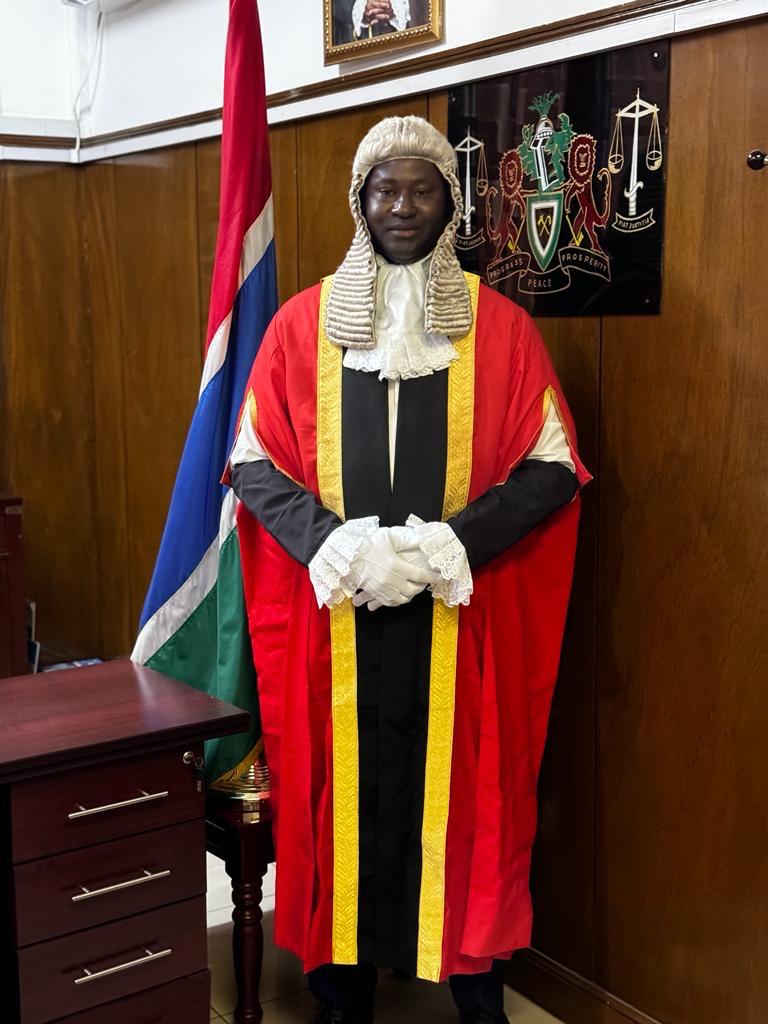
Justice Ebrima Jaiteh of the High Court has ruled in favor of the defense, rejecting a key piece of prosecution evidence in the ongoing criminal trial of The State vs. Abdoulie Sanyang.
The rejected evidence—a statement authored by senior journalist Peter Pocha Gomez of West Coast Radio—was deemed inadmissible after the defense successfully objected to its tendering through the prosecution’s first witness.
During Tuesday’s proceedings, State Counsel S. L. Jobarteh presented the case against Abdoulie Sanyang, who faces charges related to the alleged burning of the APRC bureau and offenses connected to judicial proceedings under Section 99(1)(i) of the Criminal Code. The latter charge stems from comments Sanyang allegedly made on West Coast Radio, describing the ongoing Ousainou Bojang trial as a “clandestine court.” Defense Counsel L. J. Darboe appeared for the accused.
The prosecution’s first witness, Mbye Conteh, a police officer from the Special Investigation Unit, testified that he recognized the accused during an investigation into the statements made on air. Conteh told the court that the radio host, Peter Pocha Gomez, appeared surprised by the accused’s remarks and even attempted to “put him on the right track,” but Sanyang insisted on “revealing the truth.”State Counsel Jobarteh sought to tender both a statement and video footage of the interview, identifying the statement as authored and signed by Peter Gomez. However, Defense Counsel Darboe objected on two key grounds—non-disclosure and lack of proper authorship.
Darboe argued that the statement had not been disclosed to the defense prior to trial, violating the accused’s right to a fair hearing under Section 24(3)(b) of the 1997 Constitution. He further contended that since the statement was written by Peter Gomez, it could not be tendered through a third party, insisting that the document must be introduced by its maker.
In response, State Counsel Jobarteh maintained that the document was relevant and bore the author’s signature, dismissing the defense’s objections as unfounded.After reviewing submissions from both sides, Justice Jaiteh ruled that relevance alone does not establish admissibility, citing Section 3 of the Evidence Act. He emphasized that a document must also meet standards of authorship, authenticity, and proper foundation.
The judge noted that the prosecution failed to lay a proper foundation under Section 96 of the Evidence Act to justify introducing the document through witness Mbye Conteh. He added that the document’s non-disclosure to the defense constituted a serious breach of the accused’s constitutional rights.
Justice Jaiteh summarized his ruling on three key points:
- The prosecution conceded that the document was not disclosed to the defense.
- The witness, Mbye Conteh, was not the maker of the document.
- No legal foundation was established under the Evidence Act to justify its tendering through the witness.
“Accordingly, the objection of the defense is upheld,” Justice Jaiteh declared, ordering that the statement—dated September 19, 2025, and authored by Peter Pocha Gomez—be returned to the prosecution to follow the proper legal process for admissibility.