


By Makutu Manneh
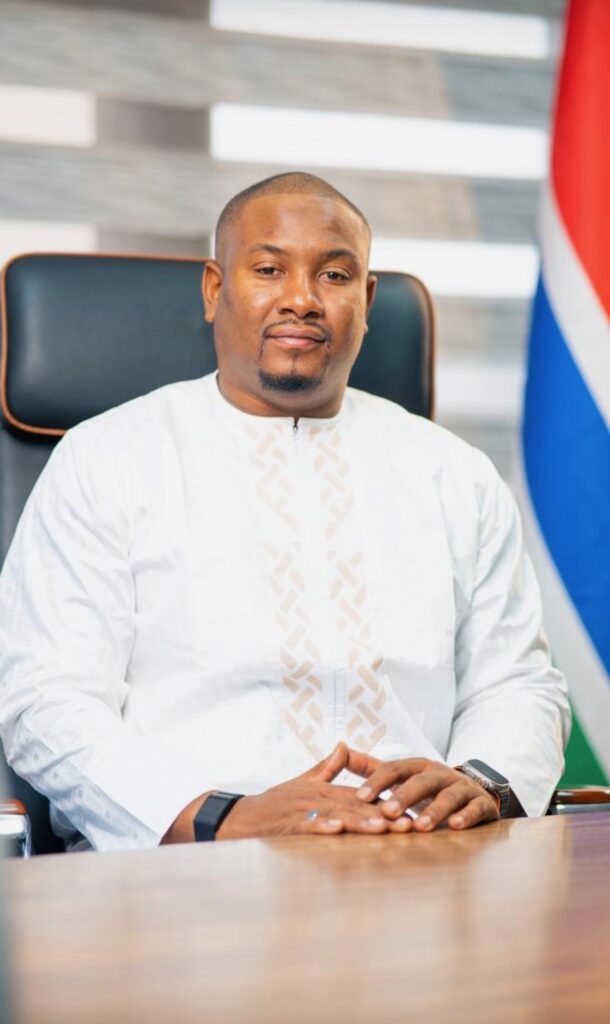
Talib Ahmed Bensouda, the mayor and leader of the opposition UNITE party, has cast himself as a transformational figure in the mold of Singapore’s founding father, saying that if elected president of The Gambia, he intends to remake the nation’s fortunes and cement a generational legacy.
In a recent interview in Atlanta, Mr. Bensouda invoked Lee Kuan Yew, the autocratic but widely admired statesman who guided Singapore from a impoverished post-colonial outpost to one of the world’s wealthiest nations, as the standard against which he hopes to be measured.
“I know this is cliché and people use it a lot,” Mr. Bensouda said, “but I would like to be known as the Lee Kuan Yew of Gambia—the father of modern Singapore. He found Singapore in a state of poverty and turned it into a world-class, top-10 country, and I believe Gambia can achieve that.”
The comparison is an ambitious one. Singapore, a city-state of nearly six million people, ranks among the world’s leading economies by per capita income. The Gambia, a narrow sliver of a country on West Africa’s Atlantic coast with a population of roughly 2.7 million, remains one of the continent’s smaller and less developed nations, heavily reliant on tourism, remittances, and foreign aid.
Mr. Bensouda said he wants younger Gambians to remember him long after he is gone as the president who ushered in an era of modernity and progress—a legacy he framed not merely as political ambition but as a personal obligation to future generations.
He also struck a notably self-accountable tone, a posture uncommon among politicians in a region where incumbents have historically clung to power. If he fails to deliver on his promises in a first term, he said, voters should remove him from office.
“I certainly don’t want to be a president that underdelivers or does not perform,” he said. “If I don’t live up to expectations, I expect Gambians would vote me out and not give me a second mandate.”
Mr. Bensouda has not yet announced a formal presidential campaign, and The Gambia’s next presidential election is scheduled for 2026. President Adama Barrow, who came to power in 2017, ending more than two decades of rule by the authoritarian Yahya Jammeh, has indicated his intention to seek another term.
Comments are closed.