

By Staff Reporter
The UNITE Party and the National Unity Party (NUP) on Tuesday formally signed a Memorandum of Understanding (MoU), forging a political alliance to jointly contest The Gambia’s presidential election scheduled for December 5, 2026.
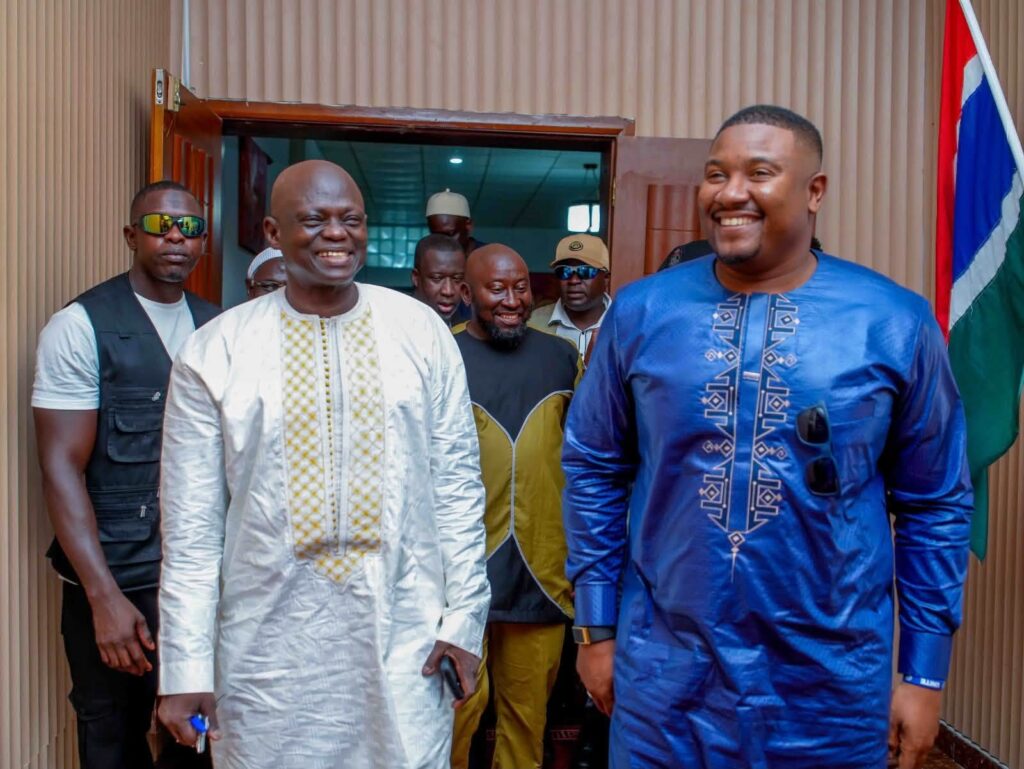
The signing ceremony took place at Pencha MI Hall and was attended by executive members of both parties. Mayor Talib Ahmed Bensouda signed on behalf of UNITE, while Dr. Lamin J. Darboe signed for NUP, with the national presidents of both parties also appending their signatures to the agreement.
The alliance is anchored on what the two parties describe as a shared commitment to democratic governance, national unity, accountable leadership, and inclusive development. Through the agreement, UNITE and NUP are expected to deepen political cooperation and coordinate efforts around policy areas of common interest as the country moves toward the December polls.
Speculation about a possible alliance between the two parties had circulated in Gambian political and media circles in recent days, with both sides initially declining to confirm details of ongoing talks. Tuesday’s signing puts those discussions to rest, formalizing what had been described by sources close to the negotiations as a consensus reached by technical teams from both parties on the terms of the partnership.
The MoU is expected to provide a framework for closer collaboration between UNITE and NUP going forward, including coordination on messaging, strategy, and shared priorities ahead of the vote. Further details on the specific mechanisms of cooperation between the two parties are expected to be announced in the coming days.
The agreement comes amid a broader wave of coalition-building among Gambian political parties in the lead-up to the December 5 election. In recent days, the ruling National People’s Party has struck its own alliance with the Gambia Democratic Congress. The UNITE-NUP pact adds another significant bloc to an increasingly fluid and competitive field ahead of what is widely seen as a pivotal test for the country’s political landscape.
Comments are closed.