

UNITE Now Gambia’s Largest Political Party, Ebrima Dibba Claims Following Nationwide Tour
By Seedy Jobe
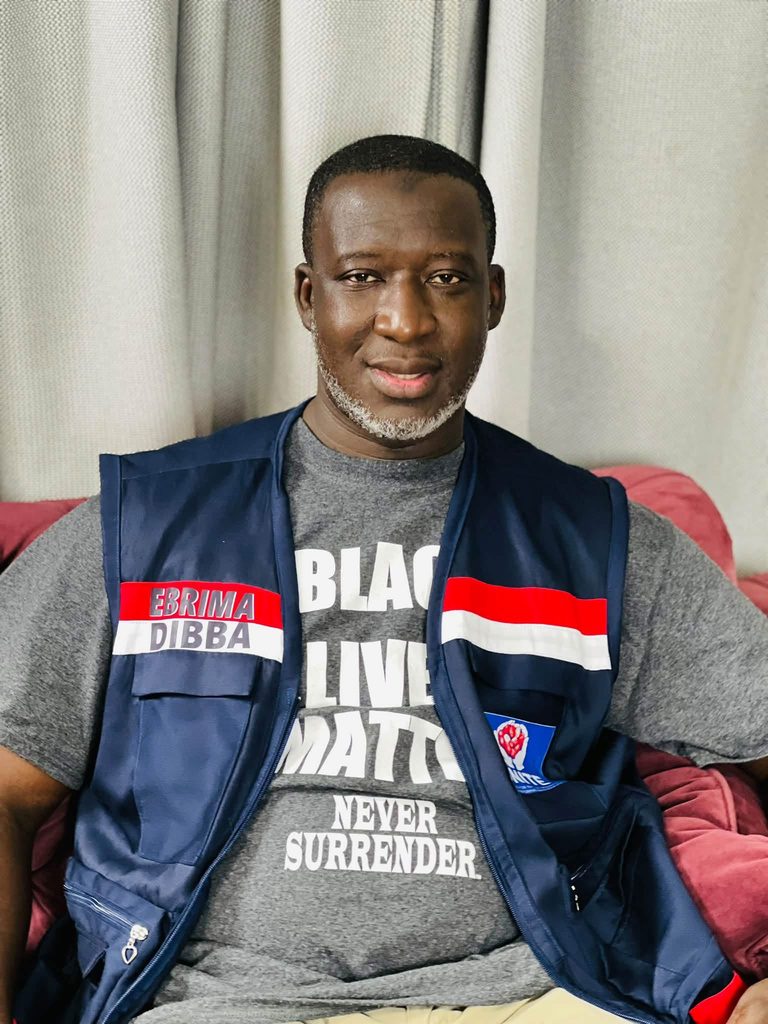
Ebrima Dibba, national president of the Unite for Integrity, Transformation and Equality (UNITE) Party, has claimed that the party’s recent nationwide tour has established it as the largest political organization in The Gambia, citing growing public support and an extensive grassroots structure.
Speaking on Kerr Fatou’s Kaacha program following the party’s nationwide tour, which concluded with a rally in Sanyang ahead of the presidential nomination process, Mr. Dibba said the turnout and organizational strength demonstrated during the tour had confirmed an earlier prediction by party leader Talib Ahmed Bensouda.
According to Mr. Dibba, Mr. Bensouda had declared at the party’s formation that UNITE would become the country’s largest political party by October. He said he had embraced and repeated that prediction, which he now believes has been fulfilled.
“This tour has shown that we are the largest political party in this country,” Mr. Dibba said.
He maintained that the tour demonstrated not only the party’s growing popularity but also the strength of its organizational structure across the country.
Drawing on his three decades of political experience, Mr. Dibba said he had never encountered a political party with a grassroots network as extensive as UNITE’s.
He claimed that the party now has registered members in every village across The Gambia, supported by organizational structures established through regional, constituency, and ward congresses.
Mr. Dibba argued that the party’s nationwide presence and organizational capacity position it as a formidable political force ahead of the December 5 presidential election.
His claims about UNITE’s size and nationwide support were not accompanied by independently verified membership figures or comparative data on other political parties.
Turning to the recent protests by University of The Gambia students over transportation difficulties, Mr. Dibba accused President Adama Barrow’s administration of repeatedly failing to fulfill its promises to students.
He described the demonstrations as an expression of accumulated frustration, arguing that students had reached a breaking point after years of unfulfilled commitments.
According to him, there is a limit to how long people can tolerate repeated assurances without meaningful action.
Mr. Dibba said the government’s handling of student transportation reflected a broader failure to address basic public service needs.
He described it as shameful that, more than six decades after independence, The Gambia continued to struggle to provide adequate transportation for students.
He argued that reliable school transportation was a basic service that many countries, including developing nations, had long established.
The UNITE national president defended the students’ decision to protest, saying citizens should be able to demand immediate action when essential services are not provided.
Responding to President Barrow’s assertion that the government had fulfilled its responsibility by signing a contract for student buses, Mr. Dibba said the statement demonstrated a lack of accountability.
He argued that the government’s responsibility does not end with awarding contracts but extends to monitoring their implementation and ensuring that promised services are delivered.
According to Mr. Dibba, public officials cannot simply sign agreements and distance themselves from the consequences when contractors or implementing agencies fail to meet their obligations.
He maintained that effective governance requires continuous oversight, follow-up and accountability to ensure that public commitments translate into tangible improvements.
Mr. Dibba also rejected suggestions that the student demonstrations were spontaneous or unjustified.
He said students had repeatedly raised concerns about transportation difficulties before resorting to protests, arguing that their actions reflected longstanding grievances that had not been adequately addressed.
The UNITE national president said he regularly witnesses the transportation difficulties faced by university students, describing long queues of students waiting for buses that are often unable to accommodate everyone.
He said buses frequently arrive, collect a limited number of passengers and leave others stranded, even as classes are already underway.
Mr. Dibba argued that such conditions place unnecessary burdens on students and undermine their ability to attend lectures and participate fully in academic activities.
He questioned why The Gambia continued to face such challenges when other developing countries had established transportation services even for nursery school pupils.
Mr. Dibba expressed support for the students’ demonstrations, insisting that peaceful protest remains a legitimate means of holding public officials accountable.
He added that the same principle should apply under a future UNITE administration, saying students and other citizens must retain the right to express dissatisfaction when the government fails to meet its responsibilities.
He maintained that public accountability should not depend on which political party holds power and that citizens should always be free to demand better services from their leaders.
Comments are closed.