

UNITE Accuses Barrow Government of Misrepresenting Commission Findings to Undermine Bensouda’s Presidential Candidacy

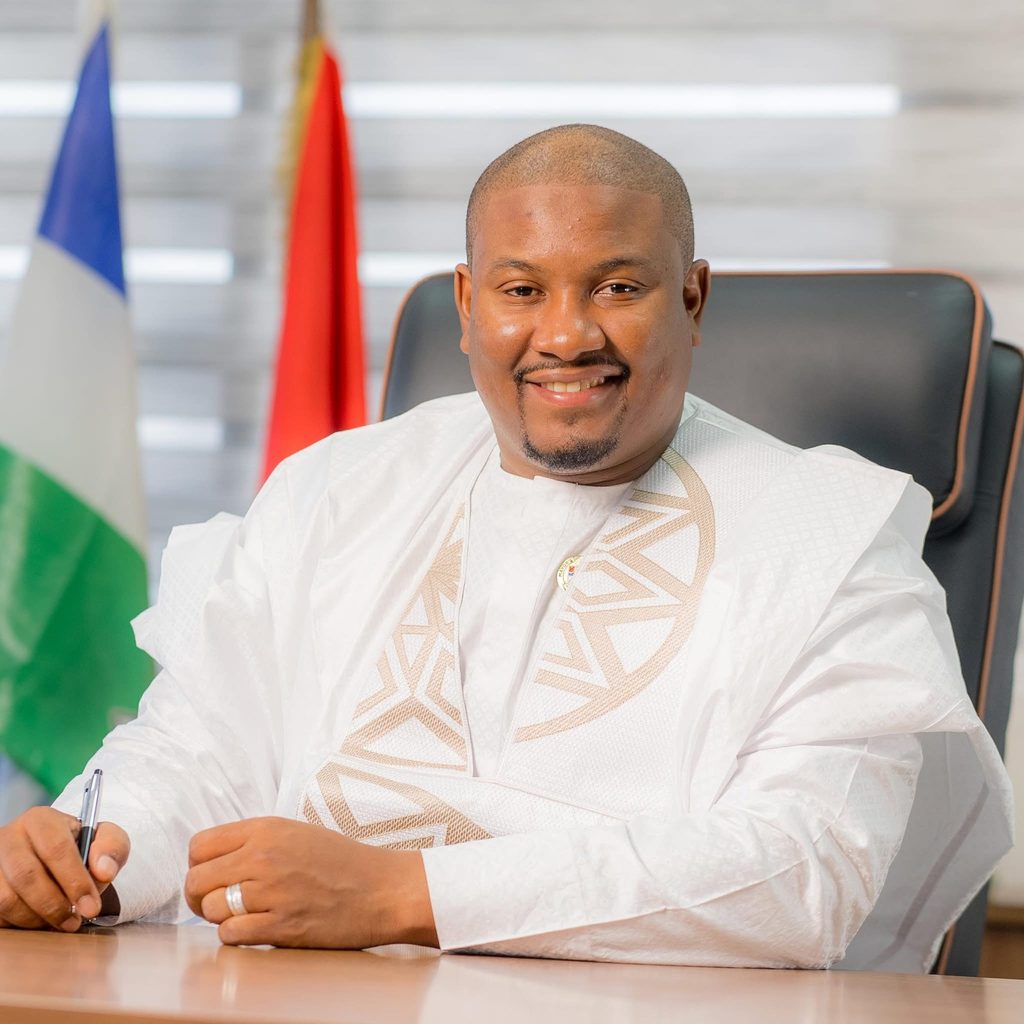
By Staff Writer
The Unite for Integrity, Transformation and Equality (UNITE) Party has accused President Adama Barrow’s administration of deliberately misrepresenting findings of the Local Government Commission of Inquiry in an attempt to undermine the presidential candidacy of Coalition 2026 flagbearer Talib Ahmed Bensouda.
In a five-page letter dated November 2, 2026, addressed to President Barrow through the Chief of Staff at the Office of the President, the party challenged the government’s recently published White Paper on the Kanifing Municipal Council (KMC), arguing that its conclusions mischaracterize the commission’s findings and have no legal bearing on Mr. Bensouda’s eligibility to contest the December 5 presidential election.
The letter, signed by UNITE Secretary General Dembo B. Kanteh and copied to the Independent Electoral Commission (IEC), calls on the president to correct the public record before November 7, when Mr. Bensouda is scheduled to present his nomination papers.
UNITE alleged that the timing of the White Paper’s publication was politically motivated and intended to create doubts about the mayor’s constitutional qualifications.
“UNITE regards the date of publication of the White Paper and the mischaracterizations of the Commission findings therein, as a deliberate misuse of State authority for electoral advantage,” the party stated.
It further accused the government of attempting to mislead voters about Mr. Bensouda’s eligibility ahead of the presidential nomination process.
According to the party, the government’s White Paper on Volume Two of the Local Government Commission of Inquiry report was made available for download on October 29, 2026.
UNITE said the Gambia Printing and Publishing Corporation (GPPC) officially received the documents by pen drive from the Solicitor General on October 30, despite the accompanying letter being dated October 29.
The party also complained that the official commission report had not been made available through GPPC, even though electronic versions were reportedly circulating.
UNITE argued that the circumstances surrounding the publication raised questions about the government’s intentions, particularly because the release came shortly before Mr. Bensouda’s scheduled nomination.
The party cited Sections 90(a) and 90(c) of the Elections Act, 2025, which it said require candidates and political parties to respect the Constitution, observe ethical and moral standards, and comply with the Code of Election Campaign Ethics.
It also referenced Section 91(b), which prohibits the misuse of state resources and public property for political propaganda during election campaigns.
Although acknowledging that the campaign period had not yet commenced, UNITE maintained that the timing of the White Paper was intended to negatively influence the nomination process.
A central argument in UNITE’s response is that a government White Paper does not constitute a judicial ruling or an independent finding of a commission of inquiry and therefore cannot, by itself, disqualify a presidential candidate.
The party cited the Court of Appeal ruling in M. A. Kharafi & Sons Limited v. Attorney General, GCA 046/2019, arguing that a White Paper represents the government’s response to a commission report rather than an enforceable judgment.
According to the letter, the ruling establishes that a White Paper is neither part of the commission’s report nor a judgment or order of a court.
UNITE also invoked Section 203(a) of the Constitution, which requires the president to publish a commission of inquiry report, together with comments and a statement of any action taken or reasons for not taking action.
The party argued that this constitutional authority does not empower the government to make binding findings of personal liability or determine a candidate’s eligibility for public office.
“A White Paper records the Government’s response to a commission report. A White Paper is not itself a court judgment, or a Commission finding, and does not have the force of law,” the letter stated.
UNITE further cited Section 62(3) of the Constitution, which addresses presidential disqualification arising from dismissal from public office, criminal convictions or findings of misconduct, negligence, corruption or improper behavior by a legally established commission or tribunal.
The party maintained that none of the findings against Mr. Bensouda met the constitutional threshold for disqualification.
In challenging the White Paper, UNITE drew a distinction between the commission’s findings concerning Mr. Bensouda’s administrative oversight and the government’s characterization of his conduct.
The party referred to an adverse findings notice served on the mayor on May 12, 2026, which alleged that he had exercised political and executive influence in a manner capable of causing or sustaining irregular commitments, unauthorized expenditure, irregular project direction and financial exposure beyond statutory limits.
UNITE argued that the notice did not establish personal culpability for corruption or financial misconduct.
It also cited the commission report’s legal analysis, particularly Section 1.2.96 on pages 264 to 267, which stated that the evidence did not establish primary accounting-officer liability on the mayor’s part.
According to the passage cited by UNITE, the testimony supported oversight-level exposure, particularly concerning unlawful honoraria payments, audit follow-up failures, procurement-documentation weaknesses and unresolved revenue-control irregularities.
The party further highlighted a passage on page 438 of the report stating that individuals named in Appendix A-8 should not be treated as criminally convicted and that final personal liability should be determined only after notice, an opportunity to respond, verification of transaction records and attribution of responsibility according to each person’s role.
UNITE argued that these qualifications were central to understanding the commission’s conclusions and should not have been disregarded in the government’s response.
“From the Commission Report there is not a single finding against Mr Bensouda which meets the threshold set in section 60(2)(3) of the Constitution,” the letter stated, citing a provision differently numbered from the Section 62(3) reference used elsewhere in the document.
The party insisted that the commission had made no finding capable of disqualifying Mr. Bensouda from contesting the presidency.
UNITE also challenged the government’s interpretation of the commission’s recommendations, accusing the administration of presenting proposed accountability measures as established findings of misconduct.
The party cited Chapter 12 of the commission report, which it said expressly preserved the rights of adversely mentioned individuals to receive notice, respond to allegations and submit supporting documentation.
According to the letter, the commission recommended that any recovery or surcharge proceedings be preceded by transaction-level verification before final assessment or enforcement.
UNITE argued that the government’s White Paper failed to respect those qualifications.
It specifically challenged a passage on page eight of the White Paper in which the government characterized Mr. Bensouda’s conduct as improper behavior and negligence of duty, citing what it described as admissions revealing governance failures and weak compliance.
The party rejected that characterization as false and malicious.
It maintained that the original adverse findings notice referred to conduct capable of causing financial irregularities, rather than a definitive finding that the mayor had personally committed misconduct.
UNITE further argued that the White Paper did not identify specific transactions, supporting evidence or reasons for concluding that Mr. Bensouda was personally liable.
The party also invoked Section 204(1) of the Constitution, arguing that any materially different adverse findings relied upon by the government would have to be lawfully communicated to the affected person, together with the reasons supporting them.
The party called on President Barrow to publicly clarify the distinction between the commission’s findings, its recommendations and the government’s own conclusions.
It also demanded that the president acknowledge that the White Paper has no bearing on Mr. Bensouda’s presidential eligibility and ensure the prompt publication of a certified copy of the commission’s report and related records.
“Mr President, we call on you to correct the public record before the 7th November 2026,” the letter stated.
UNITE urged the president to respect constitutional limitations and refrain from what it described as further misuse of public authority for electoral advantage.
“Such conduct diminishes the dignity of the Presidency and public confidence in the election,” the party said.
It added that the government should not use state institutions to determine which political opponents an incumbent president would face at the polls.
“The State must not be used to choose the opponents an incumbent is prepared to face,” the letter stated.
UNITE also formally notified the IEC of its objections, urging the electoral body to disregard the White Paper when considering Mr. Bensouda’s nomination.
The party asked the commission to treat its correspondence as a complaint under Section 89(2) and 89(3) of the Elections Act, 2025, and address the matter without delay.
“The White Paper is irrelevant to the nomination and must be ignored,” the letter stated.
“The White Paper must not be allowed to influence the nomination process.”
UNITE requested a substantive response from the government before November 7, the date scheduled for Mr. Bensouda’s nomination.
Copies of the correspondence were also directed to the diplomatic community and local and international media organizations.
The party’s allegations come amid growing political tensions ahead of the December 5 presidential election, with the findings of the Local Government Commission of Inquiry becoming a contentious issue surrounding Mr. Bensouda’s candidacy.
UNITE maintains that the government’s interpretation of the commission’s findings is legally flawed and politically motivated. However, the party’s arguments represent its interpretation of the report and relevant constitutional provisions, rather than a judicial determination of Mr. Bensouda’s eligibility.
Comments are closed.