

GFC-UDP Alliance Cites Decade of Governance Failures, Pledges Constitutional and Institutional Reforms

By Seedy Jobe
The Gambia First Coalition (GFC)-UDP-led alliance has outlined what it describes as a decade of governance failures under President Adama Barrow’s administration, pledging sweeping constitutional, institutional, and economic reforms aimed at restoring public confidence and strengthening democratic accountability.
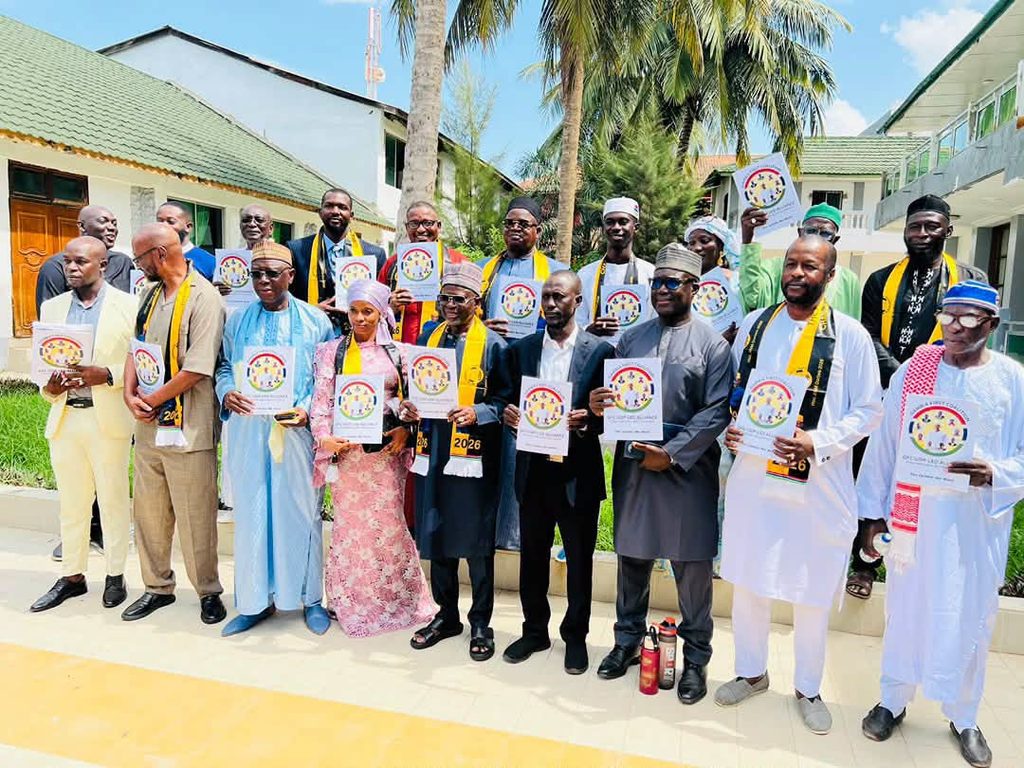
In its manifesto unveiled at Paradise Suites Hotel, the alliance identified a range of structural, institutional, social, and economic challenges that it said have undermined national development over the past decade.
A section of the document titled “Key Issues to be Resolved After 10 Years of NPP Misrule” presents a critical assessment of the government’s record, citing systemic corruption, weak accountability, mounting public debt, declining institutional independence, and worsening economic hardship.
According to the alliance, public confidence in government institutions has deteriorated because of limited transparency, inconsistent decision-making, and inadequate mechanisms for holding public officials accountable.
The manifesto also criticizes delays in constitutional reform and what it describes as insufficient safeguards against executive overreach. It argues that excessive centralization of resources and decision-making has left regional authorities, local councils, and communities heavily dependent on the central government for basic development.
The alliance further identifies weak policy implementation as a major obstacle to effective governance, arguing that government initiatives are frequently announced without adequate costing, monitoring, evaluation, or public reporting.
It also raises concerns about limited diaspora participation in national decision-making despite the significant contributions Gambians abroad make through remittances, investment, and professional expertise.
On the economy, the alliance identifies rising public debt and mounting debt-servicing obligations as major constraints on the government’s ability to invest in essential sectors, including healthcare, education, agriculture, infrastructure, youth employment, and social protection.
The manifesto highlights the rising cost of living, food insecurity, and heavy dependence on imported food as significant challenges facing Gambian households.
It also points to persistent youth unemployment and inadequate job creation, warning that limited economic opportunities have contributed to growing frustration and irregular migration.
The alliance argues that insufficient incentives for private-sector development have particularly affected young entrepreneurs, women, farmers, and small businesses.
In agriculture, it identifies low productivity, inadequate mechanization, poor irrigation systems, high production costs, and limited access to financing as obstacles to food security and economic growth.
Women engaged in agriculture and enterprise, the manifesto states, continue to face barriers to land ownership, credit, equipment, and market access.
The alliance also raises concerns about the performance of the civil service, describing it as weakened by political interference, inadequate merit-based recruitment, insufficient professional training, poor performance management and limited digital modernization.
It argues that security-sector reform remains incomplete, citing gaps in professionalism, personnel welfare, accountability, civilian oversight and border security.
On infrastructure and economic diversification, the manifesto identifies weak industrial and manufacturing capacity, unreliable and expensive electricity, and inadequate digital connectivity, particularly in rural communities.
It also criticizes the country’s heavy reliance on seasonal coastal tourism, arguing that the sector’s broader economic potential remains largely untapped.
The alliance highlights what it describes as poor governance of fisheries, forestry and other natural resources, citing weaknesses in transparency, regulation and sustainable management.
It further identifies inadequate climate-resilience measures in infrastructure and development projects as a growing concern.
In the social sectors, the alliance points to persistent maternal and child health challenges, shortages of medical equipment, inadequate healthcare capacity and high out-of-pocket expenses for patients.
It also identifies gaps in education infrastructure, technical and vocational training, and the development of higher education and innovation systems.
According to the manifesto, these shortcomings have weakened human capital development and limited opportunities for young Gambians to acquire skills relevant to the labor market.
To address the governance challenges, the GFC-UDP alliance has made constitutional reform a central pillar of its proposed democratic restoration agenda.
The coalition pledges to reintroduce the 2020 Draft Constitution within its first 100 days in office, describing the document as a foundation for establishing a modern, democratic and people-centered constitutional order.
It says the proposed reforms would strengthen democratic institutions, prevent a return to authoritarian governance and establish more effective safeguards against abuse of executive power.
The alliance plans to engage civil society organizations, political parties, religious leaders and other stakeholders to build consensus around the constitutional process.
Among its priorities are a clear two-term presidential limit, stronger separation of powers, independent oversight institutions and enhanced constitutional protections for fundamental human rights.
Beyond constitutional reform, the alliance promises comprehensive legislative and institutional changes aimed at strengthening the rule of law and restoring public trust in state institutions.
Its proposals include reinforcing judicial independence, strengthening the National Assembly’s oversight responsibilities and empowering anti-corruption agencies with independent prosecutorial authority.
The manifesto also commits to respecting the institutional autonomy of the Auditor General, Accountant General, Inspector General of Police and Governor of the Central Bank, in accordance with constitutional provisions.
The alliance further pledges to repeal or amend laws it considers restrictive of fundamental freedoms, including provisions of the Public Order Act, Information and Communications Act and Criminal Code.
It also proposes electoral law reforms, stronger anti-corruption legislation and modernization of the judiciary through digital systems, improved infrastructure, professional training and legal education.
Expanded civic education programs would form part of its efforts to strengthen democratic participation and public understanding of constitutional rights and responsibilities.
The alliance has also pledged to overhaul the relationship between central and local governments by transferring greater responsibilities and financial resources to local authorities.
According to the manifesto, the proposed decentralization reforms would give councils greater autonomy to plan and implement development projects while improving accountability for public resources.
Central to the proposal is a structured fiscal decentralization framework designed to provide predictable and sustainable financing for local governments.
The alliance says it would introduce a fixed, formula-based revenue-sharing system, consistent with constitutional provisions, to guarantee local councils a defined share of national revenue.
It argues that predictable funding would enable councils to undertake multiyear development investments, improve waste management, maintain local roads and strengthen essential community infrastructure.
The manifesto also proposes capacity-building initiatives to improve local government administration, financial management and service delivery.
Through these reforms, the alliance says it intends to reduce excessive dependence on central government, strengthen grassroots participation and ensure that development resources are distributed more transparently and equitably.
The proposals form part of the GFC-UDP alliance’s broader electoral platform ahead of the December 5 presidential election, as it seeks to present constitutional reform, institutional accountability and economic recovery as central priorities of an alternative government.
Comments are closed.