


By Makutu Manneh
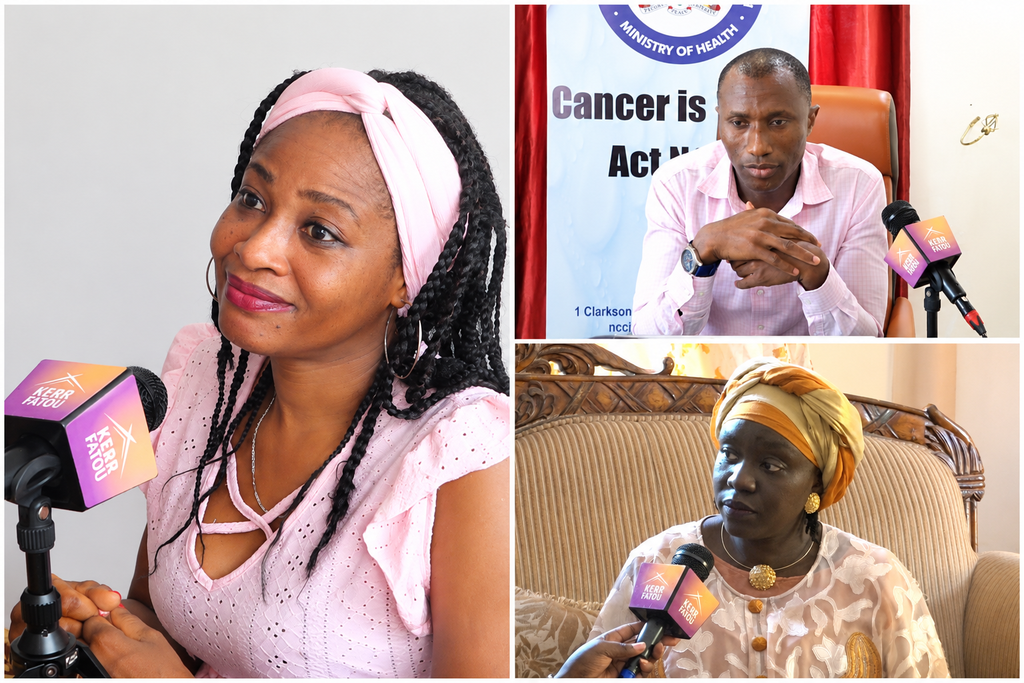
For Princess Adjoba Nyaniba, surviving breast cancer was more than overcoming a life-threatening illness. It was an experience marked by uncertainty, emotional distress, and financial hardship—challenges that continue to shape her life years after treatment.
Although she survived the disease, her medical journey is far from over. She must undergo annual follow-up examinations, a routine complicated by the limited availability of mammography services in The Gambia. On her doctors’ advice, she continues to retain a tube inserted during her treatment until the medically recommended time for its removal.
Looking back, Ms. Nyaniba recalled the shock of learning that the symptoms she had experienced were signs of breast cancer.
“To be honest, I was shocked and surprised. All the time I was doing screening and going up and down, I never thought that was breast cancer,” she said.
She described experiencing sudden, intense pain but said she never associated it with cancer.
“But I never thought for once that was breast cancer. But I had hope. When the doctors told me the stage it was at, they said they could help to cure it,” she recalled.
For Ms. Nyaniba, that hope became an important part of her recovery. But she emphasized that maintaining a positive outlook was not something she could accomplish alone.
She credited emotional encouragement, moral support, and the reassurance of those around her with helping her navigate the difficult experience.
She said cancer patients need more than medical treatment. They also need compassion, understanding, and sustained support from their families and communities.
Beyond the physical and psychological toll, Ms. Nyaniba described the financial burden of cancer treatment as another struggle that can be just as overwhelming as the disease itself.
She noted that patients often depend on relatives, friends, and well-wishers to meet treatment expenses, but that assistance can diminish as the costs accumulate.
“Sometimes the people helping you get fed up,” she said.
She also expressed concern about the stigma and insensitive treatment some cancer patients experience, warning that hurtful words and social isolation can deepen their suffering.
Ms. Nyaniba urged families and communities to treat patients with dignity and compassion, reminding them that a cancer diagnosis does not diminish a person’s worth.
She encouraged women battling breast cancer to speak openly about their experiences and seek assistance rather than endure the challenges in silence.
The difficulties described by Ms. Nyaniba reflect broader challenges confronting cancer patients in The Gambia, where limited diagnostic services, shortages of specialized medical personnel, and expensive treatment continue to affect access to care.
Dr. Kebba S. Bojang, Programme Manager of the National Cancer Control Programme at the Ministry of Health, acknowledged that while some cancer diagnostic services are available, the country’s capacity remains inadequate.
According to Dr. Bojang, mammography services are available at only three facilities known to him: Edward Francis Small Teaching Hospital (EFSTH), Afrimed and Bafrow.
EFSTH serves as the country’s main public referral hospital, receiving suspected breast cancer cases from other health facilities.
Once cancer is suspected, patients require laboratory investigations and pathology services to confirm the diagnosis before appropriate treatment can begin.
However, Dr. Bojang said access to essential cancer medicines remains a significant challenge.
Although some chemotherapy drugs are available locally, he explained that supplies are insufficient to meet patients’ needs. Many of the medicines are expensive, imported and subject to inconsistent availability.
The situation is further complicated by the absence of radiotherapy services, an essential component of treatment for many cancer patients.
Dr. Bojang confirmed that The Gambia currently has no operational radiotherapy facility, forcing patients who require the service to seek treatment outside the country.
He said the government, working with development partners, is making efforts to establish the country’s first radiotherapy center, with a location already identified at a general hospital.
Beyond the lack of equipment and medicines, The Gambia also faces a critical shortage of healthcare professionals trained in cancer management.
Dr. Bojang said the country currently has only one trained oncologist, alongside shortages of oncology nurses, oncology pharmacists and other specialized personnel.
To address the shortage, the Ministry of Health has begun supporting the training of additional professionals abroad.
Two Gambian doctors have been sent to Ghana for radiotherapy training, while a medical physicist is undergoing training in Morocco. Another medical physicist is expected to travel to Ghana for further training.
In the meantime, cancer patients continue to receive care from general medical practitioners and specialists in surgery, gynecology and internal medicine.
Dr. Bojang acknowledged that expanding cancer services presents substantial financial challenges, even for the government.
“Cancer treatment is expensive, even for the Ministry of Health. But efforts are being made to ensure that drugs are provided, along with services, investigations, treatment and human resources. This is why the National Cancer Control Programme was established,” he said.
Despite the limitations in treatment capacity, Dr. Bojang identified late diagnosis as one of the most pressing obstacles to improving cancer outcomes in The Gambia.
He said many patients, including those with breast cancer, seek medical attention only after their disease has progressed to an advanced stage.
By that point, treatment becomes more complicated, more expensive and, in some cases, less effective.
He attributed the problem partly to limited public awareness and inadequate access to screening services.
According to Dr. Bojang, improving awareness of cancer symptoms and encouraging early medical examinations could help more patients receive timely diagnoses and appropriate treatment.
He stressed the importance of public education in helping people recognize warning signs and seek professional medical advice before their conditions worsen.
As the government works to expand cancer services, civil society organizations are also playing an important role in raising awareness and supporting patients.
Among them is Cancer Confrontation Care and Consolation The Gambia (C3G), an organization advocating for improved cancer prevention, diagnosis and treatment.
Soma Njie, a communications expert and trustee of C3G, said one of the questions frequently raised about cancer in The Gambia is whether the disease is becoming more widespread.
She cautioned against assuming that an increase in diagnosed cases necessarily means cancer prevalence is rising.
According to Ms. Njie, greater public awareness and improvements in diagnostic services may be contributing to the identification of cases that previously would have gone undetected.
For her, the priority is ensuring that cancers are detected early enough for patients to have better prospects of successful treatment.
Ms. Njie traced the origins of C3G’s advocacy to a tragic incident involving a four-year-old boy who was diagnosed with advanced kidney cancer.
She recalled that Dr. Jah brought a group of concerned individuals together about a decade ago after the child was brought to him at a late stage of the disease and subsequently died.
“Dr. Jah was the gentleman who brought us together 10 years ago after a four-year-old boy was brought to him with late-stage kidney cancer. Unfortunately, the boy passed away,” she recounted.
Ms. Njie said the child’s death exposed serious gaps in The Gambia’s cancer care system and demonstrated the need for collective action.
The experience, she explained, encouraged ordinary citizens and professionals to work together to support government institutions, healthcare providers and families affected by cancer.
Ms. Njie identified three priorities in improving breast cancer care in The Gambia: affordable and reliable diagnostic services, consistent access to essential medicines and financial assistance for patients undergoing treatment.
She acknowledged that cancer treatment is expensive worldwide but said the burden is particularly severe in The Gambia because the country depends heavily on imported medicines.
Cancer drugs, she explained, must often be purchased in foreign currencies, particularly US dollars, exposing patients and healthcare providers to high procurement costs.
Importation delays and inconsistent supplies can also disrupt treatment, adding further uncertainty for patients and their families.
For households already struggling to meet basic needs, the financial demands of repeated medical examinations, medication and prolonged treatment can become overwhelming.
Ms. Njie emphasized that addressing these challenges requires sustained collaboration among the government, healthcare professionals, civil society organizations and the wider public.
For survivors such as Ms. Nyaniba, the challenges of breast cancer do not end when treatment is completed. Follow-up examinations, financial pressures and emotional recovery remain part of everyday life.
Her experience also highlights the importance of sustained support for patients whose medical needs continue long after public awareness campaigns have ended.
While October is internationally recognized as Breast Cancer Awareness Month, patients and advocates say the need for accessible diagnosis, affordable treatment and emotional support extends throughout the year.
For The Gambia, the challenge is not simply raising awareness of breast cancer but ensuring that patients can obtain timely, affordable and effective care.
For Ms. Nyaniba and others confronting the disease, survival should not depend on the ability to raise money, travel abroad for treatment or rely indefinitely on the generosity of relatives and well-wishers.
Their experiences underscore a wider concern: that without greater investment in cancer services, early detection and patient support, too many Gambians will continue to face not only the threat of cancer but also the financial and emotional burden of trying to survive it.
Comments are closed.