

Dr. Ceesay Denies Government Rushed White Paper to Block Bensouda’s Presidential Bid

By Fatou Sillah
The Minister of Information, Media and Broadcasting Services, Dr. Ismaila Ceesay, has dismissed allegations that the government deliberately expedited the publication of its White Paper on the Local Government Commission of Inquiry to prevent Coalition 2026 presidential candidate Talib Ahmed Bensouda from contesting the December 5 election.
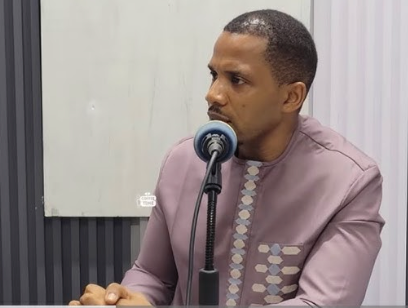
Speaking in an interview with West Coast Radio, Dr. Ceesay defended the timing and procedures surrounding the publication, insisting that the process followed established constitutional requirements and had no connection to Mr. Bensouda’s presidential ambitions.
He explained that the commission was established approximately two and a half years ago, when Mr. Bensouda was serving as mayor of the Kanifing Municipal Council (KMC) and had not publicly declared any intention to seek the presidency.
According to the minister, the inquiry was established to investigate allegations of corruption and administrative irregularities in local government institutions, rather than to target particular individuals.
“The purpose of this commission is to fight corruption and bring sanity into local governance. It is not intended or established to witch-hunt anybody,” he said.
Dr. Ceesay’s remarks followed accusations by Mr. Bensouda and his UNITE Party that the government had deliberately timed the release of the White Paper to coincide with the presidential nomination process, potentially undermining his eligibility to contest the election.
Dr. Ceesay said the commission submitted its report to President Adama Barrow in May, after which the government established a multisectoral committee chaired by the Permanent Secretary at the Ministry of Lands to review its findings and advise on an appropriate government response.
He explained that the committee completed its work approximately one or two months before the White Paper was presented to Cabinet for consideration.
According to the minister, Cabinet subsequently devoted three consecutive days to reviewing the commission’s report and the committee’s recommendations.
Following those deliberations, the Attorney General and Minister of Justice were tasked with conducting a final technical review of the document before its publication.
Dr. Ceesay maintained that the process was extensive and involved several government institutions, making it inaccurate to suggest that the White Paper had been hastily prepared for political purposes.
He further explained that the Constitution requires the government to respond to a commission of inquiry report within six months of receiving it.
In this case, he said, the constitutional deadline was November 11, 2026, meaning the government was legally required to complete the process before that date.
The minister argued that the publication schedule was therefore dictated by constitutional obligations rather than the Independent Electoral Commission’s presidential nomination timetable.
Responding directly to Mr. Bensouda’s allegation that the government acted after the IEC announced its election timetable, Dr. Ceesay insisted that the review process had begun long before the nomination schedule was released.
“It did not work like that. This shows his ignorance of how government works,” he said.
He maintained that the establishment of the commission, the submission of its findings, the multisectoral review and Cabinet deliberations were all part of a process that preceded the current controversy over Mr. Bensouda’s presidential candidacy.
Dr. Ceesay also rejected claims that the White Paper had been released in the middle of the night to influence public opinion or create uncertainty surrounding the mayor’s eligibility.
He said the document was formally gazetted and uploaded to the websites of the Ministry of Justice and the Ministry of Information.
According to him, his ministry also issued a press release shortly after 8 a.m. announcing its publication.
The minister argued that these steps demonstrated that the document had been released through official government channels rather than through any covert or irregular process.
Dr. Ceesay also dismissed allegations that the government had altered or manipulated the commission’s findings before publishing its White Paper.
He said the preparation of the government’s response involved the commissioners, the multisectoral committee and Cabinet, arguing that the officials involved would not permit the report to be doctored or misrepresented.
The minister maintained that the review process was designed to ensure that the government’s response accurately reflected the commission’s work and complied with the relevant legal and administrative requirements.
He rejected suggestions that the White Paper was intended to damage Mr. Bensouda politically, describing it instead as part of the government’s broader efforts to strengthen accountability and address corruption within local government institutions.
Dr. Ceesay argued that Mr. Bensouda should support the process if he was genuinely committed to combating corruption and improving governance.
The minister’s comments come amid a dispute between the government and UNITE over the implications of the White Paper for Mr. Bensouda’s presidential candidacy.
UNITE has accused the administration of mischaracterizing the commission’s findings and attempting to use the document to undermine its candidate ahead of the November 7 nomination date. The party maintains that the White Paper has no legal bearing on Mr. Bensouda’s eligibility to contest the presidency.
Dr. Ceesay, however, insists that the publication followed a constitutionally mandated process and was neither rushed nor politically motivated.
Comments are closed.