

“What Has Never Happened Will Not Happen Here,” Dibba Warns Against Bensouda’s Disqualification
By Seedy Jobe
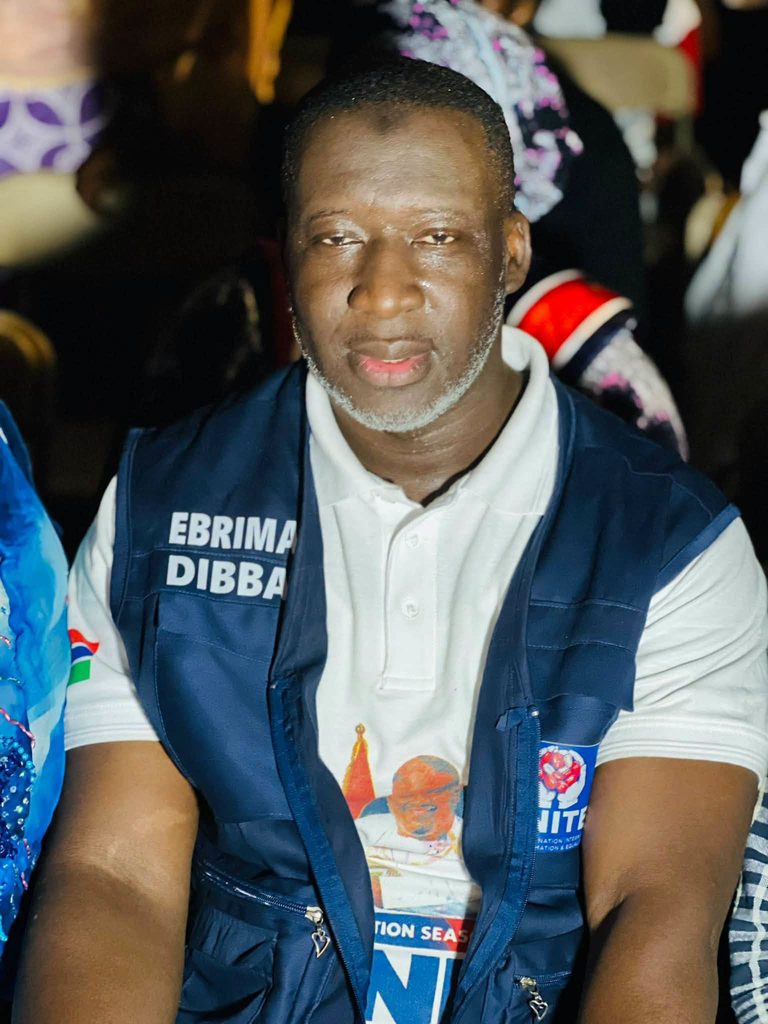
Ebrima Dibba, national president of the UNITE Party, has warned against any attempt to disqualify Coalition 2026 presidential candidate Talib Ahmed Bensouda from the December 5 election, describing such a move as an act of dictatorship that his party would refuse to accept.
Speaking on Kerr Fatou’s Kaacha program, Mr. Dibba addressed the controversy surrounding the government’s White Paper on the findings of the Local Government Commission of Inquiry and its potential implications for Mr. Bensouda’s presidential eligibility.
Mr. Dibba accused Attorney General and Minister of Justice Dawda Jallow of attempting to shift responsibility for determining Mr. Bensouda’s eligibility to other institutions rather than providing a clear legal position.
He expressed confidence in Independent Electoral Commission (IEC) Chairman Joseph Colley, whom he described as knowledgeable and experienced in legal matters.
According to Mr. Dibba, the IEC chairman would not allow the commission or its staff to be used to carry out a decision that the government itself had been unwilling to make.
He argued that the government’s White Paper failed to provide a clear and definitive basis for disqualifying Mr. Bensouda, instead creating confusion over the legal implications of the commission’s findings.
On that basis, he maintained that there was no justification for preventing the Coalition 2026 candidate from participating in the presidential election.
Mr. Dibba dismissed the possibility of Coalition 2026 presenting an alternative presidential candidate, insisting that Mr. Bensouda remained the party’s only choice.
He said he had no contingency plan and would rather withdraw from politics than support another candidate if Mr. Bensouda were disqualified.
According to him, he would resign from political activities and return to his family rather than participate in an election under such circumstances.
Mr. Dibba argued that it would be fundamentally unfair to allow a political movement to spend five years organizing, mobilizing supporters and investing substantial personal and financial resources, only to prevent its candidate from contesting an election barely a month before polling day.
He described such a development as both undemocratic and an abuse of political power.
Drawing on The Gambia’s political history, Mr. Dibba argued that preventing a major opposition candidate from contesting an election under the circumstances he described would set a dangerous precedent.
He referenced political figures spanning different periods of the country’s history, including Pierre Njie, former President Sir Dawda Kairaba Jawara, United Democratic Party leader Ousainu Darboe and former President Yahya Jammeh.
Mr. Dibba maintained that no comparable attempt had been made to exclude a presidential candidate in the manner he feared under the current administration.
“What has never happened will not happen here,” he declared.
He warned that any decision to prevent Mr. Bensouda from being nominated would represent a serious setback for the country’s democratic progress.
Mr. Dibba emphasized that UNITE was not a violent political party and had no intention of instigating unrest.
However, he insisted that the party would not passively accept what it considered an unlawful attempt to exclude its presidential candidate.
He said party members had a right to defend themselves if attacked, stressing his personal determination to protect himself, his candidate and his political organization.
Mr. Dibba acknowledged that he could not control the consequences of any confrontation, including threats to his own life, but maintained that he would not abandon his political convictions.
He reiterated that the party had no alternative candidate and remained confident that Mr. Bensouda would be nominated.
Nevertheless, he warned that if the nomination were blocked, the party’s response would be to reject the decision.
Mr. Dibba said he could not predict what such resistance might lead to and expressed hope that the situation would never arise, warning that the consequences could be damaging to the country.
He maintained that responsibility for the country’s political stability rested with those entrusted with administering the electoral process fairly and in accordance with the law.
Mr. Dibba also reminded President Adama Barrow that political authority derives from the consent of the governed and does not belong permanently to any individual.
He argued that Mr. Barrow possessed no presidential authority before assuming office and would cease to exercise that authority once he left the presidency.
According to Mr. Dibba, political leaders must recognize that the power they exercise is entrusted to them by citizens and remains subject to democratic accountability.
His remarks come amid growing controversy over the government’s White Paper and questions raised by opposition figures about whether its findings could affect Mr. Bensouda’s nomination.
While Mr. Dibba maintained that there was no legal basis for disqualification, the IEC remains responsible for determining whether presidential aspirants satisfy the applicable nomination requirements.
The UNITE national president insisted that Coalition 2026 would proceed with Mr. Bensouda as its presidential candidate, expressing confidence that the commission would uphold the law and allow him to contest the December 5 election.
Comments are closed.