

NAWEC Signs $11.9M Deal With TBEA, Firm Linked to 2017 First Lady Foundation Controversy

By Makutu Manneh
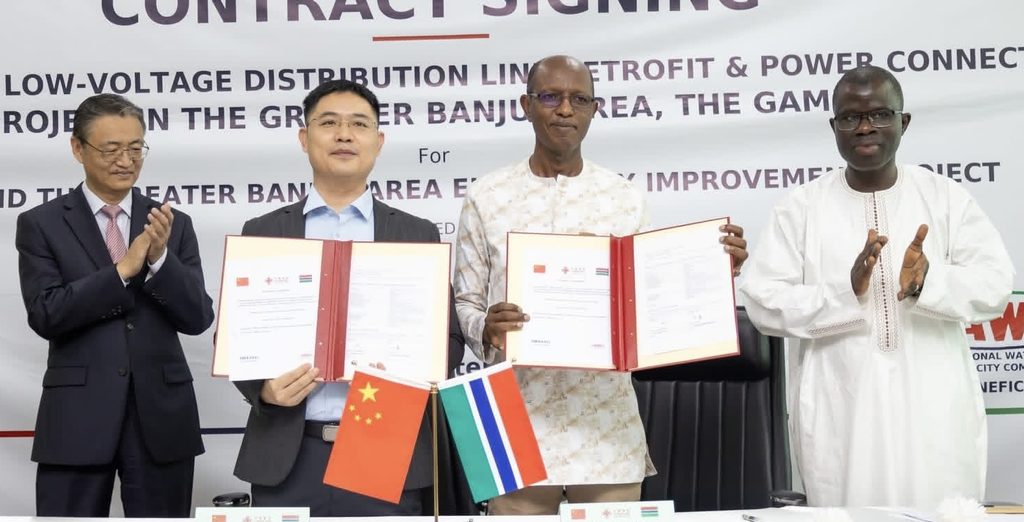
The National Water and Electricity Company has signed an approximately $11.9 million contract with Chinese electrical equipment manufacturer TBEA Company Limited for a project aimed at upgrading electricity infrastructure and expanding access across the Greater Banjul Area.
The agreement, signed by NAWEC on behalf of the Gambian government, is part of the China-Aid Greater Banjul Area Electricity Improvement Project and is expected to be implemented over 18 months, according to a statement from the Ministry of Petroleum, Energy and Mines.
The ministry said the project will rehabilitate medium- and low-voltage electricity networks, install modern equipment and expand connections throughout the Greater Banjul Area.
More than 40 communities are expected to be electrified, benefiting an estimated 80,000 people. The ministry said thousands of households, businesses, schools and health facilities are expected to gain improved access to electricity.
Speaking at the signing ceremony, Petroleum, Energy and Mines Minister Nani Juwara thanked the government and people of the People’s Republic of China for what he described as their continued support for The Gambia’s socioeconomic development.
Juwara said the government remains committed to achieving universal electricity access, describing reliable and affordable power as an important part of the country’s development agenda.
NAWEC Managing Director Gallo Saidy said the project’s success would ultimately be measured by improvements experienced by consumers, including more reliable electricity, fewer outages and greater access for households and businesses.
He said improved electricity services would also support economic activity, education, healthcare and the broader well-being of communities.
China’s ambassador to The Gambia, Liu Jin, described electricity as one of the two countries’ five priority areas of cooperation. He said the project is expected to increase the capacity of power lines, reduce transmission losses and address unstable supply and inadequate electricity coverage in parts of the region.
Liu expressed confidence that TBEA would complete the work to the required standards and encouraged technical exchanges and vocational training to strengthen the country’s local technical workforce.
“The project represents another milestone in the enduring partnership between The Gambia and the People’s Republic of China and reflects continued efforts to strengthen electricity access and improve power supply for communities across the Greater Banjul Area,” the ministry said.
The latest agreement also brings renewed attention to TBEA’s previous dealings in The Gambia and a controversial financial transaction involving the Fatoumatta Bah-Barrow Foundation, established by First Lady Fatoumatta Bah-Barrow.
In December 2017, TBEA transferred more than GMD 33 million to an account belonging to the foundation at a time when the Chinese company was pursuing an electricity contract involving NAWEC. The transaction subsequently drew public scrutiny over the relationship between the payment and TBEA’s business interests in the country. Contemporary accounts reported that the foundation announced an investigation into the transaction.
The transaction prompted allegations from opposition figures and government critics that the payment could have improperly influenced TBEA’s dealings with the government. Those allegations were not established merely by the existence of the transfer, and calls were made at the time for authorities to investigate the circumstances surrounding it.
Accounts of the transaction said most of the money — about GMD 33 million— was in connection with President Adama Barrow’s official visit to China in December 2017. A later explanation said the money had been provided to finance the presidential trip and was routed through the foundation because transferring it through a government account at the Central Bank would have caused a delay.
The earlier controversy is separate from the newly announced $11.9 million China-Aid electricity improvement project. The Ministry of Petroleum, Energy and Mines says the new project is intended to strengthen the Greater Banjul Area’s electricity network and expand reliable power access to communities across the region.
Comments are closed.