


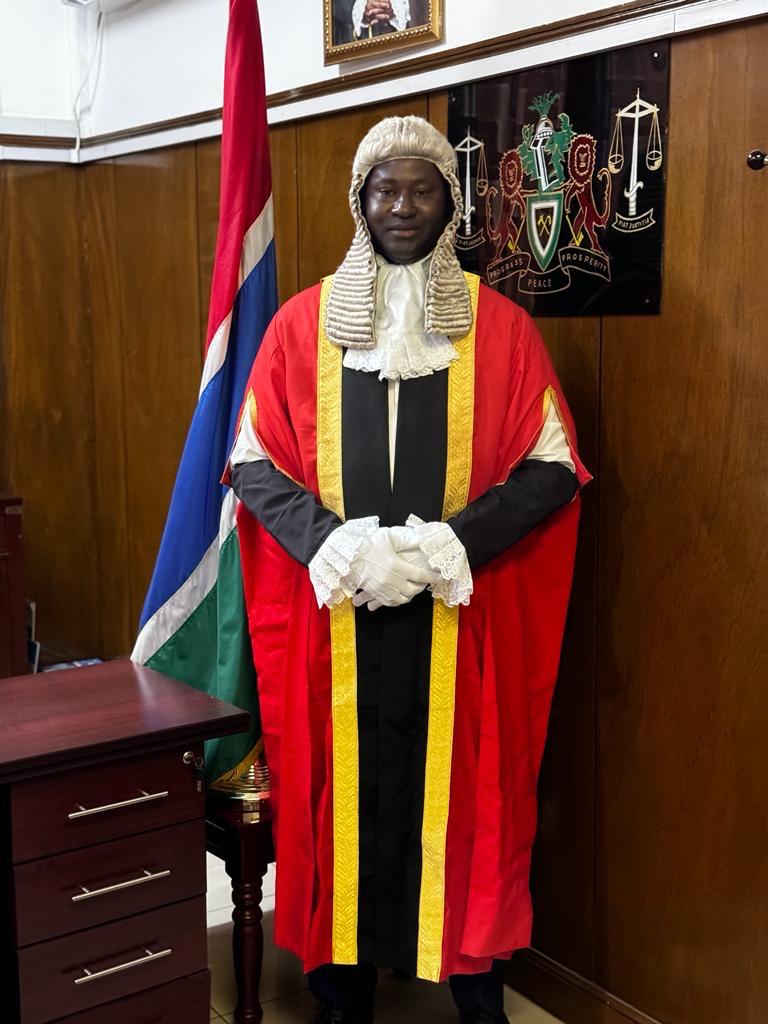
The High Court struck down two separate parole applications this week, ruling that a new statutory mechanism intended to allow early release for certain prisoners is not yet operational.
Justice Jaiteh dismissed the requests from Muhammed Jammeh and Ensa Jammeh, both of whom appeared in person to petition for release under Section 258 of the recently enacted Criminal Procedure Act 2025. The applicants argued that they met the legal criteria for parole: neither was serving a capital sentence, both had demonstrated good behavior in custody, and each had served at least one-third of their prison term.
Despite acknowledging their rehabilitative efforts, Justice Jaiteh ruled that the applications were “premature and legally incompetent,” citing the government’s failure to implement the regulations necessary to make the statutory parole system functional.
“While the law exists on paper, the infrastructure to support it does not,” Justice Jaiteh said, referencing Section 258(4) of the Act, which requires that any parolee participate in a rehabilitation program at a government-prescribed facility. “The Court cannot lawfully suspend a sentence and release a prisoner on parole in the absence of the mandatory statutory framework governing post-release rehabilitation.”
The judge emphasized that the statute’s use of the word “shall” signals a mandatory obligation rather than a discretionary guideline. Although the court retains limited discretion under subsection (3) to grant parole, Justice Jaiteh said it cannot bypass the legislature’s conditions without engaging in “judicial legislation” and committing an “impermissible usurpation” of Parliament’s authority.
The applications were struck out “without prejudice,” allowing the Jammehs to reapply once the Ministry of Justice and other relevant authorities establish the operational framework required for the parole system.
Until then, the promise of parole under the 2025 Act remains largely theoretical, existing on paper but inaccessible in practice.
Comments are closed.