

Touray Says ‘Winner-Takes-All’ System Drives Alliances of Convenience, Not National Interest
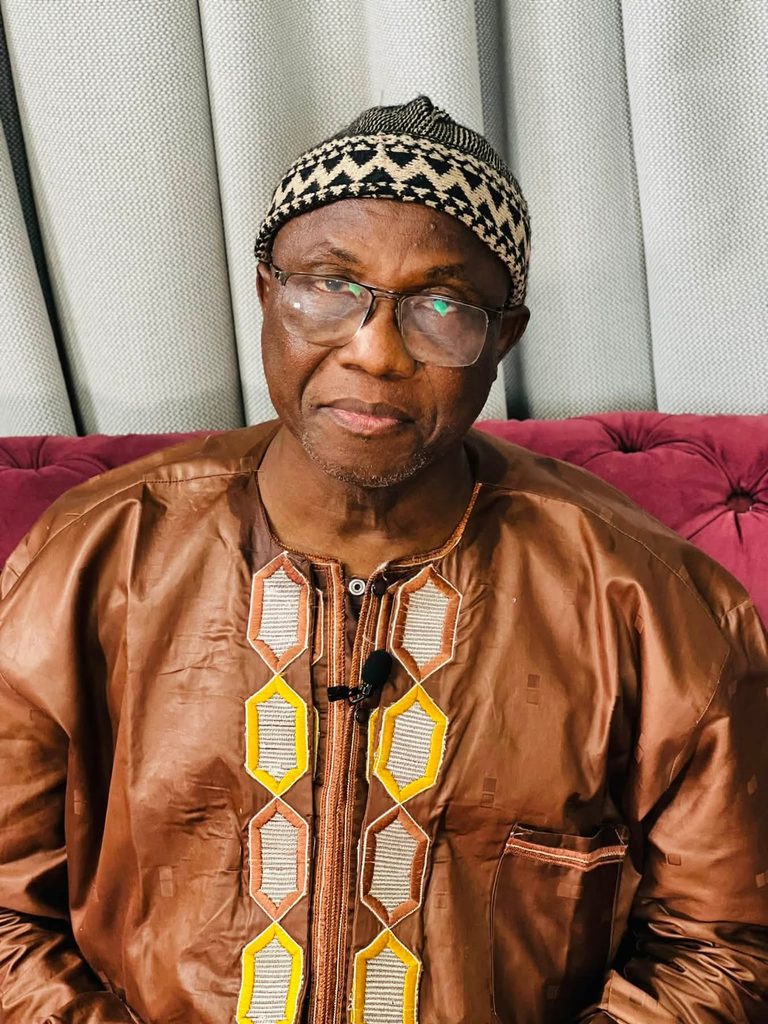
Suwaibou Touray, Secretary General, PDOIS.
By Seedy Jobe
PDOIS Secretary General and Party Leader Hon. Suwaibou Touray says The Gambia’s history of political alliances has been heavily influenced by a winner-takes-all electoral system that gives incumbents significant advantages and encourages coalitions formed for political convenience rather than the national interest.
Touray made the remarks during an appearance on QTV’s Decision 2026 program, which examined whether political alliances in The Gambia are driven by national interest or self-interest.
Asked whether political parties apply a national-interest test when negotiating alliances, Touray said PDOIS favors what he described as a “coalition of necessity,” an alliance formed around the country’s needs and a clearly defined political program.
He acknowledged that politicians across the spectrum often claim to be acting in the national interest but said it ultimately falls to the public to examine their actions and determine whether those claims are credible.
Touray traced the problem to the political system established after independence, arguing that The Gambia developed a winner-takes-all culture in which a candidate or party that secures a simple majority assumes control of government, even when the margin of victory is narrow.
According to Touray, that system has historically given governing parties considerable advantages because incumbents have access to state resources- human, material, and financial- that can help them maintain political dominance.
He cited the era of the People’s Progressive Party, saying the ruling party used its position to attract members of opposition parties, including the United Party and the party associated with Garba Jahumpa, by offering government positions. At a time when the number of educated Gambians was relatively small, he said, joining the ruling party could become an avenue to employment and public office.
Recalling his own experience as a young supporter of the National Convention Party, Touray alleged that government vehicles belonging to the Public Works Department were used to transport ruling-party supporters to polling stations, while people identified with the opposition were denied similar access.
“So therefore, the ruling party has the edge. So it gives them a very easy way of winning,” Touray said.
Touray distinguished between what he called a “coalition of convenience” and a “coalition of necessity.”
A coalition of convenience, he said, is largely concerned with gaining access to government and sharing the benefits of political power. By contrast, he said, a coalition of necessity should be driven by a common program, supported by a concept note, and grounded in an agreed vision of the national interest.
Touray said such an alliance should bring together like-minded political actors around clearly defined objectives rather than simply unite parties for electoral advantage.
Asked whether PDOIS had been holding out for an alliance led by the party — and why it had not joined initiatives such as the Gambia First Coalition or Coalition 2026 — Touray said that was not necessarily the case.
He said that during the PDOIS congress in January, veteran party figures Halifa Sallah and Sidia Jatta announced that they had stepped down from their positions within the party to pursue an initiative aimed at bringing political parties together in a broad coalition for a political transition.
According to Touray, PDOIS agreed to give that initiative time to consult with the country’s political parties.
He said that when other groups subsequently approached PDOIS, the party informed them that it remained interested in a coalition but had already committed to allowing the initiative led by Sallah and Jatta to run its course.
Touray said PDOIS is seeking what he described as a progressive coalition capable of transforming The Gambia’s electoral, economic, political, legal and constitutional systems. He said similar objectives were part of the agenda surrounding the 2016 coalition but were ultimately not achieved.
Asked whether PDOIS was therefore waiting for the outcome of the Sallah-Jatta initiative, Touray said the party wanted to see how the effort develops before determining its next move.
If that initiative does not succeed, he said, PDOIS would return to the drawing board and assess other existing political alliances, including the UMC and UDP initiatives.
Touray said the party would examine which of those platforms most closely aligns with its program and what it considers the national interest before deciding whether — and with whom — to align.
Comments are closed.