


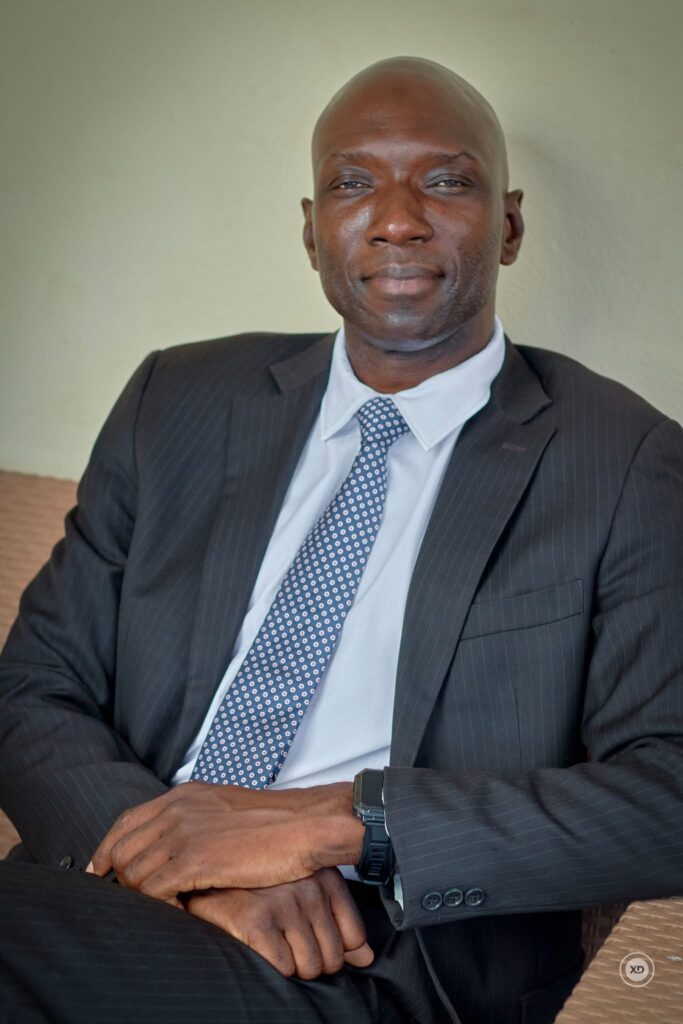
Dr. Ousman Gajigo, Political/ Economist
By : Dr. Ousman Gajigo
The Minister of Finance, Mr. Seedy Keita, recently appeared in the media, where he tried to spin a narrative at odds with reality regarding The Gambia’s public debt. But it is hard to spin reality about the size and structure of a subject such as public debt when so much is well documented. The fact is that the total size of the debt ballooned under the Adama Barrow administration. In addition, its composition changed in significant ways that are negative for the country.
In 2016, the country’s total public debt was about D60 billion. Today, the public debt is well over D140 billion – more than double within ten years. No matter which way one looks at it, the Adama Barrow administration has added more to the debt than earlier administrations did. So the legacy of earlier debt is not a major driver of the current public debt.
The external component of the public debt, which must be settled in hard currency and cannot be inflated away like domestic debt, has also exploded under the Adama Barrow administration. In 2016, the external debt was higher than the domestic debt. Today, external debt makes up a far higher proportion of the total, which makes servicing it far more difficult. Indeed, the more we service that foreign debt, the more it accelerates the depreciation of our currency – and we know that currency depreciation is one of the major factors driving our inflation and rising cost of living.
It was also interesting to note that during his media appearance, Minister Keita’s comments seemed to treat debt accumulated by state-owned enterprises (SOEs) as a special category, as if the government bears no responsibility for it. But the debt from these SOEs cannot be separated from the overall government, as if they were independently run institutions with no government control. After all, the central government appoints the management of all the SOEs, and it appoints their boards as well. The strategies and policies guiding the operations of these SOEs are determined by the government. Many of the loans taken out by these entities were only possible because of guarantees provided by the state. It therefore makes no sense to speak as if the liabilities incurred by these SOEs somehow mitigate the gargantuan size of the debt this government has accumulated.
The government has also tried to downplay the scale of the debt figures by pointing to supposed “development investments”. This argument, too, is hollow once properly scrutinized. Consider the two main development expenditures this government has proudly proclaimed: electricity and roads. Pouring money into a sector does not automatically mean investment in that sector. The Adama Barrow administration’s record in these two sectors provides a textbook case of why expenditure is not necessarily investment.
Most of the debt incurred for the electricity sector came directly through NAWEC or projects implemented by that SOE. Billions of dalasi have been spent by this administration on electricity, yet the country has not achieved energy security. The most egregious example is the more than D12 billion paid to Karpowership for the temporary supply of a small quantity of electricity.
Yes, electricity access has increased in rural areas, but we are now left with a situation where the country imports the bulk of our electricity from Senegal, which exposes the country to supply decisions made in Senegal – decisions over which we have no control. Not only does this weaken energy security, but it also leaves the country in a weakened position in any negotiations with Senegal on any issue. The payments to Karpowership and payments for Senegalese electricity imports were financed with both deficit spending and direct lending from multilateral institutions. In other words, public debt increased as a result of actions by the government, but without any unequivocal overall improvements in the sector.
The situation is not fundamentally different when it comes to roads. This administration has constructed poor-quality roads without the necessary planning, leading to obstructed traffic and increasingly damaging floods. This rainy season alone has exposed poor design and construction in several areas. More importantly for this discussion, the amount of money this Adama Barrow government lost in the Senegambia Bridge deal is higher than the value of all the roads that have been built. In other words, the public debt incurred to build those roads could have been avoided had the government competently negotiated just a single transport deal.
So, in reality, while the country spends significant resources on the electricity and transport sectors, very little of it actually counts as investment. It is all recurrent expenditure that worsens the unfavorable status quo and ensures that the structural problems remain.
It can be seen that the exceptionally high public debt this government has incurred is not due to inherited legacy borrowing from earlier regimes. Nor is it due to unavoidable investment in necessary development. As with many countries under poor leadership, the debt was not only avoidable, but the resources borrowed were also poorly allocated.
The reality is that The Gambia’s public debt has been irresponsibly increased by the Adama Barrow administration, and the funds received have been grossly misallocated. It is a classic case of fiscal irresponsibility.
Comments are closed.