

Government, UNICEF to Hold Children’s Town Hall as Officials Push for Greater Youth Voice in Policymaking

By Seedy Jobe
The Gambian government and UNICEF are preparing to host the second edition of the Special Mansakunda for children on Saturday, Aug. 8, an initiative officials say is designed to give young people a direct voice in national policymaking and strengthen government accountability.
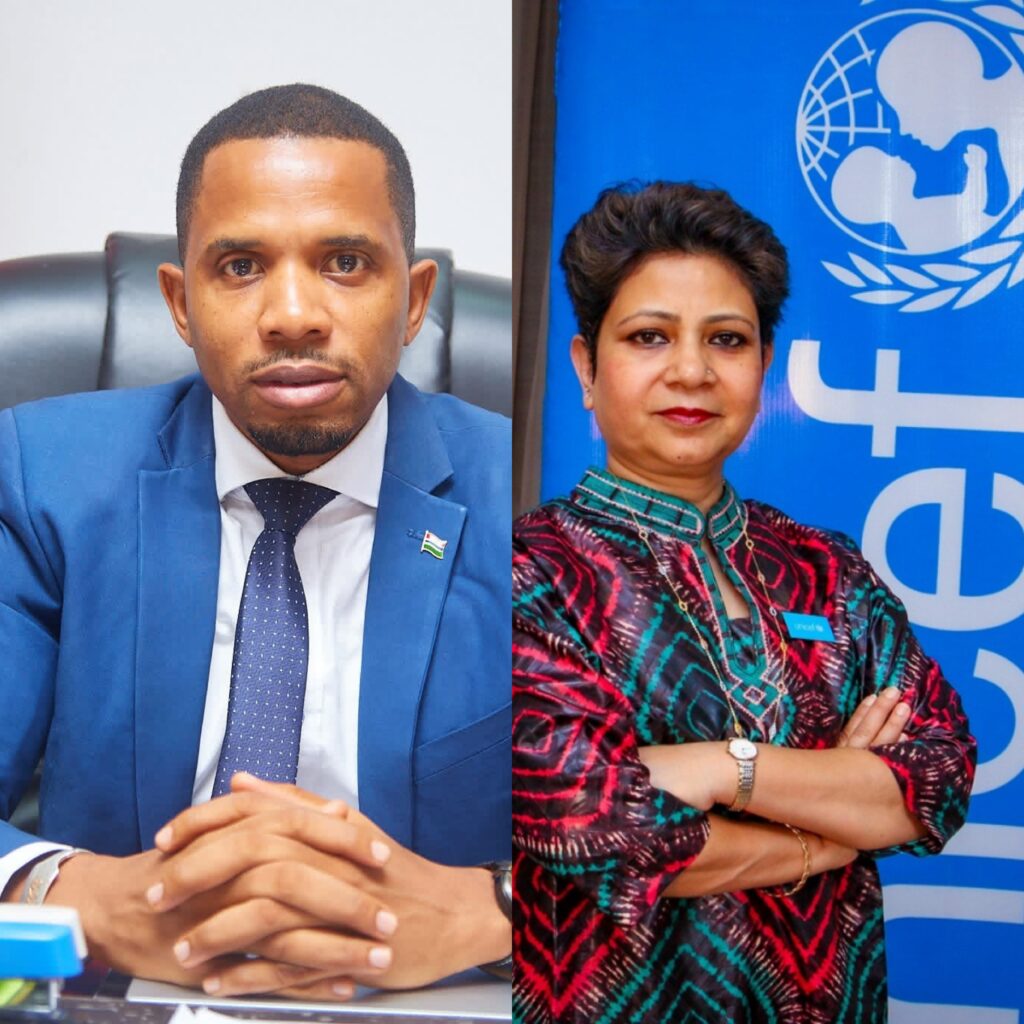
Speaking on GRTS on Monday, Information Minister Dr. Ismaila Ceesay and UNICEF Representative Nafisata Binte Shafique said the forum will bring children face-to-face with cabinet ministers to discuss issues affecting their lives, from education and healthcare to climate change, digital safety, and child protection.
“We want to give children a voice,” Dr. Ceesay said. “They need to participate in the decision-making of this country.”
Dr. Ceesay described the Special Mansakunda as more than a symbolic exercise, calling it a key part of the government’s efforts to promote transparency, accountability, and public participation. While the administration remains focused on expanding access to electricity, clean water, healthcare, education, and road infrastructure, he said, it also sees investing in young people as essential to the country’s future.
The forum will allow children to question ministers directly about government policies and services. Dr. Ceesay said discussions could include how rural electrification affects children’s education and safety, as well as measures to protect young people from harmful online content. Beyond addressing immediate concerns, he said, the event is intended to help children better understand how government functions.
“If I had to choose between two Mansakundas, the children’s Mansakunda would be more important to me,” he said.
The event will be held at the Sir Dawda Kairaba Jawara International Conference Centre and is being fully funded by UNICEF. Last year’s inaugural edition brought together more than 200 children.
Ms. Shafique said the children’s forum reflects UNICEF’s broader partnership with the Gambian government in areas including health, nutrition, education, water and sanitation, child protection, social protection, and public financing for children.
She highlighted several recent initiatives, including a nationwide measles and rubella vaccination campaign that reached more than 350,000 children over the past year. She also said that roughly 75,000 out-of-school children had returned to classrooms in recent years through joint education programs, while more than 3,500 children received nutrition services, with recovery rates exceeding 82 percent.
Rather than prescribing discussion topics, Ms. Shafique said, organizers want children to determine the agenda themselves.
Drawing on previous engagements with the Children’s National Assembly, she said participants have consistently raised concerns about equal access to education, healthcare, clean water, and sanitation. They have also highlighted climate change, digital literacy, and internet access, as well as child protection issues including female genital mutilation, child marriage, and gender-based violence. Some children have also voiced concerns about conditions in certain institutions.
With children accounting for roughly 54 percent of The Gambia’s population, Ms. Shafique said, their perspectives are essential to shaping the country’s long-term development.
“Children cannot be left out of decisions that affect their future,” she said.
Ahead of the forum, participants are being briefed on their rights, government policies and ongoing public programs so they can engage ministers with informed questions and recommendations.
The participants are members of the Children’s National Assembly, a youth parliament made up of 107 elected representatives chosen by their peers from constituencies across the country. UNICEF said the body is designed to reflect the diversity of Gambian children, including girls and boys, children with disabilities, and representatives from both urban and rural communities. Collectively, they represent the interests of the country’s estimated 1.3 million children.
Comments are closed.