


There is an old and dangerous temptation in government: when the message becomes uncomfortable, turn on the messenger.
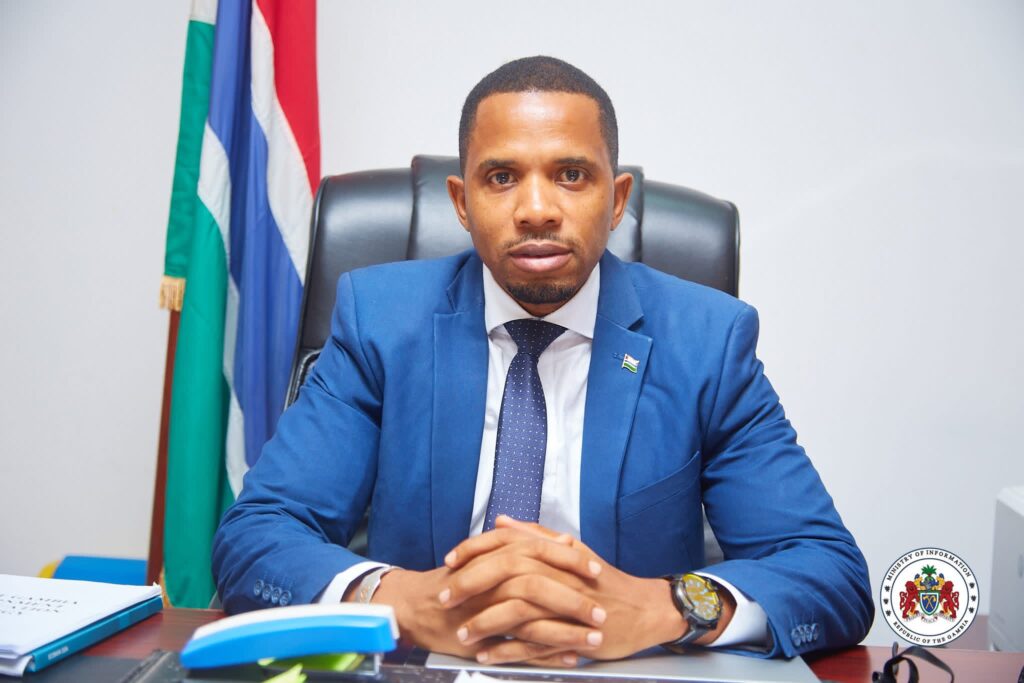
Dr. Ismaila Ceesay’s remarks on GRTS about journalists covering protests over The Gambia’s electricity crisis raise precisely that concern. Rather than treating the press as observers documenting a national problem, the information minister appeared to suggest that media coverage could itself encourage unrest, that by showing citizens protesting, journalists were somehow adding fuel to the fire.
He went further, suggesting that in other countries journalists reporting in such a manner would be “stopped.”
How, exactly, they would be stopped was left unsaid.
That ambiguity is what makes such language troubling, particularly when it comes from the minister responsible for information, media, and broadcasting. Governments possess powers that journalists do not. When an official entrusted with overseeing the media speaks vaguely about journalists being “stopped,” reporters are entitled to ask what that means.
There is also a contradiction at the heart of the argument.
Only a day earlier, President Adama Barrow and members of his government had publicly acknowledged the hardship caused by the electricity crisis and appealed to Gambians for patience as authorities worked toward a solution. If the crisis is real enough for the president to address, surely the public reaction to that crisis is real enough for journalists to report.
Reporting a protest does not create the grievance behind it.
A camera pointed at an angry crowd did not switch off anyone’s electricity. A reporter describing demonstrations did not plunge a neighborhood into darkness. Journalism may make public frustration visible, but visibility should not be confused with causation.
This distinction matters.
The purpose of a free press is not merely to record the comfortable proceedings of government inaugurations, speeches, ceremonies, and official statements. Journalism becomes most necessary when society is under strain. It goes where the tension is because that is where the story is.
Around the world, journalists report from wars, demonstrations, disasters, and political upheavals. They report from Gaza and Ukraine. They document protests, displacement, hunger, and human suffering. Governments, including ours, rely on that journalism to understand events beyond their borders.
We do not ordinarily accuse a journalist covering a demonstration abroad of creating the demonstration. We understand instinctively that witnessing an event and causing it are fundamentally different things.
Why should that principle disappear at home?
Certainly, journalists have responsibilities. A free press is not a license for recklessness. Reporters should verify information, avoid inflammatory speculation, distinguish fact from rumor, and exercise particular care when covering volatile situations. Journalism that deliberately directs violence or knowingly spreads false information deserves criticism.
But those standards cannot be stretched until ordinary reporting becomes synonymous with incitement.
If citizens gather publicly because they have gone without reliable electricity, documenting their complaints is journalism. Interviewing them is journalism. Showing the conditions surrounding a demonstration is journalism. Asking government officials why the crisis persists is journalism.
The uncomfortable nature of the story does not transform the act of reporting it into a crime.
This is why Dr. Ceesay’s remarks deserve scrutiny beyond the immediate electricity controversy. The deeper question is philosophical: What does a government believe the press is for?
If journalists are considered responsible only when their reporting is convenient to those in power, then what exists is not press freedom but conditional permission.
A democratic society requires something more demanding.
It requires governments capable of tolerating scrutiny precisely when scrutiny hurts. It requires officials to distinguish between criticism and sabotage, between reporting unrest and manufacturing it, and between preserving public order and suppressing public knowledge.
The government should also recognize a simple truth: silencing the description of a problem does not solve the problem.
Darkness does not disappear because cameras are turned off.
The proper response to public anger over electricity is reliable electricity. The proper response to questions is credible information. And the proper response to journalism is not intimidation but facts.
We will continue to report what happens in our communities accurately, independently, and responsibly. That obligation does not disappear because the events being documented are politically inconvenient.
The public has a right to know what is happening in its country. Journalists have a duty to tell them.
And public officials, especially those entrusted with information and media affairs, have an equally important responsibility: to understand the difference between a journalist documenting the fire and the person who lit it.
Comments are closed.