


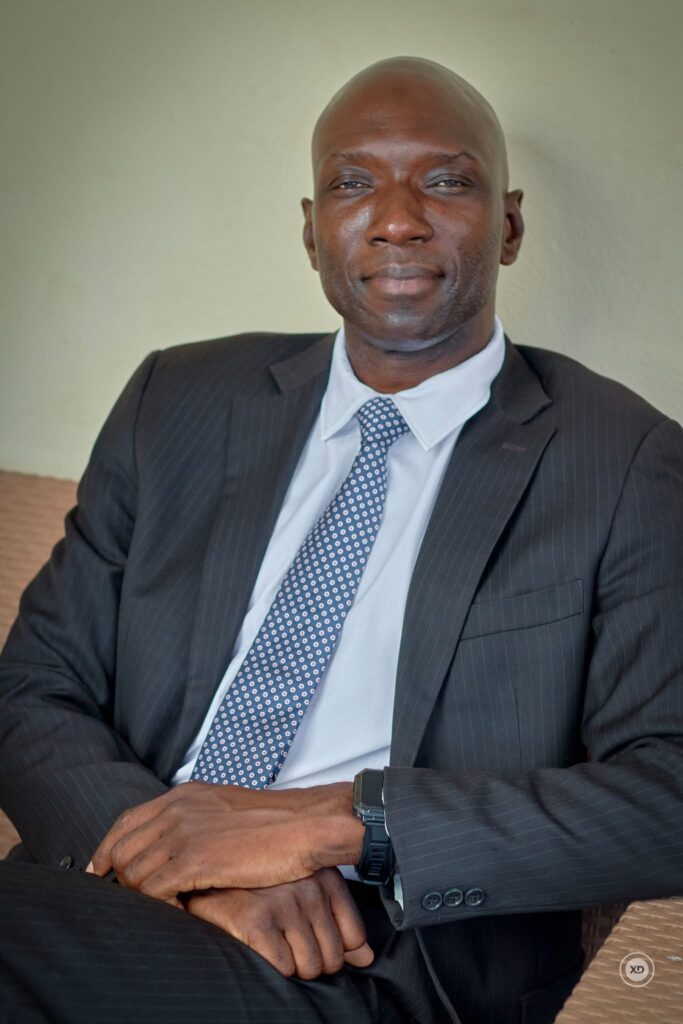
Dr. Ousman Gajigo, Politician / Economist formerly with ADB
Dr. Ousman Gajigo
While attending classes is essential for education, it is not sufficient. Students need to properly learn the subject matter, particularly in core subjects such as mathematics, science, and language. Without adequate levels of proficiency, mere school attendance does not mean much. The Gambia has achieved significant enrollment, but the quality of education, in terms of learning outcomes, has been lacking.
One must acknowledge the significant progress in The Gambia’s education sector over the past couple of decades. Gross enrollment rates at the primary level reached 100% years ago. At the Upper Basic and Senior Secondary School levels, gross enrollment rates are around 80% and 60%, respectively. So, while enrollment is not yet universal, this is still progress.
But if there is one thing the 2026 WASSCE results have shown us, it is that The Gambia has a serious quality problem in education. Of the roughly 20,000 students who sat the WASSCE in 2026, only about 1,400 achieved the scores required for university entry. This is a major problem: it shows that over 90% of graduating high school students did not acquire the required mastery of core subjects.
For those of us closely following the education sector, these WASSCE results are not surprising. Student performance in earlier grades has long provided warning signs. The National Assessment Test (NAT) is administered annually to students in grades 3, 5, and 8, with the aim of measuring foundational learning at earlier stages. Over the years, students’ NAT scores have also been poor, so the disappointing WASSCE results came as no great surprise.
What this makes clear is that a competent government in The Gambia today would need to focus on improving the quality of education. Addressing quality will require several measures, but one overlooked aspect is the need for a single Ministry of Education. Today, we have the Ministry of Basic and Secondary Education (MOBSE) as well as the Ministry of Higher Education, Research and Technology (MOHERST). The existence of MOHERST as a separate ministry is worse than superfluous.
There should be no MOBSE and MOHERST – the country currently needs only a single Ministry of Education. Within this ministry, matters relating to tertiary education could be handled by a directorate. This would help create an integrated education strategy and policy in which improvements in enrollment are complemented by the investment needed to address the quality deficit.
Maintaining a separate ministry focused on tertiary education while basic and secondary education remain low-quality is not just superfluous but costly. For one, having two separate ministries of education results in duplicated positions and corresponding costs – an extra budgetary burden the Gambian economy cannot afford.
Having an entire ministry dedicated to tertiary education has also led to undue emphasis on creating more tertiary institutions and a proliferation of unnecessary degree programs at the University of The Gambia (UTG), even before quality problems in basic and secondary education are addressed. Consider this: the matriculating class at UTG in 2025 numbered 2,800, yet only 1,400 graduating high school students nationwide met university entrance requirements. Does it make sense to expand tertiary education before first addressing educational quality?
I acknowledge that higher education involves distinct issues, such as accreditation and research, that are not major concerns at the basic level. But these issues could still be addressed without a separate ministry. To be clear, I am not arguing that MOHERST’s existence is the cause of the underinvestment in quality. Rather, it makes the quality problem harder to address, both because it fragments an already limited education budget and because a new bureaucracy generates its own priorities, leading to other non-essential expenditures.
Mere high school completion is thus a superficial metric when there is little real learning behind it. And when a large share of a country’s labor force lacks basic qualifications, its demographic dividend cannot be fully realized.
The Gambia needs tertiary education, but its institutions of higher learning need to be filled with students who are properly prepared for it. To achieve that, the country needs an integrated education system driven by a single Ministry of Education, one where quality receives the attention it deserves. This human capital development problem is a major challenge that requires serious attention.
Comments are closed.