

Juwara Questions Barrow’s Anti-Corruption Commitment, Alleges Selective Targeting of Political Opponents

By Seedy Jobe
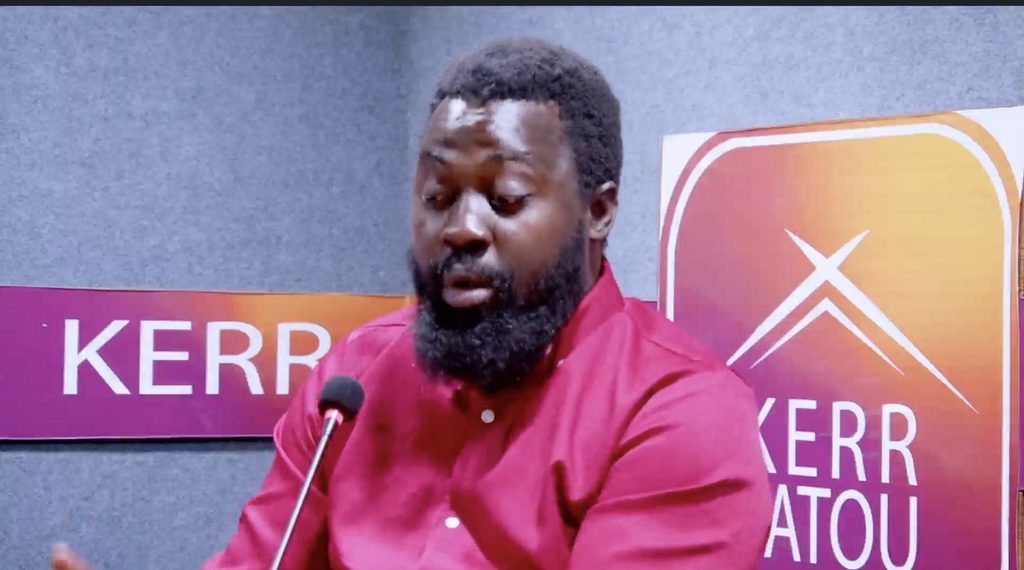
Political analyst Lamin Juwara has questioned President Adama Barrow’s commitment to fighting corruption, accusing his administration of selectively using the findings of the Local Government Commission of Inquiry to target political opponents while overlooking broader institutional failures exposed by the investigation.
Speaking on Kerr Fatou’s Politic Kaacha program on Tuesday, Mr. Juwara argued that the government’s White Paper on the commission’s findings appeared more focused on punishing individuals than addressing the systemic weaknesses identified during the inquiry.
He acknowledged that it would be difficult to categorically describe the process as a political witch hunt because the commission operated within an established legal framework. However, he cautioned that legal procedures could still be used to pursue political objectives.
According to Mr. Juwara, the fact that an action is legally permissible does not necessarily mean it is free from political considerations.
He said that while President Barrow has the authority to act on the commission’s findings, the evidence presented during the hearings revealed troubling weaknesses in the country’s governance structures that deserved greater attention.
Mr. Juwara argued that the issues raised by the commission extended far beyond Kanifing Municipal Council Mayor Talib Ahmed Bensouda and other individuals who have become the focus of public debate.
He noted that the inquiry exposed serious institutional shortcomings, including weaknesses within the Local Government Service Commission and deficiencies in the legal framework governing local authorities.
Rather than prioritizing reforms to address those problems, he said, the government had concentrated on individual accountability, leaving critical institutional recommendations largely unaddressed.
The political analyst maintained that reducing the commission’s findings to a dispute over particular individuals risked undermining the broader purpose of the inquiry and making meaningful reform more difficult.
Mr. Juwara also questioned the consistency of the sanctions and other measures outlined in the government’s White Paper, arguing that opposition figures appeared to face harsher treatment than individuals associated with the ruling administration.
He said the apparent disparity raised legitimate concerns about fairness, political influence and the government’s commitment to applying accountability measures without discrimination.
According to Mr. Juwara, the handling of the commission’s findings reflected what he described as a recurring pattern under the Barrow administration, in which political allegiance appeared to influence how individuals accused of wrongdoing were treated.
He suggested that the allegations and sanctions currently confronting Mr. Bensouda could lose their political significance if the mayor were to join President Barrow’s camp.
“If Talib moves back to his camp, you would forget about all this information we are talking about,” he said.
Mr. Juwara recalled previous commissions established under the Barrow administration, alleging that some individuals initially subjected to punitive measures later had those sanctions lifted after aligning themselves with the ruling party.
He argued that such instances, if examined collectively, raised serious questions about whether the government’s anti-corruption efforts were driven by a genuine commitment to transparency and accountability or influenced by political considerations.
The analyst maintained that a credible fight against corruption required consistent enforcement of the law, regardless of an individual’s political affiliation.
His remarks come amid controversy surrounding the government’s White Paper on the Local Government Commission of Inquiry, particularly its recommendations concerning Mr. Bensouda and other local government officials.
Mr. Juwara’s criticism underscores the broader debate over whether the government’s response to the inquiry will produce lasting institutional reforms or deepen perceptions of selective accountability ahead of the December 5 presidential election.
Comments are closed.