


By Makutu Manneh
The Independent Electoral Commission formally welcomed two new political parties into the country’s democratic fold on Wednesday, bringing the total number of registered parties in The Gambia to 24 and adding fresh voices to a political landscape increasingly animated by competition ahead of the December elections.
The UNITE Party and the All Inclusive Party received their certificates of registration at a ceremony held at the Commission’s headquarters, after both organizations satisfied the statutory requirements set out under the Elections Act.
The occasion was understated but significant. For months, questions had swirled about whether either party would clear the legal threshold in time. Wednesday’s ceremony put those questions to rest.
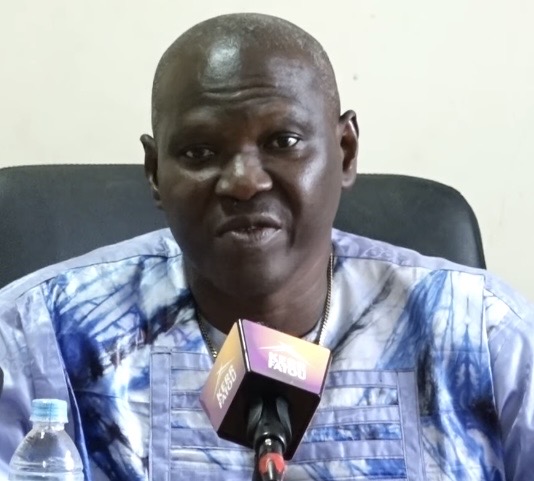
Joseph Colley, the chairman of the Independent Electoral Commission, used the moment to reinforce a message he has delivered before—that the Commission operates free from political interference, bound instead by the principles of fairness, integrity, and transparency.
“To form a political party, you have to fulfill sections 60 and 106 of the constitution,” Mr. Colley told those gathered. “As stated in the constitution, the Commission is not in the direct control of any authority. I want to make that ever clear.”
Mr. Colley also reaffirmed the Commission’s commitment to conducting what he described as free, fair, credible, transparent, and inclusive elections on December 5 and beyond.
Not everything was entirely resolved for AIP. Mr. Colley noted that while the All Inclusive Party had completed the registration process, it is still required to submit the addresses of its regional offices and ensure those offices are fully operational in accordance with the law.
The condition underscored the Commission’s insistence on full compliance—a standard it appears determined to apply uniformly across all registered parties.
Dembo Kanteh, the Secretary General of the UNITE Party, and Yiramang Darboe, the leader of the All Inclusive Party, accepted the registration certificates on behalf of their respective organizations.
Both men expressed gratitude to the Commission, describing the process as professional and transparent—an endorsement that carried its own political significance at a time when public confidence in electoral institutions remains a subject of national conversation.
Each pledged to maintain full compliance with the country’s electoral laws as their parties prepare to compete on a larger stage.
The registrations arrive at a pivotal moment. With 24 parties now officially recognized, The Gambia’s political field is broader than at any point in recent memory, setting the stage for what promises to be a consequential election season.
Whether the new parties can translate organizational momentum into electoral impact remains an open question. But their presence alone signals that Gambians are seeking new options — and that the country’s democratic institutions, for now, are making room for them.
Comments are closed.