


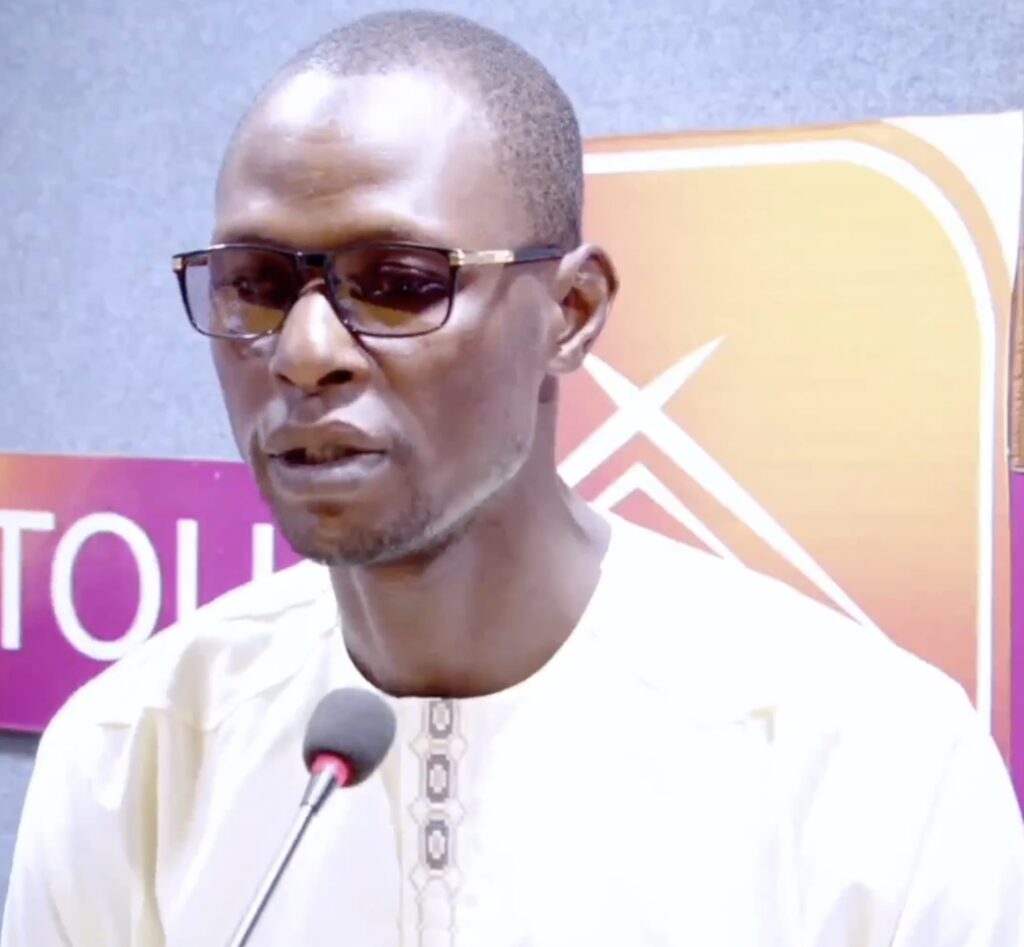
By Makutu Manneh
Hagi Suwaneh, the national youth president of the United Democratic Party, has dismissed suggestions that his party is concerned about the political rise of Talib Ahmed Bensouda, arguing instead that Bensouda’s emergence poses a greater challenge to President Adama Barrow and the governing National People’s Party.
Speaking on Kerr Fatou’s “The Brunch,” Suwaneh said the UDP recognizes Bensouda’s political influence but does not regard him as a threat to the party’s electoral prospects.
“We know the strength Talib carries. Politically, we are not worried about Talib,” Suwaneh said.
Asked why UDP officials frequently respond to statements involving Bensouda if they are not concerned about his growing political profile, Suwaneh said the party’s interventions were intended to correct what he described as misconceptions rather than to attack a political rival.
Suwaneh argued that Bensouda’s decision to establish his own political movement, along with the emergence of other political groups involving figures who previously supported the NPP, has weakened the governing party more than the UDP. He cited Kebba Madi Bojang and others who have broken with the NPP and pursued alternative political platforms.
He said those developments were fragmenting President Barrow’s political base while leaving the UDP’s core support largely intact.
“UDP’s grassroots are not affected,” Suwaneh said.
Suwaneh also pointed to President Barrow’s repeated public remarks about UDP leader Ousainu Darboe, including calls for Darboe to withdraw from the presidential race or join forces with the president, as evidence that Barrow considers the longtime opposition leader his principal electoral threat.
According to Suwaneh, the president’s focus on Darboe reflects an assessment of the country’s political landscape and the strength of the UDP’s grassroots organization ahead of the election.
“Both the NPP and President Barrow know that if votes are cast in the upcoming election, it is most likely that Darboe will win,” he said.
Suwaneh further contended that public sentiment was increasingly shifting toward the UDP, though he offered no polling or other independent data to support that assertion.
He said Barrow’s frequent criticism of Darboe was another indication that the president viewed the UDP leader as the opposition figure most capable of challenging him at the polls.
The remarks come as opposition parties and newly formed political alliances position themselves ahead of the election, with Bensouda’s emergence adding another prominent figure to an increasingly competitive political field.
Comments are closed.