

Omar Saibo Camara Says Bensouda Has Reshaped Gambian Politics, Could Be Deciding Factor in December Election

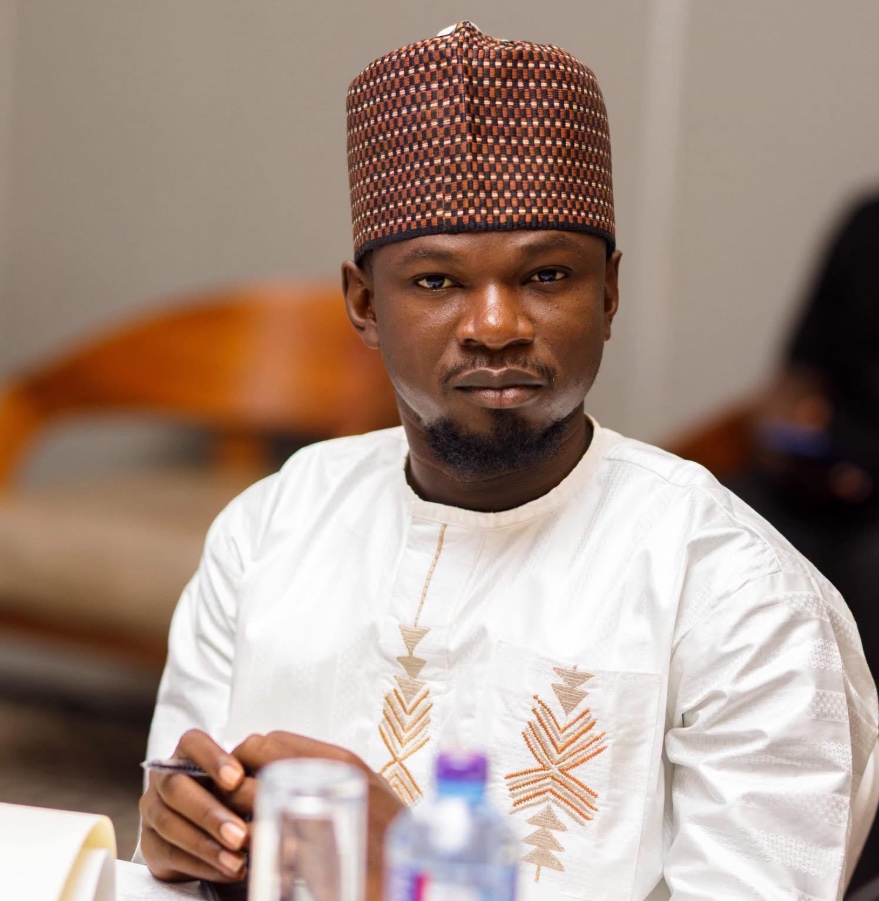
By Seedy Jobe
Human rights defender Omar Saibo Camara has described Talib Ahmed Bensouda and his United Movement for Change (UMC) as a formidable political force, arguing that the party’s rapid rise has reshaped The Gambia’s political landscape ahead of the December 5 presidential election.
Speaking in an interview with Eye Africa TV, Mr. Camara said Bensouda’s emergence had introduced a new dimension to the country’s electoral contest, challenging the traditional rivalry between the United Democratic Party (UDP) and the incumbent National People’s Party (NPP).
Despite being established only six months ago, Camara said, the UMC has developed an organizational presence and political visibility that some long-established parties have struggled to achieve.
He contrasted the party’s rapid emergence with older political organizations, some dating back to 1965, 1994, and 2010, which he said have largely faded from public discussion.
According to Camara, the UMC’s growing influence should not be measured solely by the size of crowds attending its political rallies, arguing that large gatherings do not necessarily translate into genuine electoral support.
Instead, he pointed to the party’s organizational structures, nationwide visibility, and ability to sustain political momentum as more meaningful indicators of its strength.
Camara said Bensouda’s entry into the presidential race had fundamentally altered the dynamics of an election that might otherwise have been framed as another contest between the UDP and the ruling NPP.
He recalled that the 2021 presidential election was largely presented as a two-way contest between the UDP and NPP, a narrative he suggested had benefited the incumbent party.
This time, however, he said Bensouda’s emergence had transformed the race into a three-way contest involving the UDP, NPP, and UMC.
Camara maintained that Bensouda should not be dismissed as the leader of a minor political organization simply because his party is relatively new.
He described the UMC as a well-organized political movement that has maintained significant momentum within a short period, arguing that its emergence has strengthened electoral competition.
While stopping short of predicting a UMC victory, Camara said Bensouda could play a decisive role in determining the outcome of the December election.
He explained that a political party can influence an election either by winning outright or by attracting enough votes to affect the fortunes of other candidates.
To illustrate his argument, Camara cited the 2016 presidential election, in which opposition candidate Mama Kandeh secured approximately 83,000 votes while running separately from the opposition coalition that defeated former President Yahya Jammeh.
Camara argued that had Kandeh joined the opposition coalition, Jammeh might have benefited from voters who supported Kandeh as an alternative to both the incumbent and the coalition. In his assessment, some of those voters could have shifted their support to Jammeh in a two-candidate contest.
He suggested that Bensouda could similarly influence the distribution of votes in December, regardless of whether he ultimately wins the presidency.
Camara also compared the UMC’s growth with that of the NPP, noting that the ruling party was established with the advantage of having a sitting president as its leader.
Despite that advantage, he argued, the NPP did not experience the same pace of early political growth that he believes the UMC has achieved.
Turning to Bensouda’s political credentials, Camara rejected suggestions that the UMC leader was an inexperienced newcomer seeking the country’s highest office.
He pointed to Bensouda’s two terms as mayor of the Kanifing Municipal Council (KMC), describing his eight years in local government leadership as substantial political experience.
Camara also highlighted Bensouda’s previous electoral victories in KMC, arguing that his ability to defeat candidates backed by the ruling party demonstrated his political strength.
He questioned why Bensouda’s past electoral successes should be discounted when assessing his prospects in a national contest.
For Camara, the significance of Bensouda’s candidacy extends beyond the question of whether he will become president. He argued that the UMC leader has already changed the nature of political competition by introducing another major contender into a race traditionally dominated by established parties.
He maintained that Bensouda’s political influence, organizational strength and electoral experience make him a candidate whose impact cannot be overlooked.
Camara concluded that the UMC would remain a significant factor in the December 5 election, whether or not Bensouda ultimately emerges victorious.
Comments are closed.