

By Seedy Jobe
Dr. Papa Faal, leader of the Gambia People’s Advancement Party, has described The Gambia as a country in deep economic and social distress, arguing that opposition unity offers the best path toward addressing rising living costs, insecurity, and what he characterized as failures of governance.
Dr. Faal’s party, known as GPAP, is a member of the Gambia First Coalition, which has joined an alliance with the United Democratic Party ahead of the 2026 presidential election.
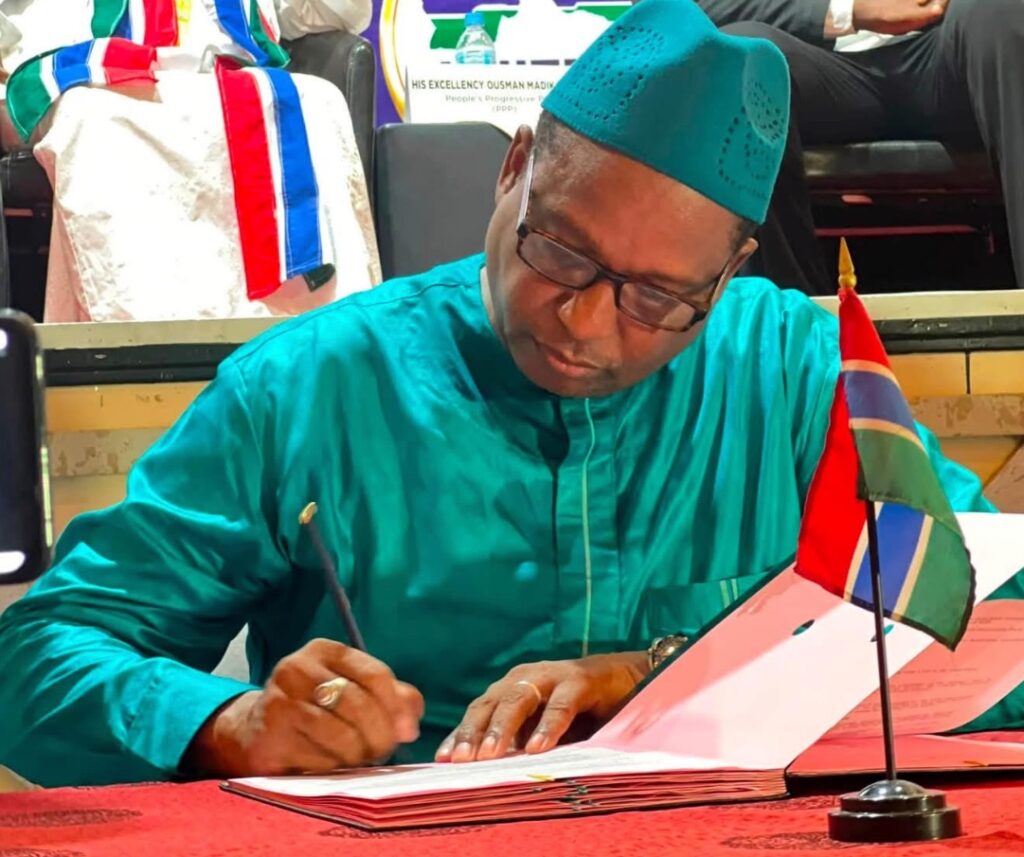
Speaking on behalf of leaders of the Gambia First Coalition and the UDP-led alliance at a signing ceremony, Dr. Faal said the country was facing one of its most difficult periods since independence, pointing to the cost of basic goods, strained public services, and limited economic opportunities.
“Our country is in a difficult state,” he said. “Our people are desperate. Their survival is a daily struggle.”
Dr. Faal said the economy was increasingly failing to meet the needs of ordinary Gambians, with the rising cost of necessities placing greater pressure on households. He said many women were struggling to earn adequate incomes from their work, while a lack of opportunities had left young people increasingly vulnerable to drug abuse and crime.
He also criticized the state of the health care system, saying inadequate services could allow otherwise manageable illnesses to become life-threatening. Land ownership, he said, had also become increasingly difficult for ordinary Gambians, leaving those with greater financial resources at an advantage.
Agriculture, another area he identified as a major concern, had failed to deliver sufficient food security, Dr. Faal said. He argued that the country’s natural resources and human capital were not benefiting the wider population as they should.
Dr. Faal blamed the governing National People’s Party for many of the problems he outlined. His remarks represented the opposition alliance’s assessment of the country and were made as its members sought to present a unified alternative ahead of the December presidential election.
He said political differences among opposition groups should be set aside in response to the country’s challenges, describing the partnership between the Gambia First Coalition and the UDP-led alliance as an effort to build a broader united front.
Dr. Faal also outlined several priorities for the alliance should it win power.
Among them, he said, would be promoting greater Gambian participation in commerce so that more wealth generated in the economy remains in the country. He also called for strengthening the security services to better protect citizens and the country’s borders, increasing investment in health care and expanding skills training and economic opportunities for young people.
Agriculture, he said, would be another priority, with policies aimed at increasing domestic production and moving the country toward greater food self-sufficiency.
Dr. Faal also called for the adoption of a new constitution that he said should reflect Gambian values, establish presidential term limits and strengthen safeguards against the abuse of state institutions. He pledged that the alliance would also seek to ensure that national assets and natural resources serve the broader public interest.
Framing the alliance as a choice between political division and cooperation, Dr. Faal appealed to other opposition parties to join the effort.
“When our children ask what we did for them, we can answer with authority that we put aside our differences and unite to secure their future,” he said.
Comments are closed.