


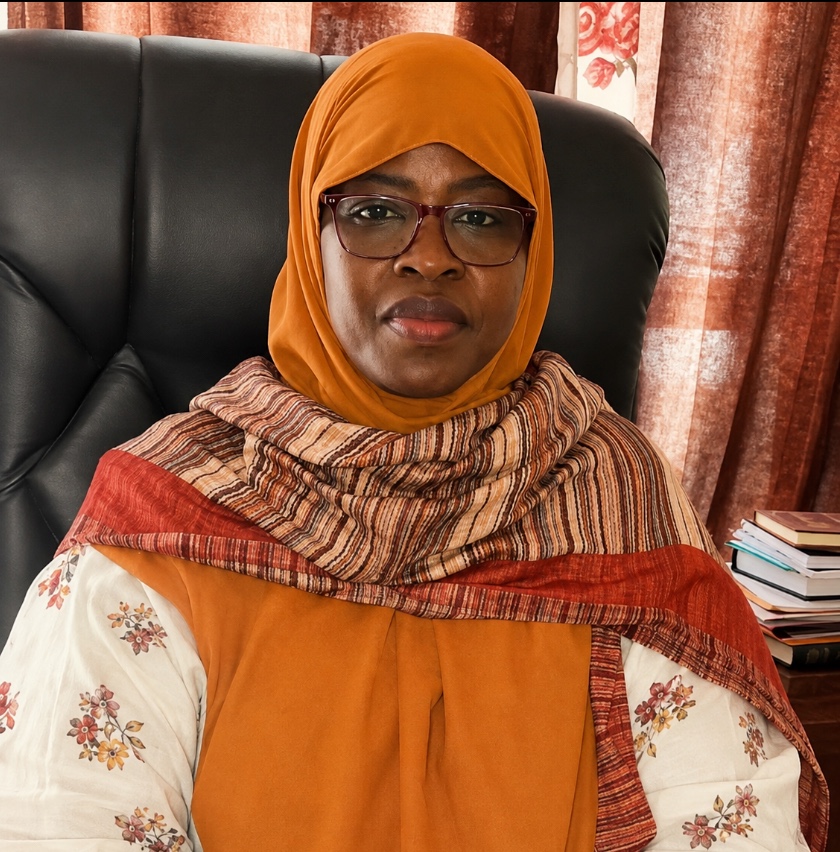
By Seedy Jobe
The Gambia’s education minister has hailed the country’s 2026 Grade 12 WASSCE results as its strongest performance in more than a decade, pointing to gains in the number of students earning multiple credits while acknowledging that significant weaknesses remain, particularly in core subjects.
Dr. Habibatou Drammeh, the Minister of Basic and Secondary Education, said in an interview with GRTS on Monday that this year’s results represented a notable improvement over previous years.
“Since 2015, we have not seen such a kind of progress in Grade 12 WASSCE results,” Dr. Drammeh said.
According to the minister, the percentage of candidates earning five or more credits, including English and Mathematics, rose to 7 percent in 2026, compared with 5 percent in 2016.
The share of candidates obtaining five or more credits, regardless of whether English and Mathematics were included, also increased, rising to 22.6 percent this year from 19.1 percent in 2025. In 2017, she said, just 13.8 percent of candidates reached that benchmark.
Dr. Drammeh said the figures offered encouraging signs that the education system was moving in the right direction. But she cautioned against viewing the results as an indication that the country’s longstanding educational challenges had been resolved.
She expressed particular concern about students who failed to earn a single credit despite sitting seven to nine subjects, as well as the relatively low proportion of candidates securing credits in core subjects.
Still, this year’s results produced notable individual achievements. Two students from Charles Jaw Memorial Academy earned nine straight A’s, according to the minister, who congratulated the students and the school for their performance.
As part of an effort to assess performance more closely, Dr. Drammeh said the ministry ranked schools and divided them into three categories based on the number of candidates they presented for the examination. Large schools were classified as those with more than 200 candidates, medium-sized schools as those with between 50 and 200 candidates, and small schools as those with fewer than 50.
The rankings showed substantial differences in performance among schools, she said. While some institutions recorded strong results, others continued to lag.
Dr. Drammeh said the ministry would focus greater attention on underperforming schools, arguing that the success recorded elsewhere demonstrated that the country already had some of the conditions necessary to produce stronger academic outcomes.
“It means that the environment is there,” she said. “It means we have the caliber of teachers.”
Despite the gains, Dr. Drammeh said there remained considerable room for improvement. The challenge for the ministry, she suggested, would be to build on the progress recorded in 2026 while ensuring that stronger results are not limited to a relatively small number of students and schools.
Comments are closed.