


By Makutu Manneh
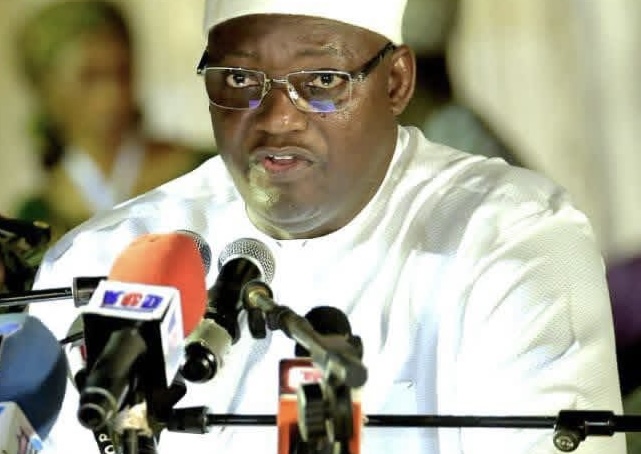
President Adama Barrow has defended his government’s road construction program, saying his critics will continue to dismiss his infrastructure record because they fear its political impact.
Speaking Saturday in Kuntaya, North Bank Region, during a foundation-stone laying ceremony for new roads, President Barrow said his administration had demonstrated its ability to deliver on promises made to communities across the region.
He argued that critics would refuse to acknowledge the government’s development projects regardless of their impact, citing criticism that roads “cannot be eaten” or that road construction does not constitute meaningful development.
“But all these are words of people who fall down from a donkey cart, but I am not their mate,” Barrow said. “This campaign is about ‘duma, ku mun sa morom duma.’ This is how the campaign will go.”
The president told residents that commitments his government made ahead of the 2021 election had been fulfilled, pointing to Saturday’s foundation-stone laying as another step in expanding infrastructure across the North Bank Region.
“I believe everyone from NBR should believe that President Barrow is ready to work,” he said.
Barrow said his political opponents had previously dismissed his development pledges as campaign rhetoric intended to win votes, but argued that his administration’s record now demonstrated otherwise.
“Before, when I spoke, critics would say it was politics, that I was seeking votes, and that all I was saying I could not deliver,” he said. “But I believe it is clear now.”
The president also pointed to the expansion of electricity access in the region, saying his earlier pledge to electrify communities had initially been met with skepticism. According to Barrow, only one community in Jokadou remains without electricity, while the others have been connected.
He said the government’s record had reached a point where communities should no longer doubt projects announced or launched by his administration.
The Kuntaya ceremony forms part of Phase II of the Connect Gambia Infrastructure Project, which is expected to involve the construction of approximately 360 kilometers of new roads. The project is aimed at improving connectivity, facilitating trade, and expanding access to essential services across the country.
Comments are closed.