

UDP Youth Leader Accuses APRC Leadership of Using Party for Political and Personal Gain

By Seedy Jobe
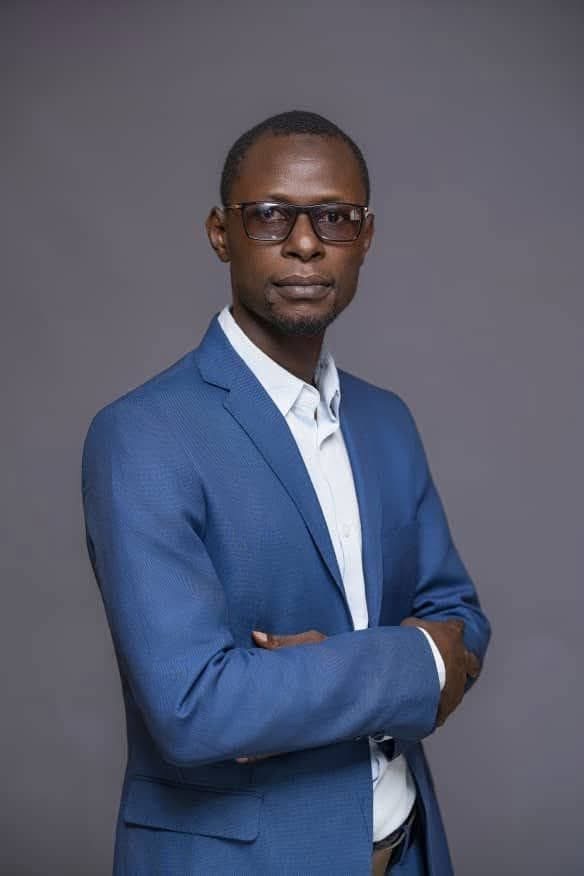
Hagi Suwaneh, the national youth president of the United Democratic Party, has accused senior figures in the Alliance for Patriotic Reorientation and Construction of exploiting the party’s name and its supporters to secure government positions and political favors.
Suwaneh made the remarks in response to Fabakary Tombong Jatta, the APRC leader and speaker of the National Assembly, who recently blamed the UDP for much of the hostility APRC supporters faced following the political transition in 2017.
Rejecting Jatta’s characterization, Suwaneh argued that ordinary APRC supporters have gained little from the party’s current alliance with President Adama Barrow’s National People’s Party. Instead, he said, a small group of senior APRC figures has benefited from the arrangement by using the party’s political influence—and its association with former President Yahya Jammeh—to negotiate government appointments.
Suwaneh also revisited the political crisis that followed the December 2016 presidential election, accusing some of the same APRC figures who now portray themselves as defenders of the party of encouraging Jammeh to reject the election results.
Jammeh initially conceded defeat to Barrow before reversing his position, setting off a political crisis that ended with a regional military intervention and his departure into exile in Equatorial Guinea in January 2017.
According to Suwaneh, the decision to challenge the election results was driven less by concern for the APRC than by senior officials worried about losing the positions and privileges they had enjoyed under Jammeh.
He alleged that after Jammeh left the country, those officials presented themselves as defenders of the former president and residents of Foni while gradually consolidating control over the APRC. The party, Suwaneh said, was eventually turned into a political bargaining tool in negotiations with the Barrow administration.
As evidence, he pointed to what he described as a sharp change in the rhetoric of APRC leaders after their political agreement with the NPP. Before the alliance, he said, some of those leaders were outspoken critics of Barrow. Afterward, he said, their criticism shifted toward Jammeh and APRC members who remained loyal to the former president, while several figures associated with the alliance received senior government appointments.
Suwaneh cited appointments to positions including speaker of the National Assembly, ambassadorial posts, and managing director roles. He also claimed that calls by APRC leaders for Jammeh’s return diminished after the alliance took shape.
The UDP youth leader argued that improved relations between ordinary UDP and APRC supporters would undermine politicians who, in his view, benefit from keeping the two groups divided.
He also raised several longstanding grievances among some APRC supporters, questioning why they had not been resolved despite the party’s cooperation with the government. Among them, he cited the case of a soldier he identified as Mr. Sarjo, whom he said had not been reinstated despite a court ruling. He also questioned why Jammeh’s residence in Kanilai remains under military use and why foreign troops continue to be stationed in parts of Foni.
Suwaneh said those unresolved issues cast doubt on claims that the current APRC leadership is using its relationship with the government to advance the interests of its grassroots supporters.
He broadened his criticism to the government’s record, citing the rising cost of living, unreliable electricity, unemployment, the depreciation of the dalasi, poor roads, public debt and concerns about violent crime. He also complained about the cost of locally caught fish, saying it has become increasingly difficult for ordinary Gambian families to afford.
On health care, Suwaneh said public hospitals face shortages of medicines and other essential supplies, forcing some patients to purchase items privately. He also criticized increases in hospital fees, arguing that the costs have placed additional pressure on mothers, children, older people and low-income families.
“They want us to forget these problems,” Suwaneh said, accusing the government and its political allies of attempting to revive old tensions between UDP and APRC supporters rather than addressing the challenges facing Gambians.
He called on APRC supporters to reconsider the party’s alliance with the NPP and said the country’s political debate should focus less on past partisan hostility and more on the problems affecting people’s daily lives.
Suwaneh said voters should judge political leaders by their ability to offer solutions rather than by appeals to division and political loyalty as the country moves toward its next election.
Comments are closed.