


By Fatou Sillah
The National Assembly on Tuesday approved the ratification of the African Union Convention on Ending Violence Against Women and Girls in Africa, a legally binding continental framework designed to prevent and eliminate all forms of gender-based violence while strengthening protection mechanisms, access to justice, and institutional responses across member states.
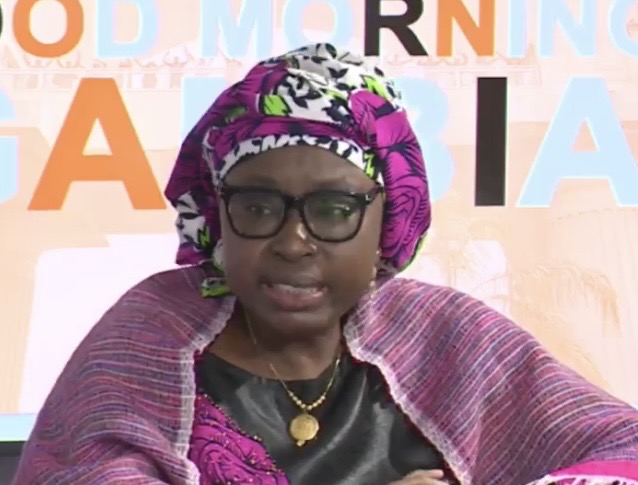
Moving the motion before lawmakers, Minister of Gender, Children, and Social Welfare Fatou Kinteh said ratification would reinforce national laws and institutions and expand protections for survivors of violence.
“The ratification of the said convention will therefore strengthen national laws and institutions, enhance access to justice and protection for survivors, promote coordinated prevention strategies, and reinforce The Gambia’s leadership in advancing gender equity and equality within Africa,” she said.
She also informed the members that The Gambia signed the convention on July 11, 2025, in Malabo, Equatorial Guinea, and acceded to it through a Cabinet meeting held on January 8, 2026.
She explained that the African Union Convention on Ending Violence Against Women and Girls (AU-CEVAWG) is a comprehensive legal instrument aimed at preventing and eliminating all forms of violence against women and girls across the continent. The convention was adopted during the 38th Ordinary Session of the Assembly of Heads of State and Government of the African Union in February 2025.
She also says that the convention seeks to establish a comprehensive and legally binding framework for the prevention and elimination of violence against women and girls by addressing its root causes, strengthening legal and institutional mechanisms, and promoting respect for human rights, gender equality, and the dignity of women and girls.
“The Convention thus aims to establish a comprehensive, legally binding framework for the prevention and elimination of, and effective response to, all forms of violence against women and girls across Africa, by addressing the root causes and drivers of such violence, strengthening legal and institutional mechanisms, and promoting a culture of respect for human rights, gender equality, and the dignity of women and girls,” she said.
The minister informed the Assembly that The Gambia signed the convention on July 11, 2025, during the African Union Summit in Malabo, Equatorial Guinea, and subsequently acceded to it through a Cabinet decision on January 8, 2026.
She described the African Union Convention on Ending Violence Against Women and Girls (AU-CEVAWG) as a comprehensive legal instrument adopted at the 38th Ordinary Session of the Assembly of Heads of State and Government of the African Union in February 2025. The convention seeks to establish a binding legal framework that addresses the root causes of gender-based violence, strengthens institutional mechanisms, and promotes respect for human rights, gender equality, and the dignity of women and girls across the continent.
Minister Kinteh noted that violence against women and girls remains a pervasive challenge that transcends regional, cultural, and socioeconomic boundaries, manifesting in numerous forms including domestic violence, female genital mutilation, early and forced marriage, sexual violence in conflict settings, workplace harassment, and abuse in public and online spaces.
She further observed that such violence occurs across a broad range of environments — including homes, schools, tertiary institutions, prisons, security institutions, sporting facilities, and digital platforms — and is largely sustained by entrenched gender power imbalances and social norms that perpetuate inequality.
The minister highlighted that The Gambia has already laid significant legislative groundwork in protecting women and girls, citing the Domestic Violence Act, the Sexual Offences Act, the Children’s Act, and the Women’s Amendment Act prohibiting Female Genital Mutilation as evidence of the country’s existing commitment.
“With the adoption of this convention, The Gambia will further demonstrate its commitment to upholding the principles of human rights, gender equality, and human dignity as enshrined in the Constitution of the Republic of The Gambia,” she said.
Following debate, the National Assembly adopted the motion, formally clearing the path for The Gambia’s full ratification of the convention and signaling a renewed commitment to combating gender-based violence at both the national and continental levels.
Comments are closed.