


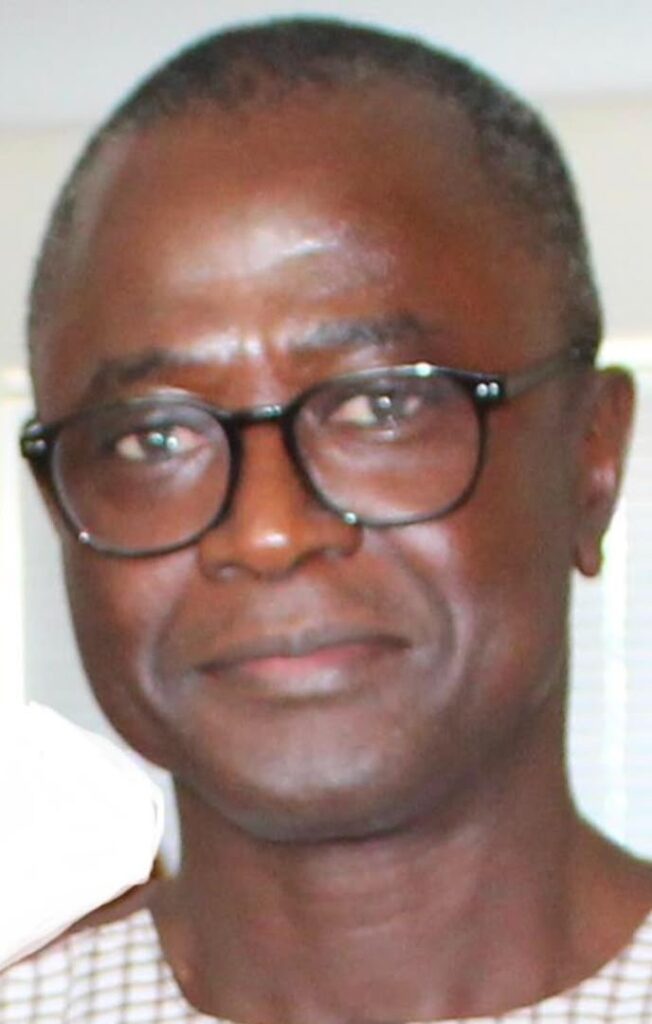
Dr. Omar Janneh, Gambian Diasporan
Dr. Omar Janneh
An inaccurate voters’ register undermines the foundation of a credible election, which brews up trouble, creating fertile ground for disputes, and instability. However, safeguarding the integrity of the voters’ register is not the responsibility of the IEC alone, yet it must act transparently, accountably, and within the bounds of the law. The IEC cannot afford to go rogue by acting unilaterally or without proper public scrutiny and independent oversight, as doing so risks undermining the integrity of the electoral process and eroding public confidence in the credibility of the elections. So, while the IEC has the primary legal duty to administer elections, political parties, civil society organisations, regional institutions, the courts, law enforcement agencies, citizens and the press (both print and online media houses) have important roles to play in ensuring that only eligible voters participate while protecting every eligible citizen’s right to vote.
The IEC remains the first line of defence in safeguarding the integrity of the electoral process. It must maintain and regularly update the voters’ register; remove duplicate, deceased, or otherwise ineligible registrations through lawful procedures; publish provisional registers for public inspection; provide adequate time for objections and corrections; and investigate credible allegations of fraudulent registrations. To promote transparency and restore public confidence, the IEC should publish the complete, corrected voters’ register for public scrutiny before it is finalised. Where sufficient evidence exists, suspected offences should be referred for prosecution. At polling stations, voter identity must be lawfullyverified.
Opposition parties have an important oversight role. They should scrutinise voter registers, train polling agents, use lawful procedures to challenge irregularities, educate supporters on legal voting procedures and report credible evidence of electoral misconduct. Equally important, they should avoid making unsubstantiated allegations that could unnecessarily undermine public confidence in the electoral process.
Civil society organisations contribute by independently observingvoter registration and polling, educating voters, monitoring the accuracy of voter registers, reporting irregularities and advocating for transparent and accountable electoral reforms.
As stated previously, regional organisations such as ECOWAS, Article 25 of the International Covenant on Civil and Political Rights (ICCPR), and the African Union also have established roles in supporting democratic elections. They deploy election observation missions, assess compliance with regional democratic standards, facilitate dialogue where disputes arise, provide technical assistance to electoral commissions and recommend reforms that strengthen electoral integrity. Where necessary, they may also assist in mediating political disputes to reduce the risk of conflict. A clean and credible voters’ register is an essential prerequisite for preventing such disputes and reducing the likelihood of conflict.
The courts and law enforcement agencies likewise perform essential functions. Courts adjudicate disputes relating to voter registration and election outcomes, while law enforcement investigates credible allegations of electoral offences- by observing due process and the rule of law.
A free and responsible press must never be censored or shackled for scrutinising the executive. A free press must accurately and responsibly inform the public, provide a platform for informed public debate with a view to place the actions of electoral authorities and political actors under scrutiny; it must report the truth and expose irregularities. In essence a free press not only ensures that elections are free and fair but are also seen to be free and fair. In doing so, they strengthen transparency, promote democratic accountability, and public confidence in the democratic process. These functions of the press are supported by several international instruments: UN Human Rights Committee, General Comment No. 34 (Article 19), Article 19 of the ICCPR, Article 25 of the ICCPR, and UN Human Rights Committee, General Comment No. 25 (Article 25).
It seems clear that preventing illegal voting requires more than political rhetoric. It requires clear legal standards, credible evidence, transparency and respect for due process. Measures that are restrictive or of questionable integrity, such the issuance of National Identity Cards before the supplementary registration exercise in certain border communities and to individuals outside The Gambia, undermined public confidence and disenfranchisedeligible citizens. This was particularly evident in the differential treatment of Gambians residing outside Africa. Similarly, weak safeguards, including missing or omitted voter information and insufficient time to correct such errors, may invariably leave the electoral process vulnerable to abuse, potential fraud, and the perpetuation of inaccuracies. The challenge for the IEC is to achieve the appropriate balance between protecting electoral integrity and safeguarding universal suffrage.
Ultimately, safeguarding electoral integrity should be viewed as a shared national challenge and responsibility. The referee (IEC) must administer elections impartially and transparently; political parties must engage responsibly through lawful processes; civil society should work to promote accountability and voter education; the courts must uphold the law impartially; and citizens should participate constructively, relying on verified information rather than speculation and the work of free and responsible press must never be censored or shackled.
Public confidence in elections depends not only on who wins, but on whether every eligible citizen is able to vote, no ineligible person should be allowed to do so, and the entire process itself must be transparent, accountable and fair. It is only then can election results command the confidence and legitimacy that every democracy requires.
Comments are closed.