


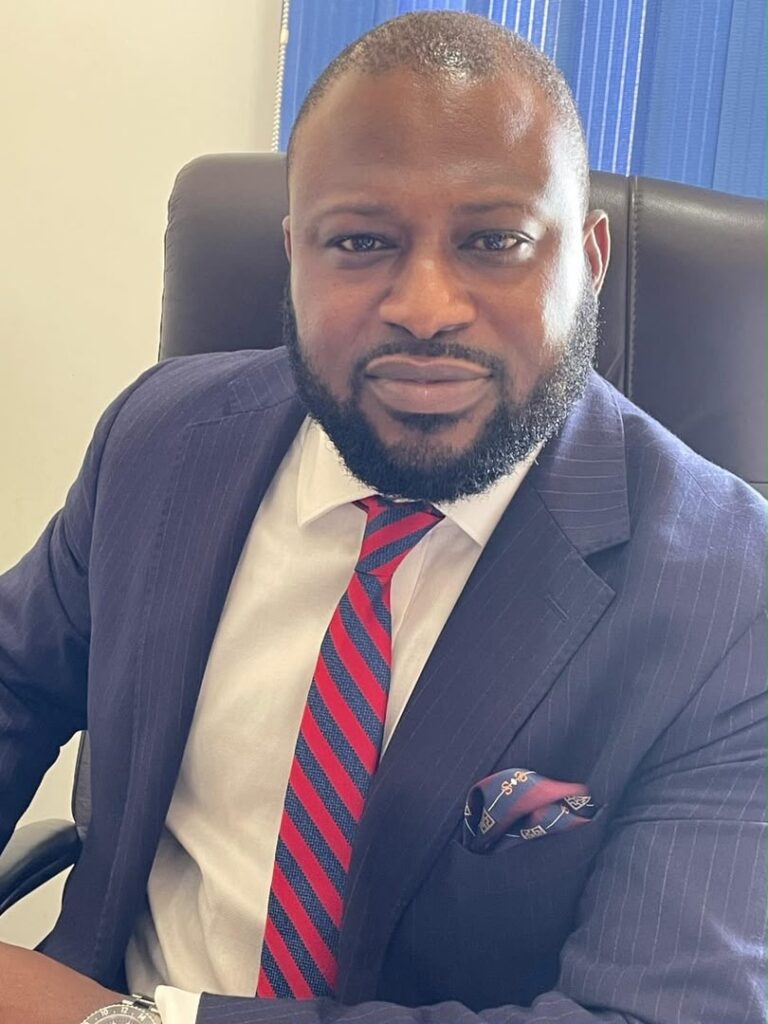
Lawyer Abdoulie Fatty
By Abdoulie Fatty
I remember that Friday afternoon, 2nd December 2016, as vividly as if it were yesterday.
I had just taken a shower and was preparing to leave for Jummah prayers. The Adhan could be heard from my house. Then came the announcement by Alieu Momarr Njie, Chairman of the IEC, that for the first time in twenty-two years, The Gambia would have a new President.
I went back to my bedroom wearing only a towel, lay flat on my back and cried.
Even now, almost ten years later, I struggle to describe that feeling. The extraordinary gush of relief, disbelief, happiness and hope. Twenty-two years of dictatorship had finally been defeated at the ballot box. Outside, jubilant cheers filled the air. I could hear a motorist revving his engine. Across the country, the vibrations of that historic moment could be felt.
Those tears were not merely tears of happiness. They symbolised the enormity of what we had achieved. It felt like a tonne of bricks had suddenly been lifted off my shoulders. The Jammeh years had burdened us with trauma, both privately and publicly. The future offered limitless possibilities, but in that moment, those possibilities were secondary to the sheer joy and relief of achieving something extraordinary.
On 21st January 2017, when Yahya Jammeh finally left The Gambia, drawing the curtains on twenty-two years of authoritarian rule, the optimism was palpable. We had freed ourselves from the bondage of dictatorship and tyranny. Or so we believed.
Jammeh had dominated virtually every facet of national life. A businessman involved in all manner of enterprises, a self-proclaimed Sheikh, healer, Professor and Babili Mansa, he presided over a regime responsible for appalling human rights violations. The State had become almost indistinguishable from the man occupying State House.
Yet Gambians had removed him through the ballot box.
Berkeley Rice famously described The Gambia at independence as the birth of an improbable nation. December 2016 represented something equally profound: the rebirth of a nation emerging from the long shadows of dictatorship.
Hence the phrase, the New Gambia.
But the New Gambia was supposed to mean more than a change of President. We had to wean ourselves off Jammeh. Not merely the man, but his methods. We had to learn to govern democratically again, uphold the rule of law, strengthen institutions and recognise public office as a public trust, not a personal entitlement.
The expectations were enormous.
Yet, no sooner had Jammeh departed than some familiar habits began creeping back. The arrest of Dr. Ismaila Ceesay in January 2018 over comments concerning national security and ECOMIG was unsettling. Then came Faraba, where three civilians lost their lives from gunshot wounds during a confrontation involving security forces.
These were painful reminders that removing a dictator was one thing; dismantling the political culture and institutional weaknesses that sustained dictatorship was quite another.
Halifa Sallah has drawn a distinction between regime change and system change. His argument, essentially, is that while the leadership changed in 2016, fundamental transformation of the system remained elusive.
There is considerable force in that observation.
In February 2021, I wrote a commentary titled “Disintegration of the Coalition: Its Pitfalls,” published by Kerr Fatou. I argued that the disintegration of Coalition 2016, the power struggle between President Barrow and his erstwhile political allies, and the abandonment of transitional objectives had stalled the national reconstruction we envisaged.
I placed considerable responsibility on President Barrow, whose pursuit of political consolidation, I argued, had increasingly displaced the original commitment to fundamental reforms.
Almost five years later, I find myself returning to essentially the same questions, only now with a greater sense of disillusionment.
But it would be intellectually dishonest to suggest that the last decade has been an unmitigated failure.
One institution deserving recognition is the Judiciary. Jammeh undermined its independence and public confidence in justice. Since 2017, the Judiciary has progressively found its feet, delivering consequential decisions against the State, including in politically sensitive matters involving presidential power.
There have also been appreciable improvements in political freedoms and civic space. Gambians can criticise those exercising public power with considerably greater freedom than under Jammeh. These are important gains.
But surely our aspirations in December 2016 extended far beyond the freedom to criticise government.
On 2nd December 2026, it will be ten years since that extraordinary day. Three days later, Gambians will return to the polls to elect a President.
Yet our national conversation is consumed almost entirely by electoral politics. Alliances, defections, accusations, divisive ethnic rhetoric and the endless struggle for political advantage.
Yet little attention, it seems to me, is devoted to a more fundamental question.
What became of the New Gambia?
The cost of living burdens ordinary Gambians. A Saturday morning trip to the market for ingredients for superkanja, benachin or chu kong can consume a painful proportion of an ordinary income. Electricity remains a frustration. The Dalasi has depreciated against the CFA and major foreign currencies. Public debt and wider economic difficulties raise serious questions about our future.
Beyond the economy, something perhaps even more troubling has taken root.
Our politics has become deeply polarised. Ethnic mistrust and suspicion, sometimes amplified by individuals entrusted with public power, increasingly manifest themselves in our political discourse. We have become so invested in our political camps that principles are frequently sacrificed at the altar of partisan loyalty or personal economic interests.
Where are the principles that supposedly united us in December 2016? And who failed the New Gambia?
Was it the political leadership entrusted with national reconstruction? Institutions that failed to assert themselves? A political class returning to habits we hoped to abandon? Or have we, as citizens, contributed through selective indignation, partisan loyalties and tolerance of conduct from political leaders that we would never accept from opponents?
I suspect the answers are more uncomfortable than many of us would care to admit.
President Barrow and his government bear responsibility for their decisions, priorities and unfulfilled promises. But attributing the New Gambia’s unrealised promise entirely to the President overlooks wider political and institutional failings.
We were remarkably united in removing Jammeh. But were we ever equally united in our understanding of the country we wanted to build after him?
Perhaps that is the question we never sufficiently interrogated.
Sometimes I cast my mind back to that December afternoon. The disbelief. The excitement. The tears. The extraordinary feeling that our country had finally turned a corner.
It is difficult to reconcile those emotions with the disillusionment that characterises so much of our national conversation today.
As we approach another presidential election, we should be asking ourselves what kind of country we have become over the last decade, and, perhaps more importantly, what kind of country we aspire to become.
Because the New Gambia was never supposed to be merely a change of government. It was supposed to be a fundamental change in how we govern, how we exercise power, how we treat one another and how we understand our responsibilities as government and citizens.
Ten years later, the question remains painfully relevant and agonisingly unanswered.
Comments are closed.