

Post-TRRC Unit Head Explains Gambia’s Special Mechanism for Prosecuting Rights Abuses

By Makutu Manneh
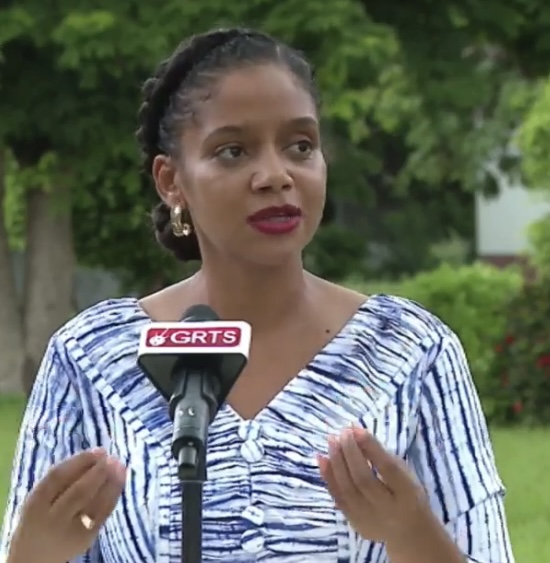
Ida Persson, head of the Post-TRRC Unit at the Ministry of Justice, has explained why The Gambia chose to establish a Special Accountability Mechanism rather than rely solely on the country’s conventional criminal justice system to prosecute cases stemming from the Truth, Reconciliation and Reparations Commission.
Speaking on Gambia Radio and Television Services, Persson said an ordinary criminal prosecution would typically begin with a police investigation, followed by the submission of a case file to the Directorate of Public Prosecutions at the Ministry of Justice. A case would then proceed to the High Court, with the possibility of an appeal to the Supreme Court.
But Persson said the government concluded that the conventional process alone was not adequately suited to the complex legal and evidentiary issues arising from the TRRC.
More than 50 people appeared before the commission and confessed to involvement in human rights violations, she said. Those admissions, however, cannot automatically be used to secure criminal convictions.
“The TRRC dealt with information, but criminal courts deal with evidence,” Persson said.
She explained that The Gambia’s common-law system places significant emphasis on protecting the rights of defendants, particularly in cases where an accused person faces the possibility of losing their liberty or life. Although The Gambia maintains a moratorium on executions, the death penalty remains in law.
As a result, Persson said, a person who admitted wrongdoing before the TRRC may deny the allegations during a criminal trial and require prosecutors to prove the case beyond the evidentiary material gathered by the commission.
She said some testimony accepted during the TRRC process, including hearsay and second-hand accounts, may not be admissible in a criminal trial, where stricter rules of evidence apply.
Persson described attempts to equate the TRRC process with a criminal prosecution as “comparing an apple to a table,” arguing that truth-seeking and criminal accountability serve fundamentally different purposes and operate under different legal standards.
She said some of those challenges became apparent during two early post-TRRC prosecutions: the NIA 9 case, involving the killing of opposition activist Solo Sandeng, and the prosecution of former junta member Yankuba Touray.
According to Persson, those cases demonstrated the difficulties prosecutors can face in meeting stringent evidentiary standards, managing cases involving multiple defendants, securing witnesses, and addressing the expectations of victims and their families. She added that the conventional judicial system provides limited opportunities for victims to participate directly in proceedings.
To address those challenges, Persson said civil society groups and the Gambia Bar Association brought together Gambian legal experts at home and abroad to help develop a prosecutorial framework tailored to the country’s transitional justice process.
The goal, she said, was to establish a mechanism that protects the rights of defendants while providing meaningful justice for victims and the broader Gambian public.
That effort resulted in the Special Accountability Mechanism, or SAM, which Persson said has been under implementation since April.
She described the mechanism as a three-part structure.
The first component is the Special Prosecutor’s Office, which combines investigative functions normally performed by the police with prosecutorial powers traditionally exercised by the Directorate of Public Prosecutions. The arrangement allows the office to investigate alleged crimes and bring prosecutions.
The second is the Special Criminal Division of the High Court, established by the former chief justice in January 2024 to expedite cases arising from the TRRC process.
The third component is the Special Tribunal, established through an agreement between the Gambian government and the Economic Community of West African States.
Persson said the tribunal is particularly important because several international crimes documented by the TRRC — including torture, enforced disappearance and crimes against humanity — were not codified as offenses under Gambian law during the period covered by the commission, from 1994 to 2017.
Because criminal laws generally cannot be applied retroactively, she said, legislation adopted after the alleged offenses cannot simply be used to prosecute earlier conduct. She cited The Gambia’s Torture Act, enacted in 2023, saying it could not be used to prosecute an act of torture committed in 1996.
Under the accountability framework, Persson said, offenses already recognized under Gambian law, including murder and kidnapping, can be prosecuted before the Special Criminal Division of the High Court.
International crimes identified through the TRRC process, including potential crimes against humanity, would instead fall within the jurisdiction of the internationalized Special Tribunal.
Comments are closed.