

Post-TRRC Unit Head Says Gambia Lacks Forensic Capacity to Locate Victims of Enforced Disappearance

By Makutu Manneh
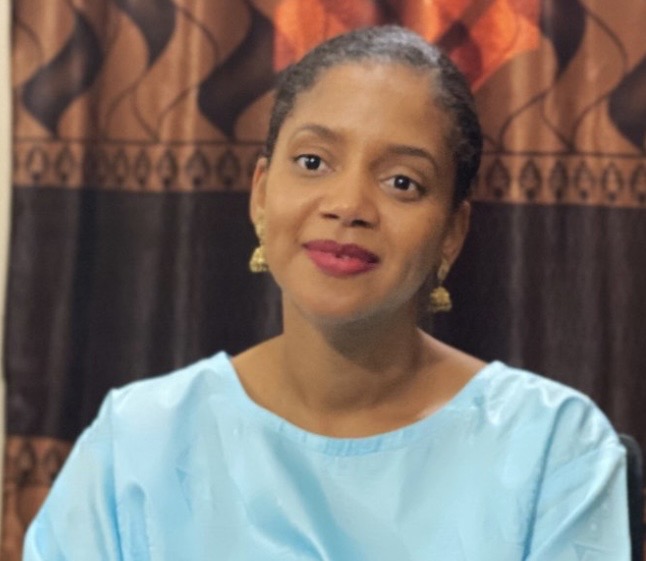
The Gambia lacks the forensic expertise and scientific tools needed to locate and identify victims of enforced disappearance, according to Ida Persson, head of the Post-TRRC Unit at the Ministry of Justice.
Persson, speaking in an interview with GRTS, said the shortage of forensic capacity remains a significant obstacle to resolving cases involving people who disappeared and whose families are still seeking answers about their fate.
The Truth, Reconciliation, and Reparations Commission, or TRRC, was mandated to investigate enforced disappearances and establish the whereabouts of those who went missing during the country’s period of authoritarian rule. But Persson said the commission was unable to resolve all such cases despite its investigations.
“So it’s a residual aspect of their mandate that they couldn’t do,” she said. “Their investigations didn’t lead to the unearthing of that information.”
The TRRC subsequently recommended that the government assume responsibility for locating those who disappeared and prosecuting people found responsible. The government accepted that recommendation in its white paper responding to the commission’s findings.
Persson said investigations and prosecutions involving enforced disappearances will now fall under the Special Prosecutor’s Office as part of the Special Accountability Mechanism.
But she said such investigations are particularly complex, requiring specialized investigative techniques, forensic expertise, and equipment that are not currently available in The Gambia. Developing that capacity, she added, is both difficult and costly.
To address the shortfall, Persson said the government is pursuing partnerships with the Alliance of Victim-Led Organizations, particularly the African Network Against Extrajudicial Killings and Enforced Disappearances. The network has established partnerships with organizations in Argentina and Guatemala that have experience conducting forensic investigations.
Persson also said the United States government has approved a $930,000 project through the United Nations Office on Drugs and Crime, with part of the funding expected to support efforts to strengthen The Gambia’s forensic capabilities.
“So we are looking at how to build partnerships so that forensic capacity can be increased — so DNA testing and this equipment that we need to be able to locate mass graves and the specialized way of exhuming them,” she said.
Beyond criminal investigations and prosecutions, Persson said the government has established a Task Force on Enforced Disappearance to address some of the administrative and psychosocial challenges facing families of missing victims.
Among its responsibilities is helping families obtain death certificates for people who have been missing for extended periods. Persson said the absence of such documentation has created legal and administrative difficulties for relatives, including accessing estates and resolving other family matters.
The task force includes representatives of the Alliance of Victim-Led Organizations and government institutions, including the ministries responsible for information and foreign affairs.
Comments are closed.