


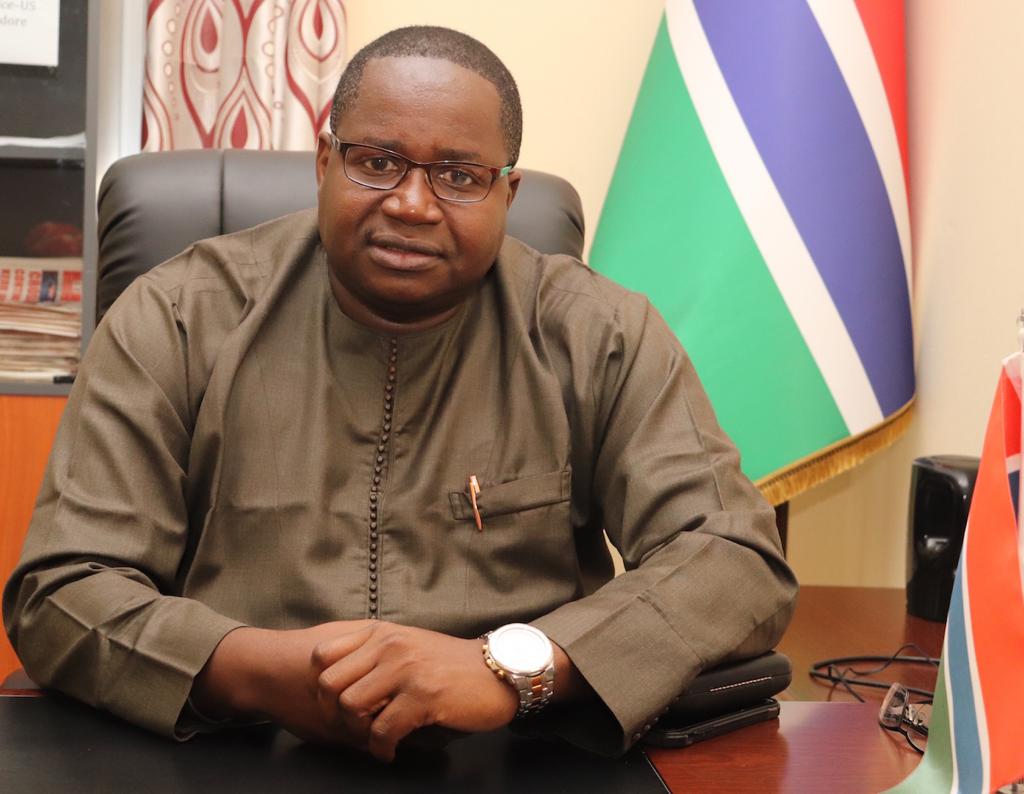
By Fatou Sillah
The Gambian government’s spokesperson and presidential adviser on diaspora affairs, Ebrima G. Sankareh, said in a recent radio interview that corruption should be understood as a global problem rather than one specific to The Gambia.
Speaking to West Coast Radio, Mr. Sankareh acknowledged that corruption remains a persistent challenge in the country but emphasized that it exists across nations at all levels of development.
“Corruption is a problem all over the world, from America to The Gambia—everywhere,” he said.
He argued that no society is entirely free of corruption, attributing the issue in part to human behavior. “There is not a single country that doesn’t have corrupt people; it is just human nature that people are corrupt, inherently corrupt; some people are inherently decent,” he said.
Mr. Sankareh also pushed back against criticism directed at the current administration, saying it is unfair to hold it solely responsible for longstanding structural problems.
“But if you have smart people, a small country, and few resources, you have crooks for decades who destroyed this country, and you have good people trying to fix it. I mean, you are trying to blame them for what happened for fifty, for sixty years; I think it is grossly unfair,” he said.
At the same time, he acknowledged that misconduct can occur within any government.
“We cannot sit here and say that in our government, there are no bad people. There are bad people in every government, but the fact of the matter is Adama Barrow is a star in terms of trying to mobilize our domestic resources to fix this country,” he said.
He went on to defend the record of President Adama Barrow, particularly in infrastructure development, describing his leadership as instrumental in mobilizing domestic resources to address the country’s challenges.
“He has tried,” Mr. Sankareh said, pointing to what he described as significant progress under the current administration.
Comments are closed.