


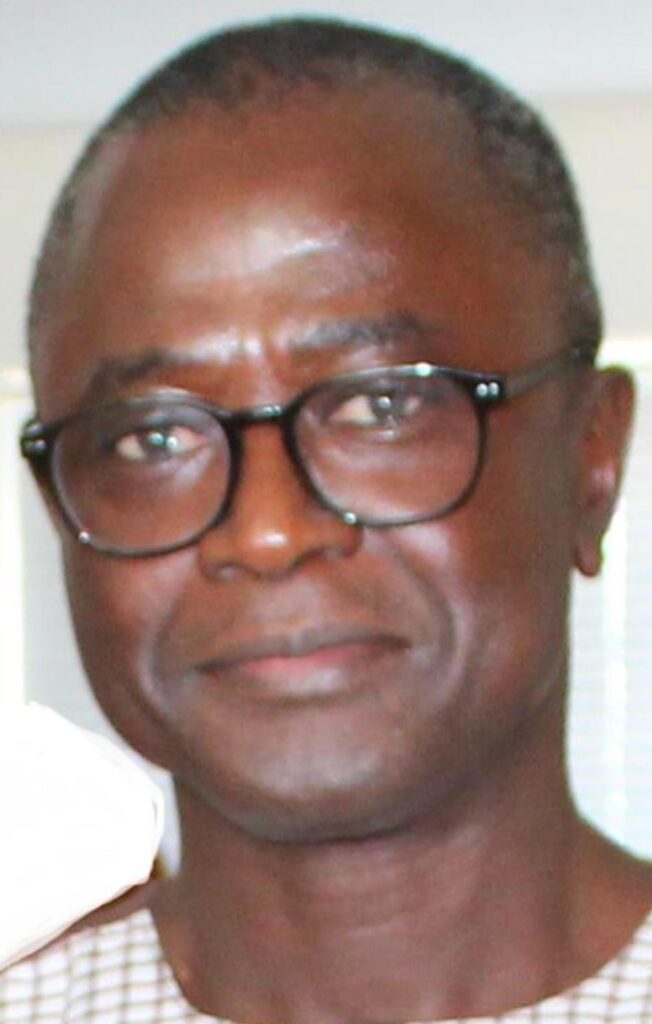
By Dr. Omar Janneh
Adama Barrow appears to have mastered a rare political art: the ability to commission everything, approve everything, and inaugurate everything while, ironically, avoiding personal responsibility for anything. Barrow seems to have an insatiable desire to approve everything- that advances his political interests, yet he appears reluctant to support a new constitution designed to define and limit presidential powers. With so many advisers surrounding the presidency, – I must add, at considerable expense to the taxpayer, one wonders why so many major decisions continue to go wrong. This begs the question: does the President really need such an army of advisers when his pen appears to be one of the most powerful tools in the country?
Oddly, matters of constitutional and institutional reforms seem buried in the dusty archives of broken promises. Clearly, politics should not only be about what a government builds; it must also be about what it protects too. We have seen that the government can build highways- of questionable quality- while simultaneously damaging the constitutional safeguards designed to protect citizens from excessive executive overreach. So, while the Barrow administration appears focused on building highways to impress visitors and showcase its version of development, anyone who visits the country during the rainy season will encounter another reality: many newly constructed roads become impassable due to flooding, while some households and neighbourhoods become submerged or difficult to access. These conditions create environmental challenges with serious implications for public health, including increased risks of waterborne diseases and the creation of breeding grounds for mosquitoes – https://www.facebook.com/reel/1657357098895898/?fs=e&mibextid=wwXIfr.
The energy sector provides another questionable approval. While the Karpowership arrangement may have provided temporary relief from electricity shortages, it seems the government lacked the imagination to recognise that a country struggling with limited resources should not spend on temporary solutions when those resources could have been directed towards permanent infrastructure. A serious government uses serious tools at its disposal to address serious challenges, rather than relying on what appear to be quick fixes.
As an academic, the transformation of institutions into universities is an initiative one would think I should welcome, but it also deserves serious scrutiny. Besides the University of the Gambia (UTG), the Gambia College has become the University of Education, the Management Development Institute has moved towards becoming a University of Civil Service, and GTTI has become the University of Applied Science and Technology. Yes, the country needs engineers, journalists, economists, farmers, lawyers, doctors, teachers, HR specialists, researchers and so on. Professions such as these are the foundation of any modern state. However, universities are not created simply by changing names of colleges or institutions. A university requires more than a change of name or status. It requires qualified professors, a strong research culture, functional laboratories, adequate funding for research and innovation, and robust academic standards where teaching is continuously informed and strengthened by research. Stable power and a robust digital infrastructure (- reliable electricity and internet connectivity) are essential in a modern academic environment, enabling access to global knowledge networks, supporting online resource acquisition and knowledge sharing, facilitating collaboration with researchers worldwide, as well as creating enabling conditions for innovation and technological advancement.Whether these essential foundations are/were properly considered before these expansions were undertaken are legitimate questions.
Similarly, in the health sector, one cannot help but question why, despite producing many medical graduates for a while now, national health outcomes continue to struggle. Producing professionals is important, but without the systems, resources, and institutions needed to support them, the expertise of the professionals cannot translate into meaningful improvements in public health and social progress.
Of all the approvals made by the administration, I think the most troubling are those involving the misuse of constitutional powers. The Barrow administration must understand that if government operates on the principle that because power exists, it can/must be exercised without sufficient explanation or restraint, then democracy travels down a very dangerous road.
The recent Supreme Court decision on the removal of former Auditor General Mr. Modou Ceesay serves as a reminder that the government itself must obey the rules it is entrusted to enforce. The lesson from constitutional democracies is simple: governments cannot become lawful merely because they are governments. They become legitimate when they respect and observe the limits placed upon them by the Constitution. Sadly, despite maintaining a bloated team, these qualities appear to be in short supply within the Barrow administration.
The consequences of unconstitutional actions can be financially painful for taxpayers. When government decisions result in expensive legal battles, ordinary citizens eventually pay the price. So, constitutional violations are not merely legal problems; they become economic and societal problems. The money spent on legal fees and compensation could instead support schools, hospitals and essential public services that address the genuine aspirations of many underserved citizens.
The concerns surrounding the objections raised by the Gambia Bar Association regarding the reported appointment of Mr. Edi Faal as Chief Justice highlights the principle that institutions survive when constitutional procedures are respected, particularly within the judiciary. A democracy cannot afford a situation where every major appointment and action by the Executive becomes the subject of debate over whether the Constitution was properly followed. Indeed, citizens should not have to solve a constitutional puzzle after decisions are made. In a serious country, the Constitution serves as the guide before decisions are taken. Why is that too difficult to do in The Gambia?
The greatest constitutional irony remains the lacklustre constitutional reform process. The draft Constitution failed to pass Parliament, leaving the promises of 2016 uninitiated. I do not think politics should also be about what is technically legal; it should be about credibility, trust, morality and keeping promises made to citizens.
Citizens should not confuse promises with achievements; they must continue to hold politicians accountable for delivering on their commitments. In my mind’s eye, the question is whether Gambians approve of the way Barrow exercises power. A president who approves roads can be praised. A president who approves infrastructure can be recognised. But a president who appears to prioritise his political future above constitutional reform invites difficult questions and leaves unresolved challenges that could ultimately constrain the country for years to come.
Who advises the President on constitutional matters when he seeks to test or stretch constitutional boundaries to further his political interests? Among his army of advisers, who reminds him that political power is temporary? Does the Attorney General or the Chief Justice have the independence and courage to protect institutions when those institutions need protection from those who control them? And is it far-fetched to suggest that, in a healthy democracy, the answer to these questions should never rest with one individual? It is not unreasonable to argue that the final signature or approval should not belong to Barrow. It should belong to the Constitution, Parliament, the courts, civil society, and ultimately the citizens themselves. The final approval belongs to the Gambian people; it is their approval that truly matters in a democracy. The December 2026 elections will reveal what judgment the court of public opinion delivers on Barrow’s overall performance and legacy. A united opposition coalition, one that can appeal to undecided voters and presents a credible alternative by drawing on the same formula that freed us from Jammeh’s brutal regime, may offer the strongest opportunity to capture and reflect the voice of the people. When a strategy has worked before, it is sensible to search for the solution where it was last found (- lesson in history); so, we must look for our keys where we lost them.
Comments are closed.