

Kiang West Lawmaker Accuses Barrow of Squandering Public Funds on Nationwide Tour
By Seedy Jobe
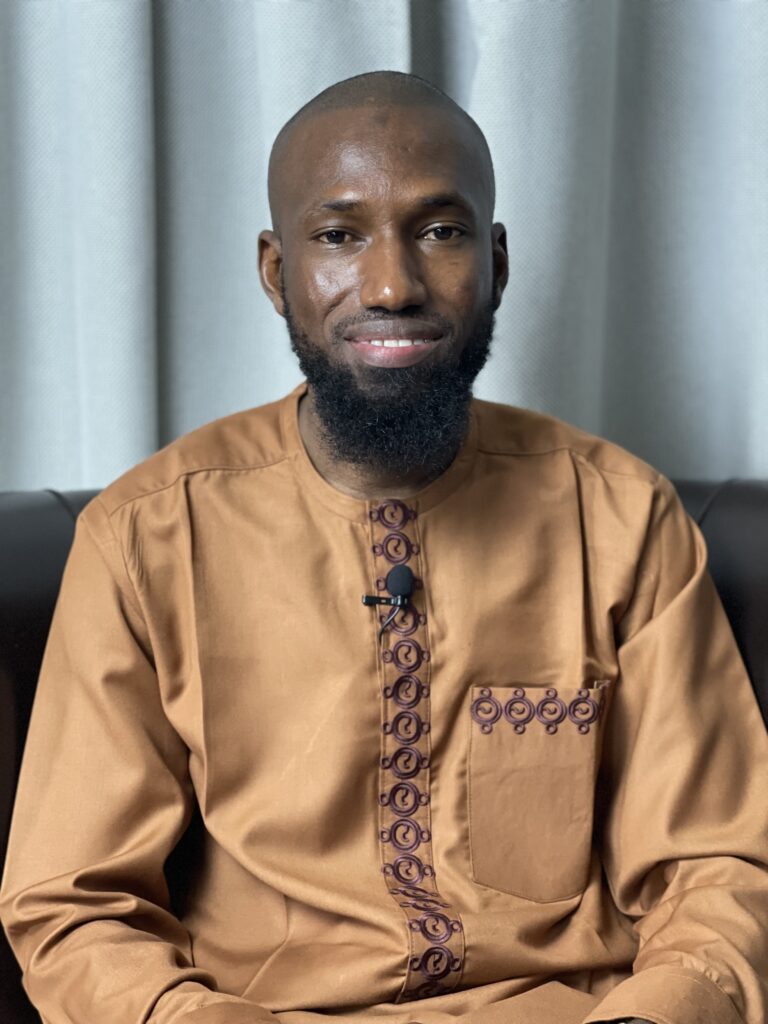
The National Assembly member for Kiang West, Modou Lamin Ceesay, has accused President Adama Barrow of using public funds to finance political activities under the guise of his nationwide meet-the-people tour, raising concerns about government spending and the oversight of public finances.
Speaking on Kerr Fatou’s Politic Kaacha program on Tuesday, Mr. Ceesay challenged the president’s defense of the tour, arguing that taxpayer money should not be used to advance partisan political interests.
His remarks followed President Barrow’s recent assertion that critics of the tour were engaging in political attacks. The president maintained that politics could not be separated from the tour, given his administration’s development record.
Mr. Ceesay rejected that justification, saying the tour was financed through the national budget and that public resources should not be used for political campaigning.
The lawmaker recalled discussions during last year’s budget proceedings, when Modou Ceesay, the chief of staff at the Office of the President, reportedly acknowledged that 2026 would be a political year and that the president would need to engage in political activities.
According to the Kiang West legislator, the remarks came as the Finance and Public Accounts Committee sought to reduce the Office of the President’s budget allocation by 50 million dalasis.
He argued that the acknowledgment reinforced his contention that the tour served a political purpose and questioned the legality of financing such activities with public funds.
Mr. Ceesay also raised concerns about what he described as persistent spending beyond approved budget allocations.
He said he had warned during the 2025 budget deliberations that the president’s expenditure on the tour would likely exceed whatever amount the National Assembly approved.
According to Mr. Ceesay, an allocation of 30 million dalasis could result in an actual spending of 63 million dalasis, while a 50 million dalasis allocation could lead to expenditures of 75 million dalasis or more.
He said the National Assembly approved 50 million dalasis for the president’s tour in 2026, but that expenditure had already reached 75 million dalasis by June, following just two legs of the tour.
The figure, he added, did not include spending on the president’s latest tour, which had yet to be accounted for.
The spending figures cited by Mr. Ceesay could not be independently verified from the information available for this report.
The lawmaker questioned the government’s spending priorities, particularly as public hospitals continue to face shortages of beds and other essential resources.
He referred to images recently circulated on social media showing patients sleeping on the floor at Banjul Hospital, including women and patients in wheelchairs receiving intravenous treatment.
He also cited reports of two mothers sharing a single hospital bed with their newborn babies at other health facilities.
Against that backdrop, Mr. Ceesay characterized the expenditure on the president’s tour as a misuse of scarce public resources.
“What President Barrow is doing is just squandering money,” he said.
Beyond the cost of the tour, Mr. Ceesay raised broader concerns about weaknesses in The Gambia’s public finance laws, particularly provisions governing virement, the transfer of funds between budget allocations.
He argued that the Public Finance Act and its accompanying regulations permit such transfers without establishing adequate limits, potentially allowing the executive to substantially alter spending priorities without seeking fresh approval from the National Assembly.
Mr. Ceesay described the national budget as one of the country’s most consequential laws, second only to the Constitution in importance, and argued that changes to approved expenditure should be subject to meaningful legislative scrutiny.
He called for clearer statutory limits on virement and stronger parliamentary oversight to prevent what he described as excessive executive discretion over public spending.
Without such safeguards, he warned, the National Assembly’s authority to approve government expenditure could be undermined by subsequent transfers of funds that lawmakers have little power to control.
Comments are closed.