

Darboe Calls Rising Cost of Living Barrow Government’s Biggest Failure

By Makutu Manneh
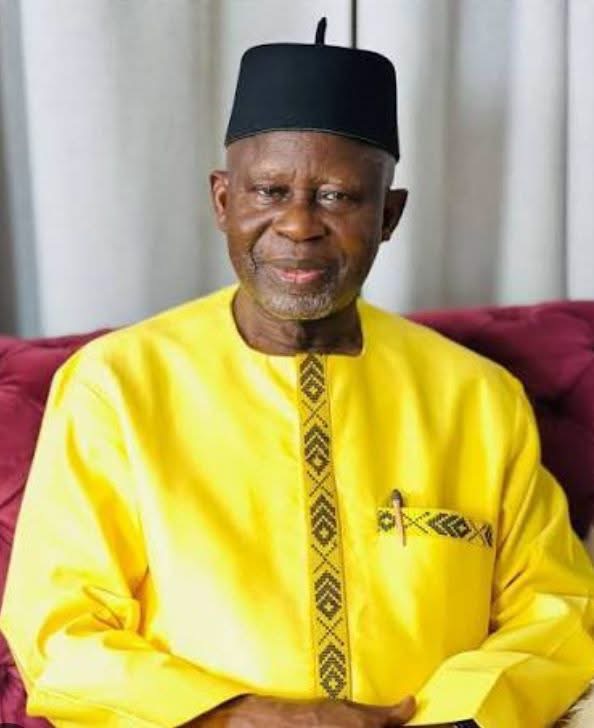
Ousainu Darboe, the leader of the United Democratic Party (UDP), has described the rising cost of living as the most significant failure of President Adama Barrow’s administration, accusing the government of neglecting the economic hardships facing Gambians while prioritizing road construction projects he characterized as substandard.
Speaking in an interview with West Coast Radio, Mr. Darboe said the administration had fallen short in several areas of governance, but its failure to ease the financial burden on ordinary households was particularly troubling.
He challenged claims by the information minister, Dr. Ismaila Ceesay, that the price of a bag of rice had fallen from between 2,500 and 2,800 dalasis to 1,500 dalasis.
“I would want to know that shop because I really don’t want to spend more than D2,000 on rice,” Mr. Darboe said. “So when Dr. Ceesay sits here and says that, he is talking with his cheeks.”
Mr. Darboe also questioned the minister’s credibility, suggesting that his defense of the administration was motivated by a desire to protect his position in government.
“But what do you expect him to do? You expect him to come and admit that their government has failed,” he said. “If he did, he would be fired; he has a job to protect because he wanted a job in the first instance. That is why he abandoned CA to come to Barrow.”
Turning to his own political ambitions, Mr. Darboe outlined measures he said he would pursue during his first 100 days in office if elected president, placing agricultural development and the cost of living at the center of his economic agenda.
He said he would seek the support of the National Assembly to introduce measures aimed at reducing household expenses, arguing that The Gambia’s heavy dependence on imported food had contributed significantly to rising prices.
His proposed approach would emphasize increased domestic food production, greater investment in agriculture and stronger government support for farmers.
Mr. Darboe said his administration would increase agricultural spending and provide additional assistance to horticulturalists to expand vegetable production. He cited the price of onions, which he said had reached 2,000 dalasis per bag, as an example of the pressure facing consumers.
Rice production would also be a priority, he said, with greater support for local farmers and incentives for private investment intended to reduce the country’s reliance on imports and lower production costs.
Beyond food prices, Mr. Darboe identified affordable housing as another pressing concern, particularly for public-sector workers.
He cited the example of a young corporal in the Gambia Police Force who must rent private accommodation because of inadequate housing facilities at police barracks, arguing that such circumstances illustrated the broader challenges facing low-income workers.
Asked how he would finance his proposals — whether through higher taxes, additional borrowing or the reallocation of existing government spending — Mr. Darboe ruled out tax increases, saying they would place further strain on households already struggling to meet basic needs.
Instead, he proposed redirecting public resources toward priority sectors and improving the management of the country’s natural and economic assets.
He said his administration would seek to generate greater benefits for Gambians from the country’s marine resources while expanding tourism beyond the Greater Banjul Area to communities in the provinces.
Mr. Darboe presented the proposals as part of a broader effort to strengthen domestic production, diversify economic opportunities and reduce the financial pressures facing Gambian households.
He did not provide detailed budget estimates or a specific financing framework for the proposed initiatives during the interview.
Comments are closed.