

GRA Chief Calls for Stronger Regional Cooperation to Protect Africa’s Tax Base

By Makutu Manneh
Yankuba Darboe, commissioner general of the Gambia Revenue Authority, has called for deeper cooperation among African tax administrations, warning that illicit financial flows, profit shifting, and increasingly borderless business activities are eroding the continent’s tax base and limiting governments’ ability to finance development.
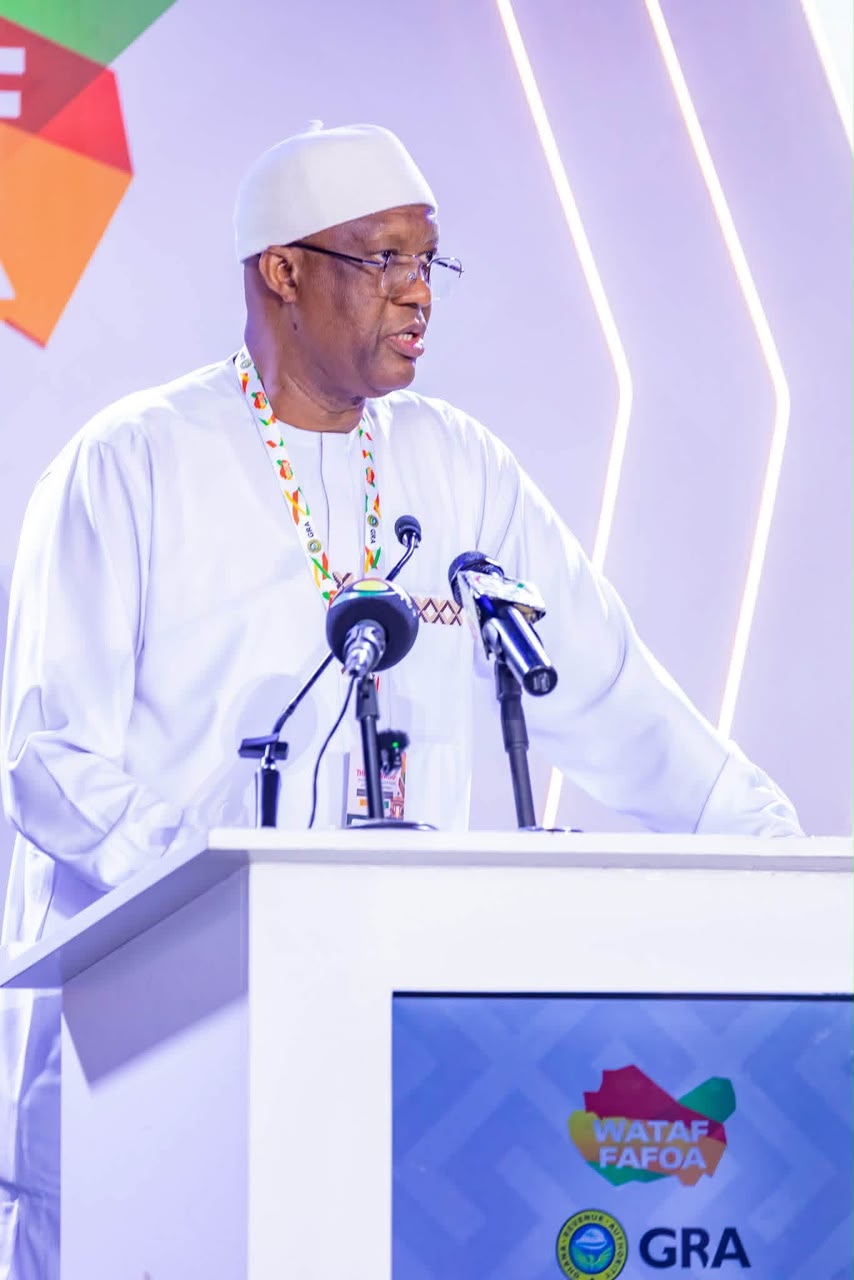
Speaking at a high-level policy dialogue during the annual general meeting of the West African Tax Administration Forum, or WATAF, in Accra, Ghana, Mr. Darboe said African countries must strengthen domestic revenue collection if they are to finance a greater share of their own development.
The meeting coincided with WATAF’s 15th anniversary, marking a decade and a half of efforts to promote cooperation and strengthen tax administration across West Africa.
“Africa’s development cannot be outsourced,” Mr. Darboe said. “Development partners will remain important. Foreign investment will remain important. Concessional financing will remain important. But ultimately, African countries must progressively finance a greater share of their own development.”
That effort, he said, requires tax administrations to look beyond the collection of revenue and recognize their broader role in financing public services, including schools, hospitals, roads, electricity, and security, as well as infrastructure needed to support economic growth.
Mr. Darboe said that although West African countries differ in size, language, and legal systems, they face many of the same tax challenges—problems that increasingly transcend national borders.
He pointed in particular to illicit financial flows, aggressive tax planning, trade misinvoicing, and profit shifting, citing a United Nations Conference on Trade and Development estimate that Africa loses about $88.6 billion annually through illicit capital flight, an amount equivalent to roughly 3.7 percent of the continent’s gross domestic product.
Commercial practices, including trade misinvoicing, abusive transfer pricing, and artificial profit shifting, contribute significantly to those losses, he said.
“Africa cannot mobilize its resources without protecting its tax base,” Mr. Darboe said.
The challenge has become more complicated as companies, capital, and digital transactions increasingly operate across borders while national tax authorities remain largely confined to their individual jurisdictions, he said. That imbalance, he argued, makes cooperation among governments and revenue authorities essential.
Mr. Darboe said greater policy coordination should not be understood as requiring African countries to adopt identical tax laws or rates. Instead, he said, governments should recognize their shared interests and ensure that tax, trade, and investment policies complement rather than undermine one another.
Such coordination, he added, could also reduce opportunities for businesses to exploit gaps between different national and regional tax systems.
Mr. Darboe pointed to negotiations over a United Nations Framework Convention on International Tax Cooperation as an example of the influence African countries can exercise when they coordinate their positions. He credited the African Group at the United Nations with advocating for a more inclusive international tax system.
He also praised the African Tax Administration Forum, or ATAF, for helping strengthen technical expertise across the continent and representing African interests in international tax discussions.
But Mr. Darboe said regional organizations must move beyond what he described as cooperation in principle toward more practical collaboration.
He called for greater sharing of information and intelligence about emerging tax risks, as well as regional networks of transfer-pricing specialists, auditors and investigators. Tax authorities, he said, should also exchange information about avoidance schemes and technological solutions that have proved effective in individual countries.
Technology alone, however, would not be enough to modernize tax institutions, Mr. Darboe said.
“Technology can modernize systems, but leadership sustains reform,” he said, arguing that the modern head of a revenue authority must serve not only as an administrator but also as a strategist, advocate for reform and guardian of institutional integrity.
Tax reforms frequently encounter resistance, particularly when they close loopholes or disrupt established practices, he said. Sustaining such changes therefore requires political support and a sense of ownership among government institutions.
Mr. Darboe said national and regional interests should no longer be viewed separately in an increasingly interconnected economy. While every revenue authority has a responsibility to protect its country’s tax base, he said, doing so increasingly depends on cooperation beyond national borders.
He concluded by calling for a stronger and more coordinated African position in international tax negotiations, arguing that wealth generated on the continent should make a fair contribution to its development.
That effort, he said, would require stronger cooperation through WATAF, ATAF and other continental institutions.
Comments are closed.