

State Seeks Recusal of Four Supreme Court Justices in Challenge to Chief Justice Faal’s Appointment

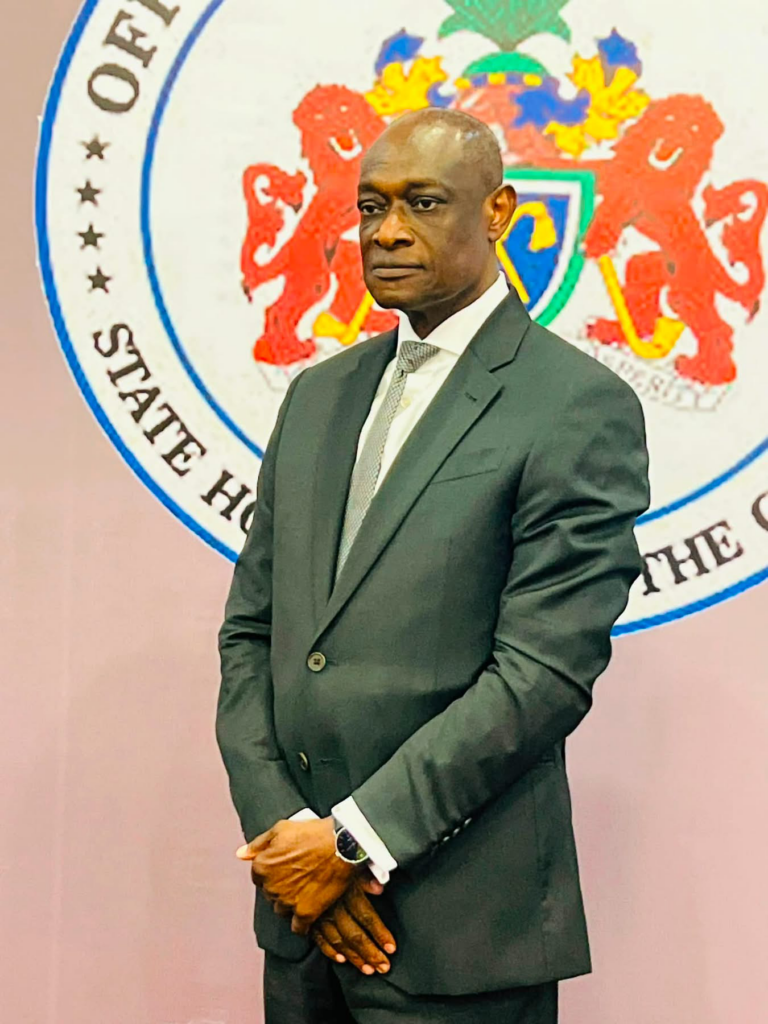
The Attorney General’s Chambers has asked the Supreme Court to recuse four justices, including Chief Justice Edrissa M.O. Faal, from hearing a constitutional challenge to Mr. Faal’s appointment as Chief Justice.
The application was filed in the case brought by the Gambia Bar Association, through its trustees Neneh M.C. Cham, Abdoulie Fatty and Nyima Samateh, against the Attorney General and Mr. Faal.
The Bar Association is challenging the legality of Mr. Faal’s appointment, arguing that he does not meet the qualifications prescribed under Section 139 of the 1997 Constitution. It is asking the Supreme Court to declare the appointment unconstitutional, null and void, and to order Mr. Faal to refund any money paid to him as a result of the appointment.
In a motion filed on behalf of the defendants, Principal State Counsel Patrick Gomez asked the court to recuse Chief Justice Faal, Justice Cherno S. Jallow, Justice Omar M.M. Njie and Justice Awa Bah from hearing the case.
The state set out separate grounds for each proposed recusal.
In the case of Chief Justice Faal, the state argued that because he is a named defendant and his appointment is the subject of the litigation, he has a direct interest in the outcome and cannot preside over a case challenging the validity of his own appointment.
The state also sought the recusal of Justice Jallow, citing his seniority on the Supreme Court. According to the affidavit supporting the motion, Justice Jallow is among the most senior sitting members of the court and could potentially benefit if Mr. Faal’s appointment were set aside.
The state argued that this creates an interest in the outcome of the case.
For Justice Njie, the affidavit states that he participated in meetings of the Judicial Service Commission on June 9 and July 1, 2026, when the commission considered Mr. Faal’s qualifications and recommended his appointment.
The state argues that Justice Njie’s participation in that process creates a conflict because the Supreme Court is now being asked to determine the constitutional validity of an appointment he helped recommend.
The affidavit identifies the Judicial Service Commission at the time as comprising then-Chief Justice Hassan B. Jallow as chair, Justice Omar M.M. Njie, Solicitor General and Legal Secretary Hussein Thomasi, former Secretary General Sulayman Samba, Gambia Bar Association representative Mary A. Samba Jallow, and Judicial Secretary Abdou Conteh.
The state also asked for the recusal of Justice Bah, citing her appointment to the ECOWAS Community Court of Justice for the 2026-2030 term and her expected assumption of duties there in October 2026. The motion argues that her forthcoming appointment creates a conflict of interest.
The state further asked the Supreme Court to direct that the case be heard by a panel excluding all four justices.
The application is supported by an affidavit sworn by Fatou Waggeh, a legal clerk at the Attorney General’s Chambers. The affidavit refers to minutes from the Judicial Service Commission meetings of June 9 and July 1 and to the final communiqué of the 69th Ordinary Session of the ECOWAS Authority of Heads of State and Government, which confirmed Justice Bah’s appointment to the regional court.
The Bar Association filed an affidavit opposing parts of the recusal application on Sept. 9, 2026, through its president, Neneh M.C. Cham.
The association does not oppose the recusal of Chief Justice Faal. It also acknowledges Justice Njie’s membership of the Judicial Service Commission, while seeking to have part of the state’s argument relating to him struck out.
It opposes, however, the proposed recusals of Justice Jallow and Justice Bah.
On Justice Jallow, the Bar Association argues that seniority alone does not establish that he would become Chief Justice if Mr. Faal’s appointment were invalidated. It noted that Mr. Faal himself was appointed from outside the existing ranks of Supreme Court justices.
The association also argues that neither Justice Jallow’s seniority nor Justice Bah’s appointment to the ECOWAS court establishes a personal or financial interest, bias, or conflict sufficient to justify recusal.
The Bar Association has also filed a preliminary objection to the state’s motion, arguing that the request for the Supreme Court to determine in advance how a substitute panel should be constituted is premature.
It says no panel has yet been constituted, no hearing date has been fixed, and no issue over quorum has arisen. On that basis, the association described that part of the state’s motion as an abuse of the court process.
The recusal dispute is one of several preliminary battles already surrounding the case.
The state had earlier filed a separate preliminary objection on Aug. 25, challenging the Bar Association’s standing to bring the case and arguing that the reliefs it seeks are not justiciable.
On standing, the state argues that the Bar Association’s trustees are not authorized under the association’s constitution to institute proceedings on its behalf.
The state has asked the Supreme Court to dismiss the case at the preliminary stage on those grounds.
The Bar Association, meanwhile, has sought an accelerated hearing of the substantive case, a request the state has opposed, arguing that such a timetable would unnecessarily limit its opportunity to prepare a defense.
When contacted about the next steps in the proceedings, the Registrar of the Supreme Court said the matter would be addressed after the court’s vacation in accordance with the Supreme Court Rules.
Comments are closed.