

NAWEC Electricity Chief Links Banjul Power Shortages to Post-2017 Investment Surge

By Makutu Manneh
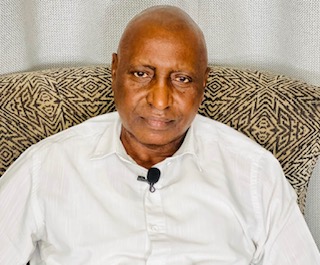
Pateh Sowe, the chief operating officer for electricity at the National Water and Electricity Company, has attributed growing pressure on the power supply in the Greater Banjul Area to a surge in investment and electricity demand since the country’s political transition in 2017.
Speaking in an interview on Kerr Fatou, Mr. Sowe rejected suggestions that NAWEC’s expansion of electricity access across the country was primarily responsible for the current supply constraints. Instead, he said much of the increase in demand had occurred in the Greater Banjul Area, where investment and development accelerated after 2017.
Mr. Sowe said investors who had left The Gambia during the rule of former President Yahya Jammeh returned after the change in government, contributing to a rapid increase in commercial and residential development.
“Look at this area we are in right now,” he said. “The electricity provided here was around four megawatts. Today it is around 20 megawatts—this area alone—because of the investment that is done here. So we have to ensure that at least those investments are also covered.”
He pointed to Brufut and surrounding communities as examples of areas that have undergone significant development. New homes and businesses, he said, require substantially more electricity than households relying mainly on basic appliances such as fans and refrigerators, particularly as the use of air-conditioners and other power-intensive equipment increases.
The growth has also forced NAWEC to upgrade parts of its distribution infrastructure, Mr. Sowe said, including replacing 250-kilovolt-ampere transformers with larger 500-kVA and one-megavolt-ampere units to accommodate rising demand.
Gallo Saidy, NAWEC’s managing director, offered a similar assessment, describing as a “fallacy” the argument that the expansion of electricity to communities outside the Greater Banjul Area was a significant cause of the current supply problems.
Mr. Saidy said electricity consumption in provincial areas remained comparatively low despite the expansion of the national grid. He cited Soma and surrounding areas, where he said demand remained below 12 megawatts even after significant expansion.
“The constraint we have is within the Greater Banjul Area,” Mr. Saidy said. “This is where the constraint is because of the expansion, and at peak periods the demand just shoots up.”
He said extending electricity to rural communities should instead be viewed as an important development that has improved living conditions for people who previously lacked reliable access to power.
The officials’ comments come as NAWEC faces growing scrutiny over persistent electricity shortages, particularly in the Greater Banjul Area, where rising demand has placed increasing pressure on the country’s available generation and distribution infrastructure.
Comments are closed.