

“President Barrow Has Never Been Angry at Citizens,” Mballow Says as He Claims NPP Support Is Growing in KMC

By Seedy Jobe
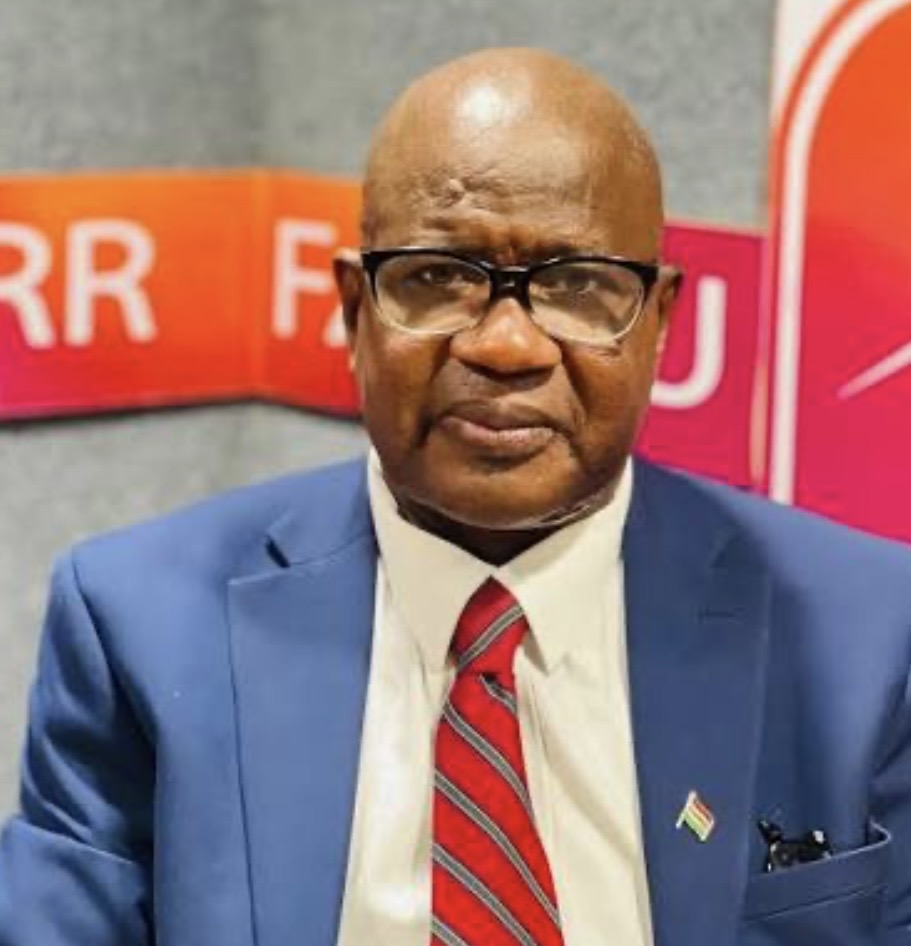
Presidential Adviser Saihou Mballow has defended President Adama Barrow against accusations that he threatened citizens during his recent Meet the People Tour in Banjul, insisting that the president’s remarks were misunderstood and that he has never expressed anger toward Gambians for exercising their rights.
Speaking in an interview with Hill Top FM on Tuesday, Mr. Mballow addressed a range of issues, including the controversy surrounding the president’s remarks, the National People’s Party’s (NPP) political standing in the Kanifing Municipality (KMC), and growing public concerns over the cost of living.
His comments followed criticism of President Barrow’s remarks directed at National Assembly Member Modou L. Bah during the Banjul leg of the tour. Critics accused the president of displaying anger and threatening citizens who were exercising their constitutional rights.
Mr. Mballow rejected that interpretation, arguing that the president’s comments had been taken out of context. He maintained that Barrow was responding specifically to Mr. Bah’s conduct, accusing the lawmaker of involving minors aged 13 and 15 in the controversy.
The presidential adviser was also questioned about allegations that the taxpayer-funded Meet the People Tour had increasingly become a political campaign platform, with the president directing criticism at opposition figures, including Coalition 2026 leader Talib Ahmed Bensouda and United Democratic Party (UDP) leader Ousainu Darboe, rather than focusing on pressing national concerns.
Mr. Mballow did not directly address whether public resources were being used for partisan political purposes but defended the president’s conduct during the tour.
Turning to the NPP’s political fortunes, he dismissed suggestions that poor attendance at the party’s gatherings in Serrekunda and Manjai reflected declining support in KMC and the West Coast Region.
Instead, he claimed that internal opinion polling conducted by the ruling party indicated growing support in both areas, which he attributed to development projects undertaken by the Barrow administration.
Mr. Mballow acknowledged that attendance at the Manjai gathering was initially low but attributed the slow turnout to delays in preparing food for participants. He maintained that the event ultimately attracted a substantial crowd after lunch was served.
The adviser also responded to allegations by UDP’s Haji Suwaneh that the crowd at the Manjai event did not accurately reflect the ruling party’s support in KMC because supporters had been transported from Foni and other areas to bolster attendance.
Mr. Mballow dismissed the criticism, arguing that political supporters were free to attend party gatherings anywhere in the country, regardless of where they lived.
He said that just as he could travel from the Kombos to Basse or Foni to attend political activities, NPP supporters from other regions had an equal right to participate in events outside their communities, provided they could afford the journey.
Despite acknowledging that supporters had traveled from other areas, he insisted that approximately 90 percent of those who attended the Manjai gathering were residents of KMC.
On the ruling party’s prospects ahead of the December 2026 presidential election, Mr. Mballow played down concerns that rising living costs, security challenges and the prices of essential commodities could undermine President Barrow’s re-election bid.
He acknowledged that criticism of the government would continue but argued that the administration had made progress in addressing economic pressures.
Citing rice prices as an example, Mr. Mballow claimed that a bag of rice previously selling for between D2,300 and D2,500 now costs approximately D1,680 to D1,700. He attributed the reduction to what he described as the effective work of the Ministry of Trade.
He also argued that The Gambia was not insulated from global economic pressures, noting that international price increases continued to affect domestic markets.
Asked why Gambians should give President Barrow another term in office, Mr. Mballow pointed to what he described as the administration’s achievements in maintaining peace, strengthening democracy and protecting fundamental human rights.
He particularly highlighted freedom of expression and press freedom, arguing that Gambians continued to enjoy important democratic liberties under Barrow’s leadership.
Mr. Mballow also cited investments in agriculture, road infrastructure, bridges and education as evidence of the government’s development record.
He expressed confidence that these achievements would persuade voters to re-elect President Barrow in December, despite mounting criticism from opposition parties over the economy and the administration’s governance record.
Comments are closed.