

“Adama, Answer the Call of the citizens. Even Allah Answered Jahannam” — Imam Ba Kawsu Urges Barrow to Heed Citizens’ Cries Over Power Outages

By Seedy Jobe
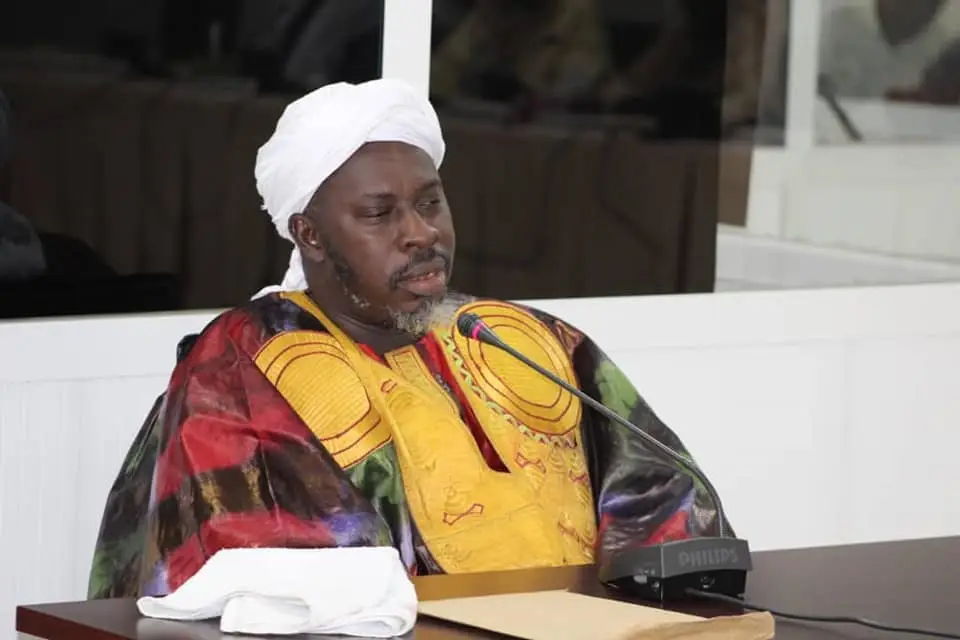
Prominent Islamic cleric Imam Ba Kawsu Fofana has appealed directly to President Adama Barrow to address The Gambia’s persistent electricity shortages, invoking Islamic teachings to describe the hardship prolonged power outages have imposed on households, businesses, and health facilities.
In a Friday sermon that has circulated widely on WhatsApp and Facebook, Imam Fofana said his message was directed to the country as a whole but particularly to President Barrow.
Drawing on an Islamic teaching about Jahannam, or hellfire, Imam Fofana recounted how it complained to Allah about the intensity of its own heat and was granted relief. He then invoked the story as a metaphor for the suffering of Gambians enduring prolonged blackouts.
“Adama, answer the call of the citizens,” he said. “Even Allah answered Jahannam.”
The cleric pointed to a recent candlelight protest in Banjul, where residents took to the streets amid widespread frustration over electricity shortages. He described the demonstration as an extraordinary expression of public distress over unreliable electricity, water shortages and worsening living conditions.
He called on the president and his government to work toward providing uninterrupted electricity in Banjul and throughout the country.
Imam Fofana devoted much of his sermon to the human consequences of the outages, arguing that the electricity crisis extends far beyond the inconvenience of sitting in darkness.
Families, he said, are spending nights in oppressive heat without fans or air conditioning, while mosquitoes and poor ventilation make conditions particularly difficult for children, older people and those with health problems.
He expressed particular concern about hospitals and other health facilities, saying power and water shortages could make already difficult conditions worse for patients and medical workers. He cited asthma patients and others with respiratory difficulties as among those especially vulnerable during prolonged outages.
Imam Fofana said the deterioration in electricity supply had become particularly severe in recent months, coinciding with the rainy season and intensifying the discomfort experienced by households.
The consequences, he said, have also spread through the economy.
Businesses and trades that depend on electricity have struggled to operate, he said, citing tailors unable to complete clothing orders and garages unable to perform work requiring electrical power. Even mosques, he added, have sometimes been unable to operate their sound systems because of outages.
“The entire Banjul lit a candle,” Imam Fofana said, referring to the protest. “Serrekunda said hotness, Brikama said hotness, Basse said hotness, Jarra Soma said hotness — the length and breadth of the country said hotness.”
He stressed that his intervention should not be interpreted as partisan politics, describing it instead as an appeal for the government to respond to the hardship citizens say they are experiencing.
“Answer the people,” he said.
The sermon comes amid heightened public scrutiny of the country’s electricity supply, with recent outages prompting protests and renewed demands for explanations from the government and the National Water and Electricity Company.
For Imam Fofana, however, the issue was ultimately framed less as a political dispute than as a question of leadership’s obligation to respond when citizens cry out for relief.
Comments are closed.