

Gambia Hosts ECOWAS Competition Summit as West Africa Pushes for Fairer, More Integrated Markets

By Seedy Jobe
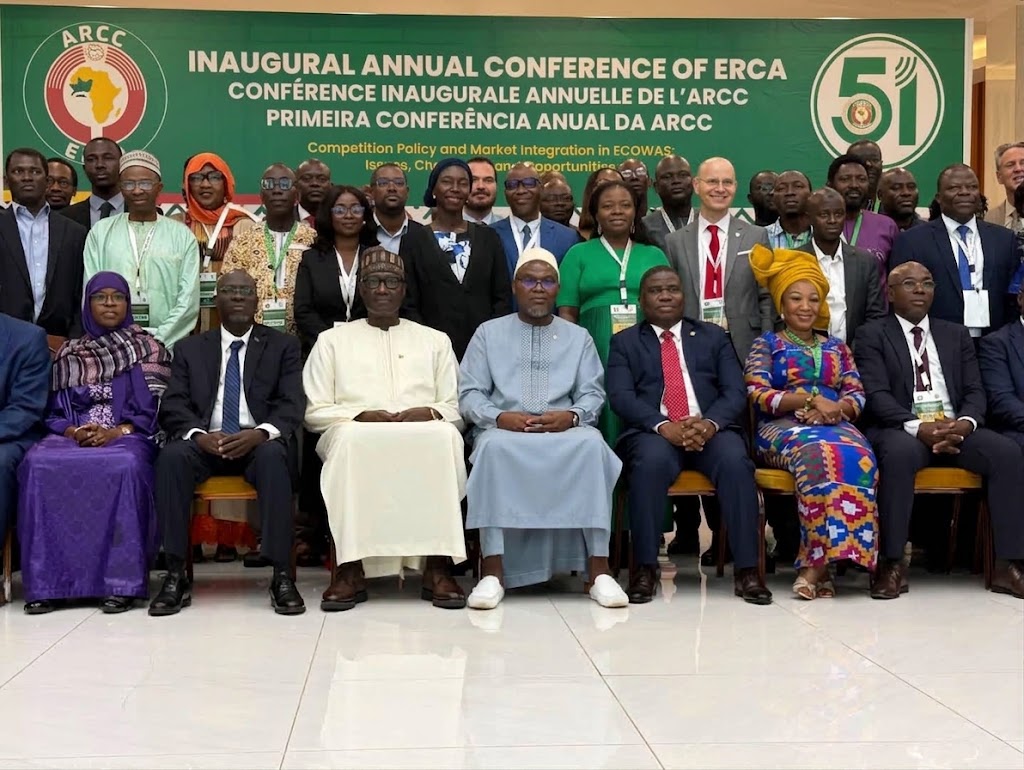
The Gambia on Tuesday opened the inaugural annual conference of the ECOWAS Regional Competition Authority, bringing policymakers and regulators from across West Africa together for three days of talks on how stronger competition rules could help create a more integrated regional market while protecting consumers and small businesses.
The conference, organized by the ECOWAS Regional Competition Authority, or ERCA, is being held from Sept. 15 to 17 at the Sir Dawda Kairaba Jawara International Conference Centre.
Under the theme, “Competition Policy and Market Integration in ECOWAS: Issues, Challenges, and Opportunities,” participants are examining how competition policy can support regional trade, investment, and economic integration while preventing monopolies, cartels, and other practices that can distort markets.
Vice President Muhammed B.S. Jallow, ECOWAS Commission President Birame Diop and representatives of national competition authorities from across the region attended the opening ceremony.
Speaking on behalf of President Adama Barrow, Mr. Jallow described the gathering as an important moment for regional economic cooperation.
“Your presence here underscores our shared conviction that regional integration and competitive markets are the bedrock of West Africa’s economic future,” he said.
Mr. Jallow argued that open and competitive markets were particularly important for ordinary consumers and small businesses, helping protect households from unfair prices while creating opportunities for entrepreneurs and attracting investment.
Effective competition rules, he said, can have an especially significant impact on low-income households, women traders, and young entrepreneurs, whose livelihoods are often more vulnerable to rising prices and distorted markets.
“Sound economic policy is paramount for both individual member states and the broader ECOWAS region,” he said.
But Mr. Jallow cautioned that greater economic integration should not simply allow monopolies and cartels to expand across national borders. Instead, he said, a common regional market should produce tangible opportunities for businesses and consumers throughout West Africa.
The vice president also reaffirmed The Gambia’s support for ERCA, which is headquartered in the country. He announced that the government had allocated land for the construction of the authority’s permanent headquarters and appealed to the ECOWAS Commission and development partners to support the project.
Mr. Jallow also pointed to domestic efforts to strengthen competition and consumer protection, including the Competition and Consumer Protection Bill of 2026 and new merger regulations expected to take effect this year.
The measures, he said, would give the Gambia Competition and Consumer Protection Commission stronger powers to address market distortions and enforce competition rules.
He urged conference participants to focus particularly on sectors that have a direct impact on daily life, including transportation, telecommunications, energy, agriculture, and the digital economy. The ultimate measure of successful competition policy, he said, should be whether consumers see lower costs and small and medium-sized businesses gain greater opportunities.
Mr. Diop thanked The Gambia for hosting the gathering and said ERCA’s presence in Banjul reflected the country’s commitment to the broader ECOWAS economic integration agenda.
He said the conference was taking place as West African economies undergo significant changes driven by digitalization, e-commerce and shifts in regional and global supply chains.
Regional integration, Mr. Diop said, must therefore involve more than simply removing barriers to trade. Governments must also ensure that the markets created through integration remain open, fair and competitive.
He described competition policy not merely as a regulatory tool but as an important part of economic development, capable of encouraging innovation, improving efficiency and protecting consumers.
ECOWAS began developing its regional competition framework in 2007, Mr. Diop said, while ERCA became operational in 2019. Since then, the authority has worked to establish its legal and institutional framework, with the focus increasingly turning toward implementation and enforcement across member states.
Mr. Diop also welcomed ERCA’s planned investigation into the cocoa value chain, an industry of particular importance to major producers such as Côte d’Ivoire and Ghana. He urged member states to cooperate with the investigation.
The broader goal, he said, should be a regional marketplace in which businesses can produce, finance and distribute goods across national borders without artificial barriers or anticompetitive practices.
“Our objective must now be to ensure the effective implementation of this framework across the community,” Mr. Diop said. “Competition policy must accompany our broad economic transformation. We must produce more, process more, and create greater value within our region.”
The conference continues through Thursday, with discussions expected to focus on competition in key industries, enforcement of regional rules and ways to ensure that deeper economic integration translates into practical benefits for West African consumers and businesses.
Comments are closed.