

Darboe Says UDP Was ‘Born Out of Tyranny,’ Drawing Parallel With PPP’s Colonial-Era Origins

By Seedy Jobe
Ousainu Darboe, the leader of the United Democratic Party, drew a parallel between his party’s founding three decades ago and the emergence of the People’s Progressive Party during the colonial era, arguing that both political movements were products of defining periods in The Gambia’s history.
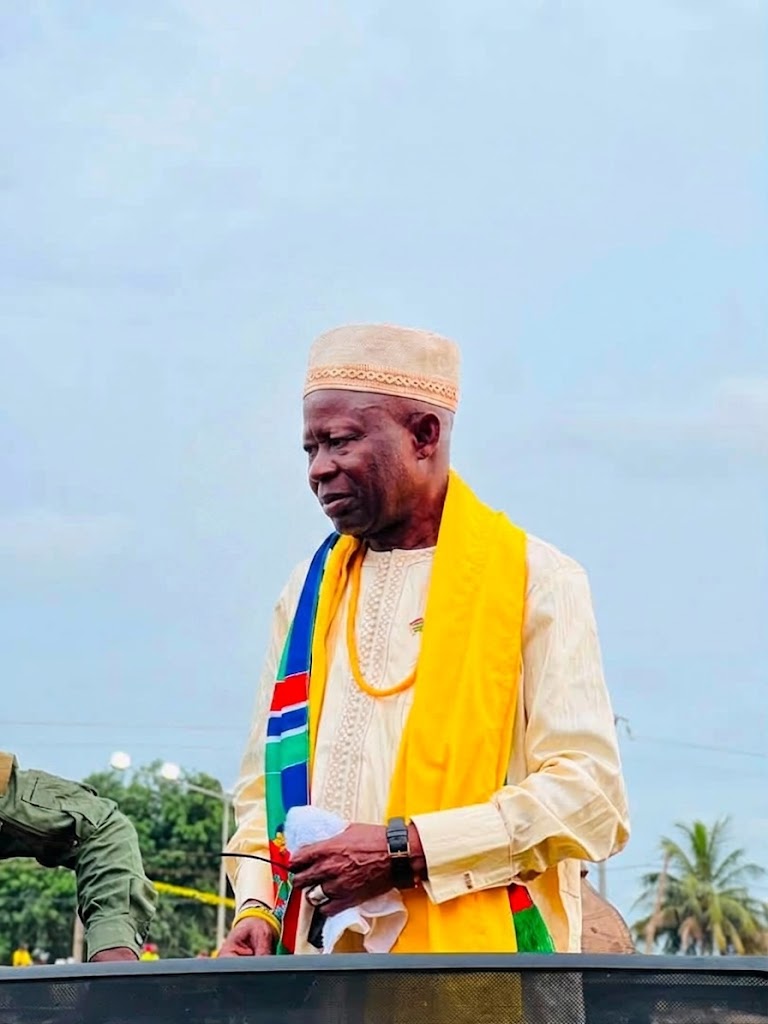
“The UDP was born out of tyranny, just like the PPP was born out of colonial rule,” Mr. Darboe said on Sunday at a rally in Brikama marking the UDP’s 30th anniversary.
The gathering drew thousands of supporters, along with representatives of allied political parties, for an event that celebrated the UDP’s history and reflected on three decades of opposition politics.
Mr. Darboe, the UDP’s secretary general and party leader, said the circumstances that gave rise to the party in 1996 bore similarities to those that preceded the creation of the PPP, though the two movements emerged in different political eras and confronted different challenges.
The PPP, he said, was established at a time when people living in the Protectorate lacked universal suffrage and had limited influence over the political decisions that would determine The Gambia’s future, including whether the country would become independent.
With no political organization adequately representing those communities, Mr. Darboe said, the creation of the PPP became a political necessity.
Three decades later, he said, The Gambia again found itself at a crossroads.
Mr. Darboe described the period following the 1994 military coup as one in which democratic institutions were weakened, constitutional government was disrupted, and political power became increasingly concentrated in the hands of one ruler.
“One-man rule was installed, and no one dared to speak out,” he said.
Mr. Darboe said those conditions, including restrictions on political activity and what he characterized as the erosion of basic democratic freedoms, created the impetus for the formation of a new opposition movement.
It was against that backdrop, he said, that figures associated with three established political parties, the PPP, the Gambian People’s Party, and the National Convention Party, came together in 1996 to establish the United Democratic Party.
The new party, Mr. Darboe said, was intended to provide a political vehicle for Gambians opposed to authoritarian rule and seeking a return to democratic and constitutional government.
Thirty years later, the anniversary celebration in Brikama offered Mr. Darboe an opportunity to cast the UDP’s history as part of a broader arc of Gambian political struggle, from the movement for greater political representation under colonial rule to the campaign against authoritarianism that followed the 1994 coup.
For Mr. Darboe, the connection between those eras was central to the party’s story: the circumstances were different, he argued, but both the PPP and the UDP emerged when their founders believed the country’s political order demanded an organized response.
Comments are closed.