

GALA Demands Barrow Respond to Parliamentary Findings on Sale of Jammeh’s Assets

By Seedy Jobe
Gambians Against Looted Assets (GALA), a civil society movement, has called on President Adama Barrow to publicly address parliamentary findings on the management and sale of assets seized from former President Yahya Jammeh, accusing his administration of failing to act on serious financial and administrative irregularities identified by lawmakers.
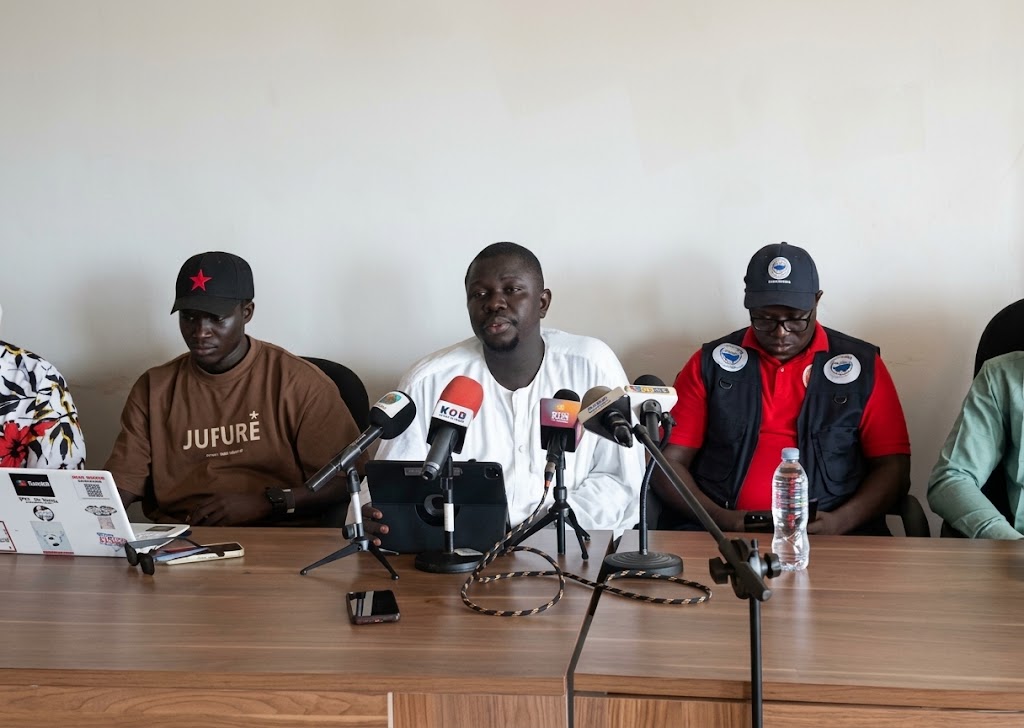
Speaking at a news conference Thursday, Oct. 8, at the NYP Complex in Kanifing, the movement’s administrative secretary, Fallou Gallas Ceesay, criticized the government for failing to issue a formal response to the National Assembly’s Special Select Committee report, which was approved in April 2026.
GALA described the government’s silence as a failure of leadership and accountability, arguing that the parliamentary findings warrant urgent action.
According to the movement, the investigation uncovered extensive irregularities in the handling of Jammeh’s assets, including questionable valuations, missing financial records, unauthorized bank accounts, improper land allocations, and unaccounted-for proceeds from asset sales.
The group identified 15 areas requiring government intervention, including alleged violations of the Public Finance Act involving former Justice Minister Abubacarr Tambadou and administrative failures during the tenure of his successor, Dawda Jallow.
It also cited parliamentary recommendations calling for further investigations involving judicial and law enforcement officials.
GALA raised particular concerns about the recovery of funds allegedly diverted during Jammeh’s 22-year rule, claiming that nearly all the foreign currency identified as having been misappropriated remains unrecovered.
The movement said approximately $302 million of an estimated $304 million remains outstanding. It further claimed that 99.95 percent of the euros and 99.10 percent of the British pounds allegedly embezzled during Jammeh’s presidency have yet to be recovered.
The figures, presented by GALA, underscore what the movement described as significant shortcomings in the government’s asset recovery efforts.
The organization also pointed to inconsistencies in official records concerning seized properties and livestock.
According to GALA, an earlier government white paper listed 281 landed properties, while subsequent task force records identified 288. The parliamentary committee’s calculations placed the figure at 291.
The movement said discrepancies in livestock sales and other asset records raised further questions about the accuracy and transparency of the government’s accounting.
It also criticized the management of livestock and wildlife confiscated from Jammeh, citing inadequate care and reports that exotic snakes had been released because authorities lacked the resources to maintain them.
GALA called on President Barrow to publish a comprehensive response to the parliamentary findings, accompanied by a detailed and costed implementation plan, by Oct. 30.
The movement also urged the National Assembly to demand a progress report from the government by Oct. 15, outlining measures taken to address the committee’s recommendations.
Beyond those deadlines, GALA called for immediate safeguards to protect remaining seized assets, a comprehensive reconciliation of financial transactions and renewed international efforts to trace and recover funds allegedly transferred abroad.
It also demanded quarterly public reports on asset recovery efforts and transparent accounting of money designated for reparations to victims of human rights violations committed during Jammeh’s presidency.
The organization urged authorities to protect journalists, whistleblowers and citizens seeking information about the management of the confiscated assets.
GALA also directed criticism at the National Assembly, calling on lawmakers to acknowledge shortcomings in their oversight of the implementation of recommendations made by the Janneh Commission, which investigated financial misconduct during Jammeh’s rule.
The movement argued that the parliamentary investigation would have little value unless its findings resulted in concrete administrative, financial and legal action.
It warned that continued government silence could further erode public confidence in the country’s accountability institutions and undermine efforts to address abuses committed under the former administration.
For GALA, the central issue is no longer simply what the parliamentary investigation uncovered, but whether the Barrow administration is prepared to act on its findings.
The movement maintained that the government’s commitment to transparency and accountability would ultimately be measured by its willingness to recover missing assets, resolve financial discrepancies and pursue accountability for any wrongdoing established through lawful investigations.
Comments are closed.