


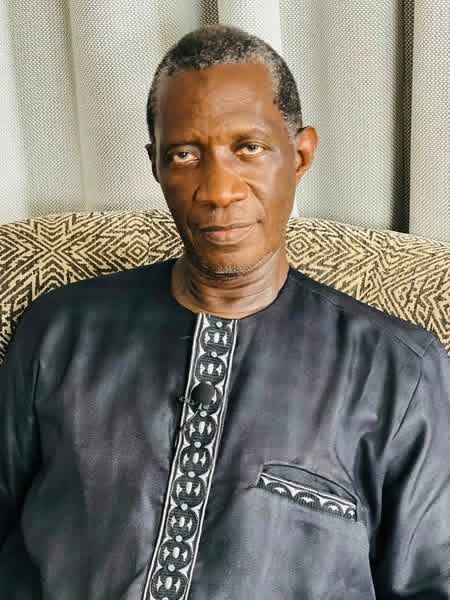
Lamin Manneh, UDP Deputy Administrative Secretary for External Affairs
By Makutu Manneh
Lamin Manneh, a senior official of the United Democratic Party, has accused the governing National People’s Party of political hypocrisy for dealing with Kebba Jallow and his group as representatives of the People’s Progressive Party, despite an ongoing dispute over the party’s leadership.
Manneh, the UDP’s deputy administrative secretary for external affairs, said Jallow had been expelled from the PPP and could no longer legitimately speak on its behalf.
Speaking on West Coast Radio, Manneh said the UDP would not have recognized Jallow as a representative of the PPP under the same circumstances, though it would be willing to engage with him in his individual capacity.
“We wouldn’t have accepted him, and this is what the ruling NPP did,” Manneh said. “They know very well that Kebba Jallow does not represent PPP.”
Manneh pointed to Jallow’s legal challenge against the Independent Electoral Commission, which recognized Ousman Madikay Faal as the PPP’s secretary general and party leader following a disputed congress in December 2024.
“Kebba Jallow took IEC to court because he said they accepted Ousman Madikay Faal as the head of PPP, and I think the case is still ongoing,” Manneh said. “NPP knows about that, but they still accept him coming to negotiate with them for supporting them as PPP.”
Manneh described the NPP’s decision to engage with Jallow’s faction as fraudulent, arguing that recognizing the group as the PPP amounted to encouraging the subversion of the party’s internal structures and undermining the rule of law.
He also cited a statement from the Faal-led PPP executive distancing the party from Jallow’s declaration of support for President Adama Barrow and the NPP. The party later expelled Jallow, Manneh said, while giving him three months to appeal the decision through its internal structures.
The dispute traces back to the PPP’s elective congress in December 2024, when Faal defeated Jallow, the incumbent, to become secretary general and party leader.
The party’s internal electoral commission later disqualified Faal and six other candidates, saying they had refused to sign a declaration in a revised party constitution pledging not to challenge the election results in court. The commission subsequently declared Jallow and his team the duly elected leadership.
Faal and his supporters rejected that decision, describing it as an attempted takeover by a committee they said no longer had the authority to act. The Independent Electoral Commission later recognized Faal’s executive as the legitimate leadership of the PPP.
Jallow’s faction disputed the IEC’s decision, accused the commission of bias, and went to court seeking to block the recognition and swearing-in of Faal’s executive.
While that legal dispute remained unresolved, Jallow and members of his group publicly announced their support for President Barrow and the NPP. The Faal-led executive rejected the endorsement, saying Jallow had no authority to commit the PPP to another political party, and later expelled him for what it described as misrepresentation of the party.
The Faal-led PPP has since joined the Gambia First Coalition, an opposition alliance led by the UDP.
Comments are closed.