


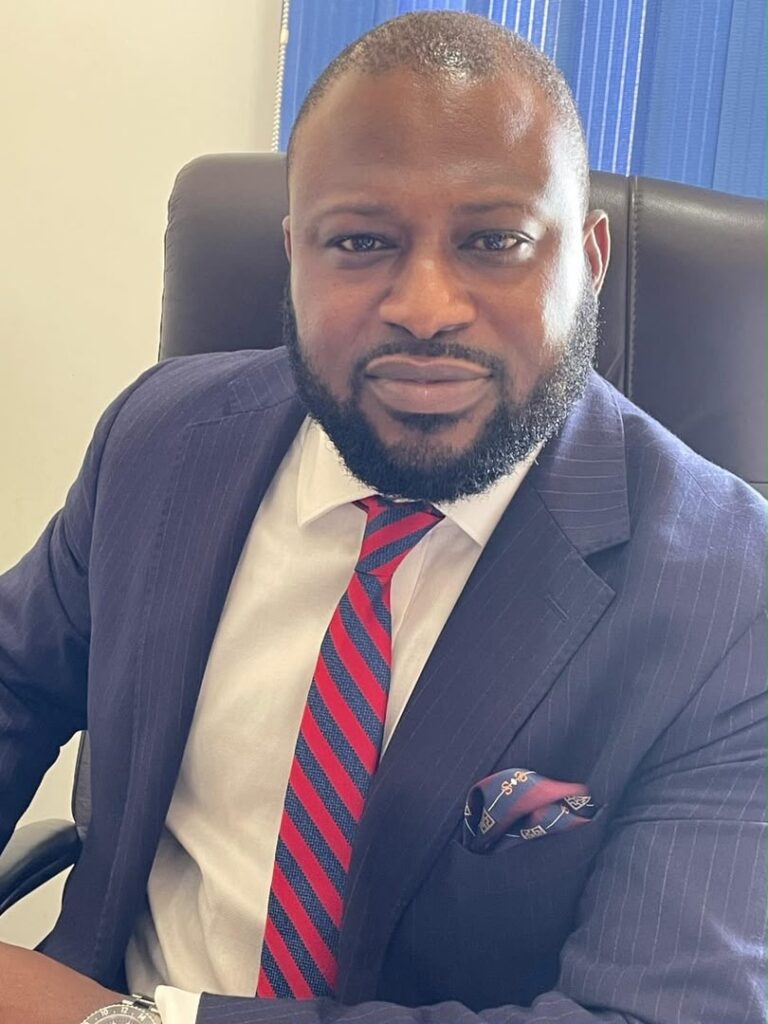
Lawyer Abdoulie Fatty
Abdoulie Fatty
On 31 March 2017, barely three months into the New Gambia, I wrote in The Standard Newspaper an article titled “Gambia’s Tribal Undercurrent.” The euphoria of defeating Yahya Jammeh was still fresh. Yet underneath all that excitement, something bothered me. Jammeh was gone, but the tribalism he deliberately stoked remained.
I started that article with a personal experience. I had opened a bank account and listed Ebrima Baba Galleh Jallow as my next of kin. The banker asked whether he was my friend. I answered: “He’s my brother.”
I understood his confusion. I am Fatty, supposedly unmistakably Mandinka. He is Jallow, with an unmistakably Fula name. Yet Koto Galleh is my brother of the same mother. My mother, Aja Mariama Barry, is Fula. She had eight children: five Jallows, conventionally identified as Fulas, and three Fattys, conventionally identified as Mandinkas.
I wrote then that intermarriage in The Gambia is so prevalent, and our tribal relations by blood so intricate and intertwined.
Nine years later, I find myself returning to the same uncomfortable subject.
This time because a microphone was left on.
Imam Baba Leigh, a prominent religious leader and Commissioner of the National Human Rights Commission (NHRC), was heard during a TikTok live making a remark in Wolof in which he questioned what was wrong with Mandinkas before describing them, collectively, as angry people. The backlash has been enormous and, frankly, merited.
Let us not sanitise this.
What Baba Leigh said was tribal stereotyping. It was offensive and wrong. Mandinkas were the target on this occasion and there is no reason to obscure that fact by massaging the truth.
In June 2020, Baba Leigh himself publicly condemned insulting entire tribes. He warned against taking the conduct of individuals and using it to malign an entire ethnic community.
Six years later, those words stare awkwardly back at him.
There is something else I should say.
I know Imam Baba Leigh personally. I like and respect him. We have exchanged Eid greetings over the years. In April 2024, replying to his Eid greetings, I prayed for his “continued good health, wisdom and leadership in our society”.
That makes this rebuke more difficult. It does not make it less necessary.
We Gambians have a weakness for maslaha: the instinct to preserve relationships and smooth over difficult truths. There is virtue in restraint and reconciliation. But maslaha becomes dangerous when it demands silence about something we would readily condemn if said by somebody we did not know.
My personal regard for Baba Leigh cannot become a bar to holding him accountable. I would be dishonest with myself otherwise. On something as fundamental as the cohesion of our country, personal affection must yield to something larger.
Gambia first.
The NHRC has probably done more than most public institutions in recent years to warn about hate speech and tribal bigotry. At its National Interfaith Dialogue to Combat Hate Speech in 2025, its Chairperson warned bluntly: “Our democracy is under threat from hate speech.”
The NHRC cannot therefore treat this merely as Baba Leigh’s personal reputational crisis. It owes the public a response. Baba Leigh should apologise unequivocally. Those asking whether his conduct is compatible with continued membership of the NHRC are raising a perfectly legitimate question.
There is another reason this cannot simply be brushed aside as an unfortunate slip.
Mandinkas have heard versions of this before.
We also have to confront an uncomfortable reality that predates this hot mic. Mandinka numerical strength has repeatedly been presented in our politics not simply as a demographic fact, but as something other communities should politically fear. Sometimes it manifests in warnings about “Mandinka domination”; sometimes in suggestions that Mandinkas seek to monopolise political power; and sometimes in the tendency to explain support for Mandinka political leaders almost entirely through tribe.
Yahya Jammeh exploited this ruthlessly.
In “Gambia’s Tribal Undercurrent” in 2017, I argued that Jammeh deliberately created a nexus between political loyalty and tribal identification: portray Mandinkas as determined to dominate political power, frighten minority communities with the prospect of Mandinka ascendancy and convert ordinary political competition into ethnic anxiety.
By June 2016, his rhetoric had crossed an altogether more sinister line. It became serious enough for the United Nations Special Adviser on the Prevention of Genocide, to condemn Jammeh’s “stigmatisation, dehumanisation and threats against the Mandinka.”
And then came the TRRC.
For three years we heard what twenty-two years of dictatorship had done to our country. Out of that painful national reckoning emerged two words that entered our democratic vocabulary:
Never Again.
But Never Again was never supposed to mean simply that Yahya Jammeh should never rule us again.
In Volume 1 (Part A) of its Final Report, the TRRC described reconciliation as a long-term process requiring profound changes in attitudes and applying not merely to victims and perpetrators but to everyone in society. It emphasised social cohesion, national unity and non-recurrence.
Never Again cannot therefore mean never again torture, disappearances and arbitrary arrests while leaving untouched the prejudices and divisions from which more serious abuses can draw oxygen. Jammeh demonstrated how easily political power could weaponise ethnicity and stigmatise an entire community.
Never Again is easy when the person we condemn is someone we dislike. Its real test comes when fidelity to its principles requires us to hold accountable people we know, respect and admire.
Perhaps this history explains some of the depth of anger surrounding Baba Leigh’s remarks. His words did not land on virgin territory. They landed upon memories of a former President who publicly singled out Mandinkas and cultivated suspicion about their belonging and political intentions.
Jammeh’s rhetoric was infinitely more serious than Baba Leigh’s. The two should never be equated. But something of the political narrative he cultivated survived his departure.
The 2021 presidential election offered an uncomfortable glimpse of that reality. Post-election analysis by CepRassfound tribal voting had been “very much manifested”. Its head, Lamin Dampha, said Mandinka respondents were divided while describing the movement of respondents from other ethnic communities towards President Barrow as “massive”.
People obviously voted for many reasons. But neither should we pretend that rhetoric about not having “another Mandinka President”, or anxieties about supposed Mandinka political dominance, formed no part of our political atmosphere.
Jammeh left. The ethnicisation of our politics did not leave with him.
In an interview published by The Standard on 6 August 2021, I described our tribal discourse as toxic, polarising and divisive. I compared the tensions to a volcano and warned that once the lava started spreading, none of us would be spared.
Yet, after saying all of this, it would be far too comforting to believe that Baba Leigh is the problem.
Remove him from the NHRC, demand an apology, condemn him for several days on Facebook and TikTok, and congratulate ourselves that tribalism has been defeated.
Baba Leigh’s microphone was accidentally left on. The more difficult truth is that similar conversations take place when the microphones are off—in homes, offices, attaya vous, political gatherings and WhatsApp groups.Often it comes dressed as humour, political analysis or some harmless observation about how “these people” behave. Repeated often enough, stereotypes become assumptions, assumptions become prejudice, and prejudice becomes an acceptable way of interpreting fellow citizens.
This is how the tribal undercurrent survives.
It thrives when we look at the surname of a public official before assessing his competence; when one person’s misconduct becomes an occasion to insult his entire tribe; and when political parties are assigned ethnic ownership.
Social media has simply amplified this. What might once have been an ignorant remark among a handful of people at an attaya vous can now reach tens of thousands within minutes. TikTok lives, Facebook posts and WhatsApp audios can turn prejudice into content and anger into a weapon.
The technology may be new. The prejudices are not.
And on this occasion, those prejudices were directed at Mandinkas. There is a tendency whenever Mandinkascomplain about tribal attacks to quickly remind them that Mandinkas can also be tribal. Of course they can. But that cannot become a device for avoiding the particular wrong before us. A community must be able to say plainly that it has been targeted without immediately being put in the dock itself.
That is not selective outrage. It is basic fairness, acknowledgement of a wrong.
Political leaders cannot exploit tribal arithmetic during elections and preach national unity afterwards. Religious leaders cannot demand restraint from their congregations while indulging ethnic generalisations themselves. Public institutions cannot publish reports about hate speech and social cohesion and become paralysed when those principles are tested close to home.
We must also stop treating tribal commentary as harmless simply because it does not immediately produce violence. Long before violence comes suspicion between communities, resentment over appointments, ethnic interpretation of elections, collective blame and the gradual normalisation of language that would once have embarrassed us.
And yet the absurdity remains. My own family is evidence enough: Jallows and Fattys, Fulas and Mandinkas, children of the same mother. Multiply that story across thousands of Gambian families and the fiction of neat ethnic camps quickly collapses.
Our intermarriage and coexistence are among our strongest defences against ethnic separation. But they cannot protect us automatically.
A tolerant society can teach itself intolerance if enough influential people keep supplying the lessons.
In 2017, I called it an undercurrent.
In 2021, I described the tensions as a volcano.
Since then, the NHRC has studied hate speech. Its Chairperson has warned that our democracy is threatened by it. And now one of its Commissioners has been caught on a hot microphone making a disparaging generalisation about an entire ethnic community.
How many more warnings do we need?
Baba Leigh should apologise. The NHRC should address the conduct of its Commissioner. But if that is where this conversation ends, we will have dealt with the immediate controversy and left the underlying menace untouched.
Nearly ten years after writing “Gambia’s Tribal Undercurrent,” my concern is no longer whether tribalism exists in The Gambia. That question has been answered.
The question is whether we have the courage to confront it before it becomes an even more defining feature of our politics and social relations.
Baba Leigh’s microphone was on. Perhaps its most important contribution was to remind us that Gambia’s tribal undercurrent is still very much alive.
Comments are closed.