

Finance Minister: Gambia’s D140 Billion Debt Is Rooted in Development and Inherited Obligations

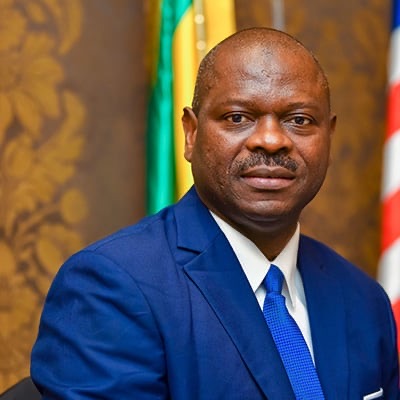
By Fatou Sillah
Finance Minister Seedy Keita has defended the government’s borrowing record, arguing that The Gambia’s public debt, which stood at D140 billion as of December 2025, reflects inherited liabilities, investments in national development, and obligations linked to state-owned enterprises rather than unsustainable new borrowing.
Speaking in an interview with West Coast Radio, Mr. Keita said 64 percent of the country’s public debt is owed to external creditors—including the World Bank, the International Monetary Fund, the Islamic Development Bank, and other development partners—while the remaining 36 percent consists of domestic debt.
The finance minister said the government’s debt position should be viewed in its historical context. Although the officially recorded public debt at the start of the Barrow administration in 2017 was D46 billion, he said the actual opening balance should have been D58.5 billion after accounting for D12.5 billion in liabilities inherited by the government.
According to Mr. Keita, the inherited obligations included D10.8 billion in previously unrecorded debts that were later consolidated into a 30-year bond, as well as D1.7 billion in liabilities associated with the National Water and Electricity Company (NAWEC) and commercial banks.
“So this D12.5 billion comprises debt that this government assumed, for which no new money was received and no new services were received. But because government is a continuity, it absorbed those debts, so the true opening balance should have been D58.5 billion,” he said.
Mr. Keita further argued that the government’s net borrowing was significantly lower than the headline public debt figure. After subtracting the inherited liabilities from the current D140 billion debt stock, he said the balance stood at D81.5 billion. Of that amount, D28 billion represents debt owed by state-owned enterprises, leaving what he described as D53.5 billion in net government borrowing.
The minister said the borrowed funds had been directed toward major infrastructure and development projects, including the University of The Gambia’s Faraba Banta campus, the Bertil Harding Highway, OIC-funded road projects, renewable energy initiatives, agricultural development programs, and secondary school improvement projects.
He said loans contracted for 30 development projects totaled approximately $511.5 million, equivalent to about D37 billion.
Mr. Keita also attributed part of the increase in the country’s debt stock to the depreciation of the dalasis against major foreign currencies, estimating that exchange rate movements alone added approximately D7.5 billion to the value of the external debt.
“There is no magic to it, no money has disappeared into thin air, these are public resources and public records, there is no borrowing that was speculative. This is where the money has gone,” he said.
The finance minister maintained that The Gambia’s debt remains sustainable, noting that the country’s capacity to service its obligations has improved. He said continued support from international financial institutions reflects their confidence that the country’s debt remains manageable.
Comments are closed.