

Supreme Court Rules Removal of Auditor General Was Unconstitutional, Awards Modou Ceesay D4 Million

By Court Reporter
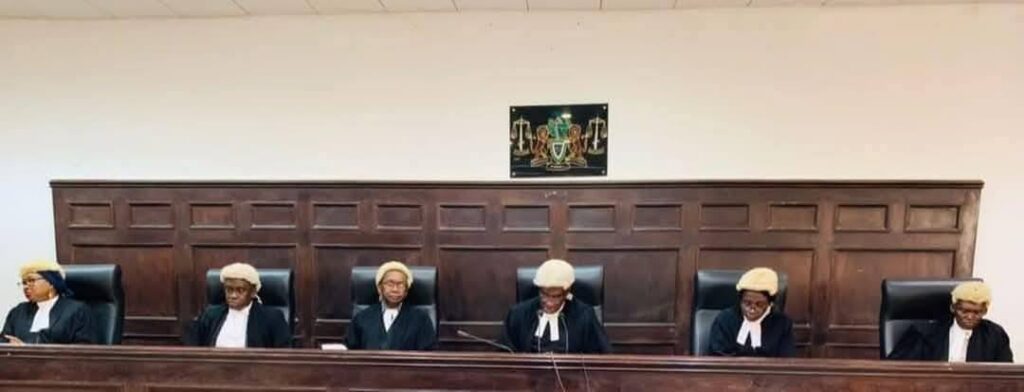
The Supreme Court on Tuesday ruled that the removal of former Auditor General Modou Ceesay from office in September 2025 violated the Constitution and the National Audit Act, declaring the action unlawful and ordering the government to compensate him for the breach of his constitutional rights.
In a unanimous judgment delivered by Justice O.M.M. Njie on behalf of a five-member panel, the court held that the executive’s decision to remove Ceesay had no legal effect because it failed to comply with the constitutional safeguards governing the tenure of the Auditor General.
The ruling marks one of the court’s most significant pronouncements on the independence of constitutional officeholders, reaffirming that the Auditor General cannot be removed except through the procedures prescribed by law.
The court found that the involvement of the police in removing Ceesay from his office also violated Section 158 of the National Audit Act and the Constitution, rendering the removal “null and void.”
Throughout the proceedings, Ceesay’s legal team argued that the office of the Auditor General enjoys constitutional protection against arbitrary executive interference. The Supreme Court agreed, holding that the executive had acted outside the law.
Despite declaring the removal unconstitutional, the court declined to order Ceesay’s reinstatement.
Justice Njie noted that Ceesay had not sought reinstatement in his reliefs and observed that the relationship between him and the executive had deteriorated beyond repair following the dispute.
The court further held that the Auditor General’s office requires a functional working relationship with the executive while maintaining its constitutional independence, and exercised its discretion not to order his return to office.
Instead, the court ordered that the current Auditor General, Cherno Amadou Sowe, should remain in office.
While rejecting reinstatement, the court granted substantial financial relief.
It ordered the Attorney General to pay Ceesay all outstanding salaries and allowances from the date of his removal in September 2025 until the expiration of his tenure, together with interest at 10 percent. The payment must be made within 60 days.
The court also awarded Ceesay D4 million in damages, holding both the Attorney General and the Inspector General of Police jointly responsible for violating his constitutional rights. That amount is likewise to be paid within 60 days.
To facilitate the final financial settlement, the court directed all parties to file affidavits within seven days detailing Ceesay’s age, salary history, allowances, pension entitlements and gratuity.
The judgment reinforces constitutional protections afforded to independent public offices by making clear that the President cannot remove an Auditor General without adhering to the procedures laid down in the Constitution and the National Audit Act.
Those procedures require either a medical board’s findings in cases of incapacity or the establishment of a tribunal to investigate allegations of misconduct or incompetence before removal can lawfully occur.
Although the ruling stops short of restoring Ceesay to office, it firmly establishes that his removal was unconstitutional and legally ineffective, while underscoring the constitutional independence of the Office of the Auditor General.
Speaking after the judgment, Ceesay’s lawyer, Counsel Lamin J. Darboe, welcomed the decision and said his client would not seek a review of the ruling.
“Even though there’s no reinstatement, I am happy with the declaration that the action of the executive was unconstitutional and unlawful,” Darboe said.
The decision is expected to serve as an important precedent on the limits of executive authority over constitutionally protected offices and the safeguards intended to preserve the independence of public accountability institutions in The Gambia.
Comments are closed.