


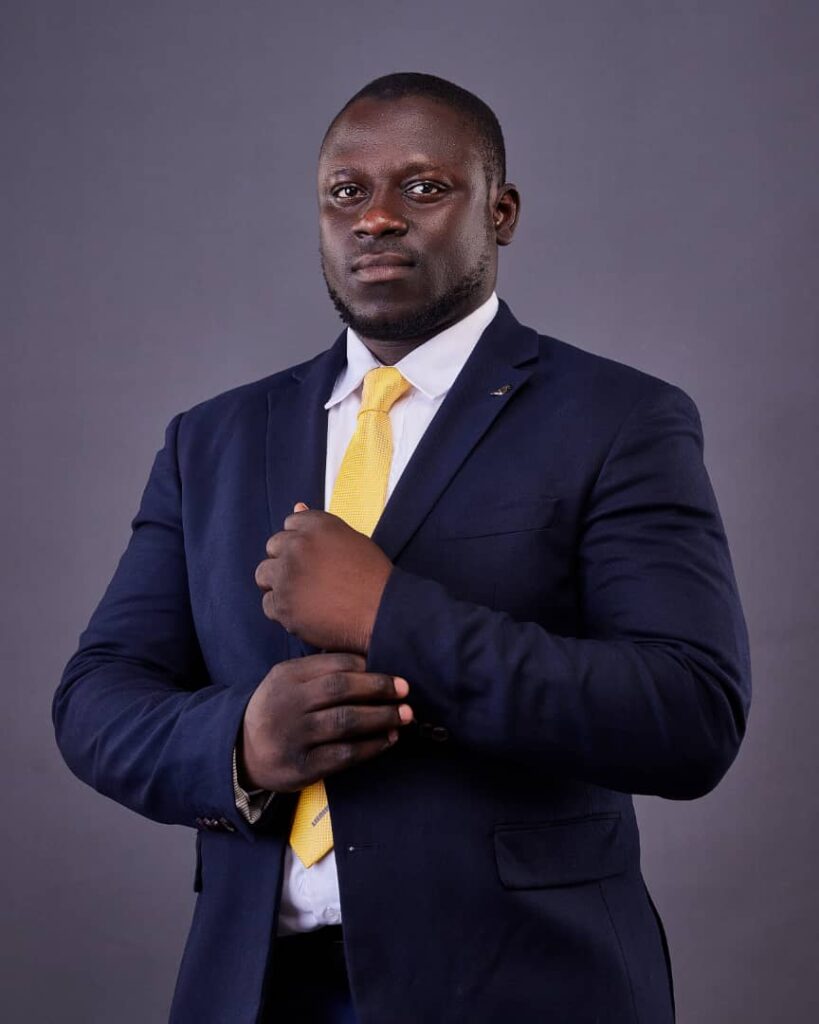
Dr. Abdoulie Bojang
By Seedy Jobe
Dr. Abdoulie Bojang, a political commentator and former National Assembly aspirant, has warned that mounting political divisions and institutional weaknesses could undermine The Gambia’s democratic process ahead of the 2026–27 electoral cycle.
In a statement shared with Kerr Fatou, Dr. Bojang described the current moment as a critical test of the country’s commitment to electoral integrity, cautioning that “disunity is no longer a political miscalculation—it is a national risk.”
“A nation does not collapse in a single moment,” he said. “It weakens when wrongdoing is tolerated, explained away, or quietly ignored.” As the country moves closer to national elections, he added, Gambians face a defining choice: whether to safeguard democratic norms or allow them to erode without scrutiny.
Dr. Bojang condemned alleged irregularities in voter registration, framing them as a direct assault on democratic participation. “Any individual who uses a position of influence to register minors, foreigners, or otherwise ineligible persons is not engaging in politics,” he said. “They are committing a betrayal—the theft of a citizen’s voice and of the nation’s future.”
He described the potential consequences in stark terms, urging attention to the experience of ordinary voters. A compromised system, he said, risks diluting legitimate votes “not by chance, but by design,” calling such acts “a deliberate injury to democracy.”
The Independent Electoral Commission, he argued, carries a heightened responsibility in this environment. “It now bears a burden heavier than procedure—the trust of an entire nation,” he said, adding that impartiality must be consistent and actively demonstrated.
Dr. Bojang also called on the commission to accelerate the registration of political parties, warning that bureaucratic delays could be perceived as political interference. “Administrative delay must never become a political tool,” he said, noting that public confidence, once eroded, is difficult to restore.
Turning to opposition parties, he issued a pointed appeal for unity. Fragmentation, he said, could weaken the broader democratic framework at a pivotal moment. “The differences that divide today will be insignificant compared to the consequences of a weakened democratic process tomorrow,” he said, urging coalition-building as a matter of national interest.
He attributed many of the system’s vulnerabilities to structural shortcomings, including outdated legal frameworks, inconsistent enforcement, and weak border management. These gaps, he said, have contributed to concerns about electoral integrity.
“The National Assembly and the Immigration Department must accept a significant share of responsibility,” Dr. Bojang said, calling for urgent legislative and policy reforms to address the deficiencies.
Despite his concerns, he acknowledged the role of civil society groups, electoral officials, and ordinary citizens who continue to defend democratic norms. Their efforts, he said, remain essential to maintaining public trust.
He concluded with a call for civic participation. “Register, show up, vote,” he said. “Participation is not a favor to the system — it is ownership of it. Silence is not neutrality; it is surrender.”
Comments are closed.