

“Trial by Media and Gaps in Evidence”: Defence Seeks Acquittal for Ousainou Bojang

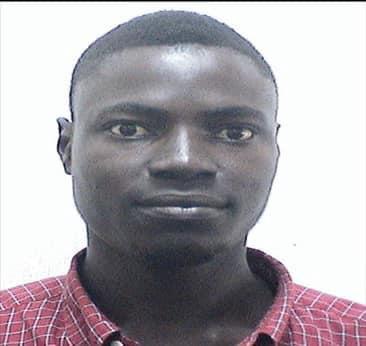
By Seedy Jobe
As the trial of Ousainou Bojang drew to a close on Wednesday, his lead counsel, Lamin J. Darboe, submitted a final brief to the High Court, urging a full acquittal and challenging the State’s evidence on multiple fronts.
Bojang, the first accused in the 2023 Sukuta-Jabang Traffic Lights shooting, faces five charges, including the murder of Police Constables Sang J. Gomez and Pateh Jallow, the attempted murder of Ansey Jawo, and acts of terrorism.
In his argument, Mr. Darboe contended that the prosecution’s case rested on “bad faith,” unreliable witnesses, and a lack of forensic evidence. He presented an alibi supported by digital call logs and eyewitness testimony placing Bojang elsewhere at the time of the shooting.
Mr. Darboe began by scrutinizing the testimony of two soldier witnesses, Ismaila Bojang and Bakary R. Jarjue, who claimed to have chased Bojang after the shooting. According to the defense, inconsistencies in their statements undermined their credibility. The soldiers testified they were returning from beach training at Senegambia and Palma Rima, preparing for a trip to Turkey. Exhibit D13, the counsel argued, shows call logs placing the soldiers in New Yundum at the time, contradicting their account.
The brief further questioned the plausibility of the soldiers’ claims. Mr. Darboe noted that one witness reported pursuing the shooter for over 400 meters and securing the crime scene in just 11 to 12 minutes, while describing the suspect as having “bow legs,” a detail not corroborated by other testimony or forensic analysis.
Mr. Darboe also criticized the testimony of Mama Jabbie, a businesswoman and marabout who claimed Bojang confessed to her in Senegal. He called her account “false and unsubstantiated,” pointing out that she allegedly lost a recording of the confession after uninstalling WhatsApp. The defense suggested her statements may have been motivated by the D1 million reward publicly offered by the President and noted her connections to senior government officials.
The only surviving victim, Police Constable Ansey Jawo, acknowledged in court that she could not identify Bojang as her attacker, recognizing him only from social media photographs after his arrest, Mr. Darboe said.
Highlighting forensic shortcomings, the defense noted that despite years of proceedings, the state had produced no DNA, fingerprint, or ballistic evidence linking Bojang to the scene or the alleged murder weapon. Even a gun reportedly found by a watchman, Lamin Fofana, was described as dismantled, casting further doubt on the prosecution’s case.
Bojang’s own testimony, according to the defense, placed him at a lodge in Brufut or at Bojang Kunda during the shooting. He claimed he traveled to Senegal for spiritual protection after being threatened by a woman who threatened to release intimate videos. This account was supported by WhatsApp logs presented as Exhibit D38, showing continuous communication with a witness named Sharon throughout the night of the incident, making it “physically impossible” for him to have been at the scene, Mr. Darboe said.
Additional witnesses, including Sulayman Faal and Famara Bojang, testified that they saw Bojang at his place of work and at Bojang Kunda during the relevant hours.
In conclusion, Mr. Darboe accused the State of engaging in a “trial by media,” citing government officials who publicly labeled Bojang a “rebel” and “UDP member” days after his arrest. He noted that claims of CCTV footage were never substantiated in court and that Bojang’s alleged cautionary statements were obtained under duress.
Urging the court to disregard the “sensationalization” and inconsistencies in the prosecution’s witnesses, Mr. Darboe maintained that the State had failed to prove its case “beyond a reasonable doubt” and called for Bojang’s total acquittal and discharge.
Comments are closed.