

UDP Youth Leader Warns Voter Registration Concerns Could Undermine Dec. 5 Election

By Seedy Jobe
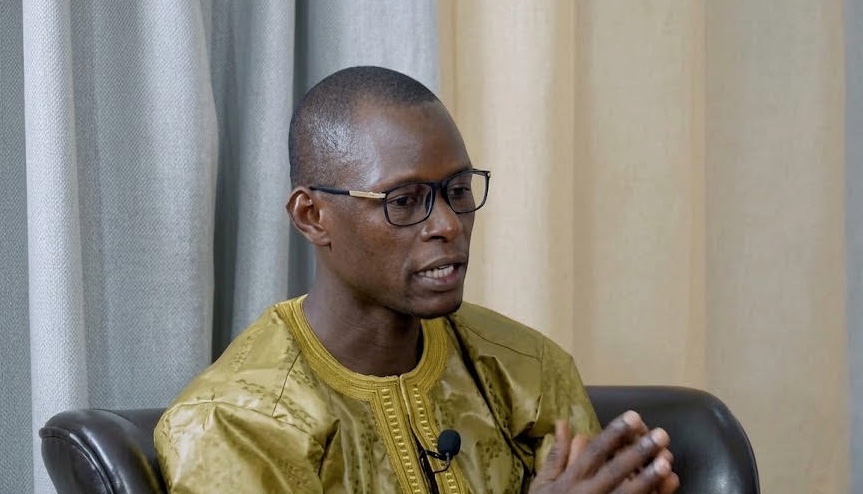
Hagi Suwaneh, the national youth president of the United Democratic Party, has warned that unresolved questions surrounding voter registration could undermine confidence in The Gambia’s Dec. 5 presidential election and increase the risk of unrest.
Speaking in an interview on Kerr Fatou’s Grand Bantaba program, Suwaneh argued that confidence in the voter register was fundamental to the credibility of the election.
“The credibility and integrity of an election lie in the process, which is the registration,” he said. “If people have suspicions about that, there is no way you can conduct a free, fair, and transparent election that people will accept.”
Asked about the implications of the Independent Electoral Commission not providing what he described as raw voter-registration data to all political parties with the election approaching, Suwaneh said the situation “signals a high tendency for chaos.”
He cited concerns over adjustments to electoral timelines and the scrutiny of voter registrations, including roughly 3,000 cases he said had been flagged and referred to the Revising Court.
“We must also look at 3,000; we must look at that too,” Suwaneh said. “People who have been flagged are in the Revising Court.”
Suwaneh also questioned the timing of presidential nominations, scheduled for Nov. 3 through Nov. 14, less than a month before the Dec. 5 election. He argued that the timetable could leave candidates with a shortened campaign period and raised the possibility that the IEC could ultimately change the election date.
“This has given the IEC a calculation that, deliberately, you can see that even with this Dec. 5 election, there are possibilities that the IEC can push it,” he said.
Suwaneh did not provide evidence that the commission intends to postpone the election, and his remarks reflected his assessment of the electoral timetable.
He nevertheless argued that unresolved concerns surrounding voter registration and the electoral calendar could make it more difficult to ensure that the election and its outcome are broadly accepted.
Turning to the opposition, Suwaneh rejected a blanket characterization of opposition parties as disunited, saying some have what he considers credible ideas for addressing the country’s challenges. But he acknowledged that rivalry and mistrust among opposition groups remain significant obstacles.
“They don’t look at the prize; they look at the competition,” he said. “If you look at the competition on the opposition side, you don’t look at the prize, and you will always fail. So this is what is facing the Gambian opposition mostly.”
Suwaneh said concerns identified by the UDP’s information technology team were not intended as attacks on the governing National People’s Party or the IEC. Rather, he said, the party believed it had identified irregularities that warranted public attention.
He said the UDP made its concerns public and held a news conference in part to alert other opposition parties to what it had found.
Suwaneh called on opposition parties to approach questions surrounding the electoral process collectively rather than viewing one another primarily as competitors. He argued that opposition groups should focus their political challenge on President Adama Barrow and work together on issues affecting the integrity of the electoral process.
Comments are closed.